

[2026 Latest] Correlation between Accuracy-Focused Demand Forecasting and Right-Sizing
In store operations within the service and retail industries, "people" represent both the largest cost and the source of the greatest added value. However, many locations still rely on store managers' "intuition and experience" for shift scheduling, resulting in chronic issues such as staff burnout from sudden vacancies or cost losses due to overstaffing relative to customer volume. As of 2026, the key to solving these challenges lies in advanced correlation logic between demand forecasting and right-sizing utilizing sophisticated algorithms.

Table of Contents (Click to open/close)
1. Why Demand Forecasting Directly Leads to Reduced Man-hours in Shift Scheduling
In traditional shift scheduling, the most time-consuming step is determining exactly when and how many staff members are required. Manually analyzing POS data, historical traffic trends, and external factors such as weather or local events to determine optimal staffing levels requires an enormous amount of effort. AI-driven demand forecasting performs time-series analysis on these multifaceted data points to predict customer traffic and sales weeks in advance with remarkable accuracy.
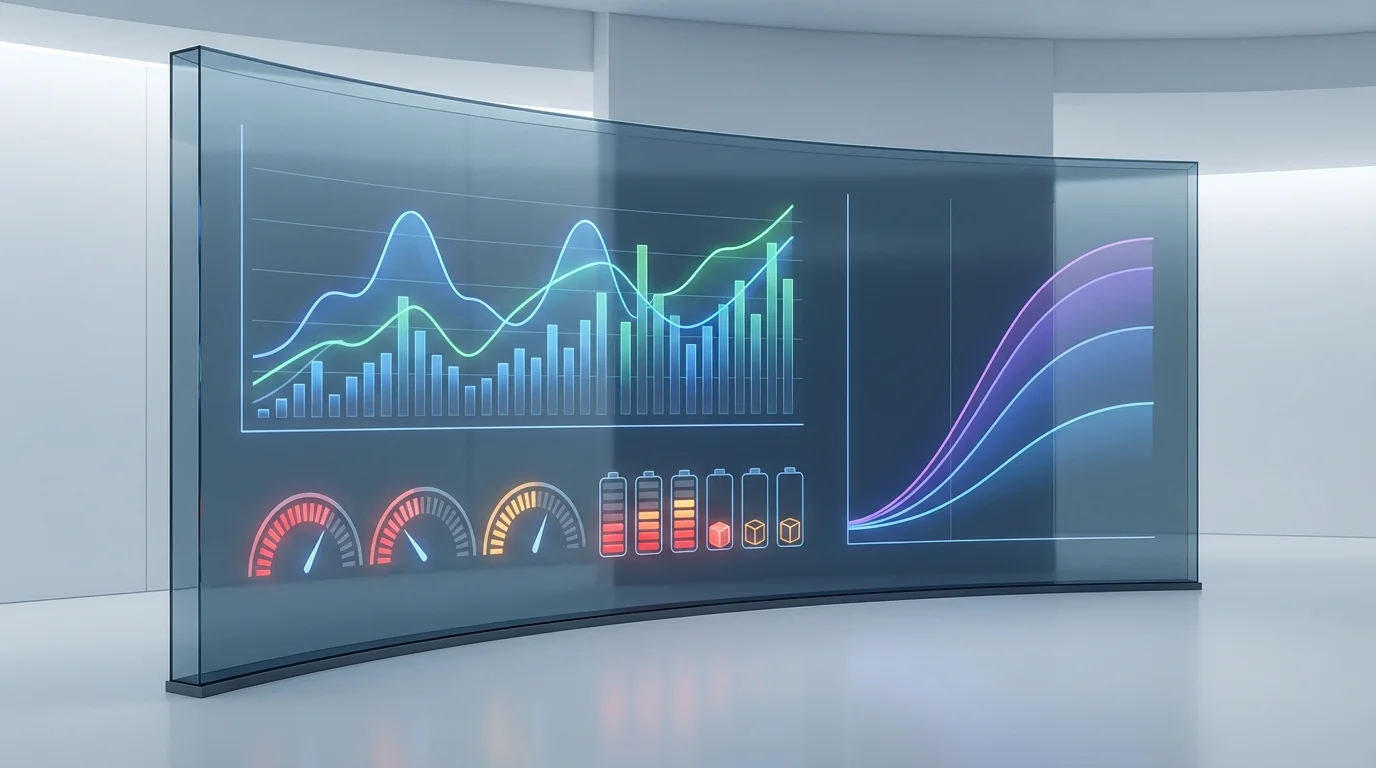
According to the latest survey data, companies that have implemented AI have reduced management man-hours spent on shift creation by an average of approximately 65%. Furthermore, improved forecasting accuracy has dramatically decreased unproductive time spent on last-minute shift adjustments, such as making phone calls to fill vacancies. The following graph shows the changes in forecast error rates and management man-hours before and after AI implementation.
2. Workload Leveling through LHR (Labor Hour Requirements) Calculation
The step following demand forecasting is the calculation of specific LHR (Labor Hours Required). This metric determines the total labor hours necessary to maintain service levels based on the forecasted customer volume. AI goes beyond simply calculating headcount; it automatically suggests "right-sizing" (optimal staffing) by accounting for individual staff skills, such as cashiering, customer service, cooking, and cleaning.
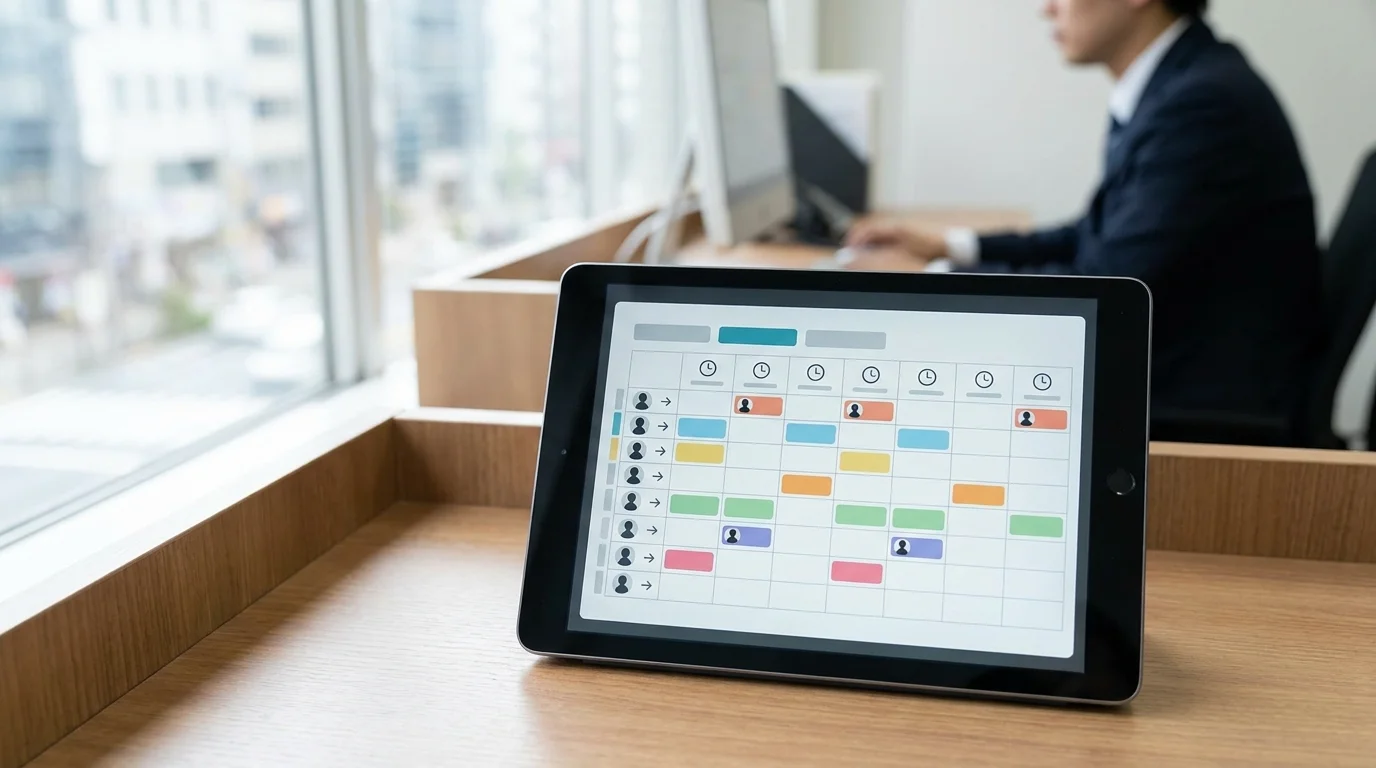
This eliminates "workload imbalances" where work concentrates during specific time slots and exhausts staff. By simulating the most efficient combinations based on the Standard Operating Procedures (SOP) for each task, the AI generates shifts that gain high levels of acceptance from frontline staff. As a result, secondary benefits such as improved employee satisfaction and reduced turnover rates can also be expected.
3. Benefits of Implementing AI Logic to Eliminate Under-buying and Over-buying
The two primary factors hindering the profitability of store operations are "under-staffing" and "over-staffing." Under-staffing leads to lost opportunities and decreased customer satisfaction, while over-staffing results in a direct waste of labor costs. AI logic specializes in minimizing these two extremes and consistently maintaining "optimal staffing levels."

Especially for companies operating multiple locations, AI can learn the unique "quirks" and "regional characteristics" of each store, enabling labor cost optimization across the entire organization. In the 2026 labor market, to maximize limited human resources, a strategic approach to controlling the labor-to-sales ratio (LH ratio) by simulating store operations on a digital twin is essential. AI-based shift scheduling is no longer just about automating administrative tasks; it has evolved into a tool that supports the business strategy itself.
FAQ
- Q. To what extent can the accuracy of demand forecasting be improved?
- A. By training the system on POS data, weather data, and event information from the past 2–3 years, it is increasingly common to achieve an error rate of within 5% for daily customer traffic forecasts. Accuracy further improves through continuous learning.
- Q. Can complex staff preferences also be taken into account?
- A. Yes. AI instantly calculates multifaceted constraints that are impossible for humans to manage—such as time-off requests, working hour restrictions, skill combinations, and limits on consecutive workdays—to derive the optimal allocation.
- Q. Are there benefits to implementation even for small-scale stores?
- A. Yes. In stores with smaller staff sizes, the impact of a surplus or shortage of even one person on service quality and costs is more significant. Therefore, precise right-sizing through AI directly contributes to business improvement.
Take your store operations to the next level
Why not achieve labor cost reduction and ease the workload on-site simultaneously with AI-driven demand forecasting and shift optimization?
Talk to us for a free strategy consultationSummary
The optimal solution for store operations in 2026 lies in the automation of "Right-sizing" based on advanced demand forecasting. AI logic utilizing POS data and time-series analysis not only significantly reduces the workload for managers in shift creation but also thoroughly eliminates opportunity losses from understaffing and cost losses from overstaffing. Leveling the workload is an essential strategy for preventing frontline burnout and achieving sustainable store management.
Published: June 17, 2026 / By: Osamu Yasuda

Related Articles
References
- [1] Labor Optimization Strategies in Service Industry (2025)
- [2] Artificial Intelligence for Demand Forecasting and Right-sizing (2026)