

[2026 Latest] Feature Engineering to Minimize MAPE: High-Precision Demand Forecasting Integrating Weather, Events, and Competitor Trends
In the retail and restaurant industries, optimizing staff allocation is a critical challenge that directly impacts operating profit margins. However, many locations still rely on "managerial intuition and experience" for shift scheduling, leading to chronic issues such as excessive labor costs and lost opportunities due to understaffing. As of 2026, the key to solving this problem lies not in simply referencing past performance, but in building AI demand forecasting models (such as GBDT and Deep Learning) that highly integrate external variables. This article provides a detailed explanation of practical feature engineering techniques to minimize MAPE (Mean Absolute Percentage Error), a primary metric for measuring forecasting accuracy.

Table of Contents (Click to Expand/Collapse)
1. Selecting "External Variables" That Dramatically Change Forecasting Accuracy
In demand forecasting, "outliers" that cannot be captured by past customer traffic (autoregressive components) alone are the biggest factor worsening MAPE. Particularly in the Japanese retail market, weather conditions and events at surrounding facilities cause fluctuations in customer traffic by tens of percentage points. To build a high-precision model, these elements must be appropriately incorporated as "features" and validated using time-series cross-validation.
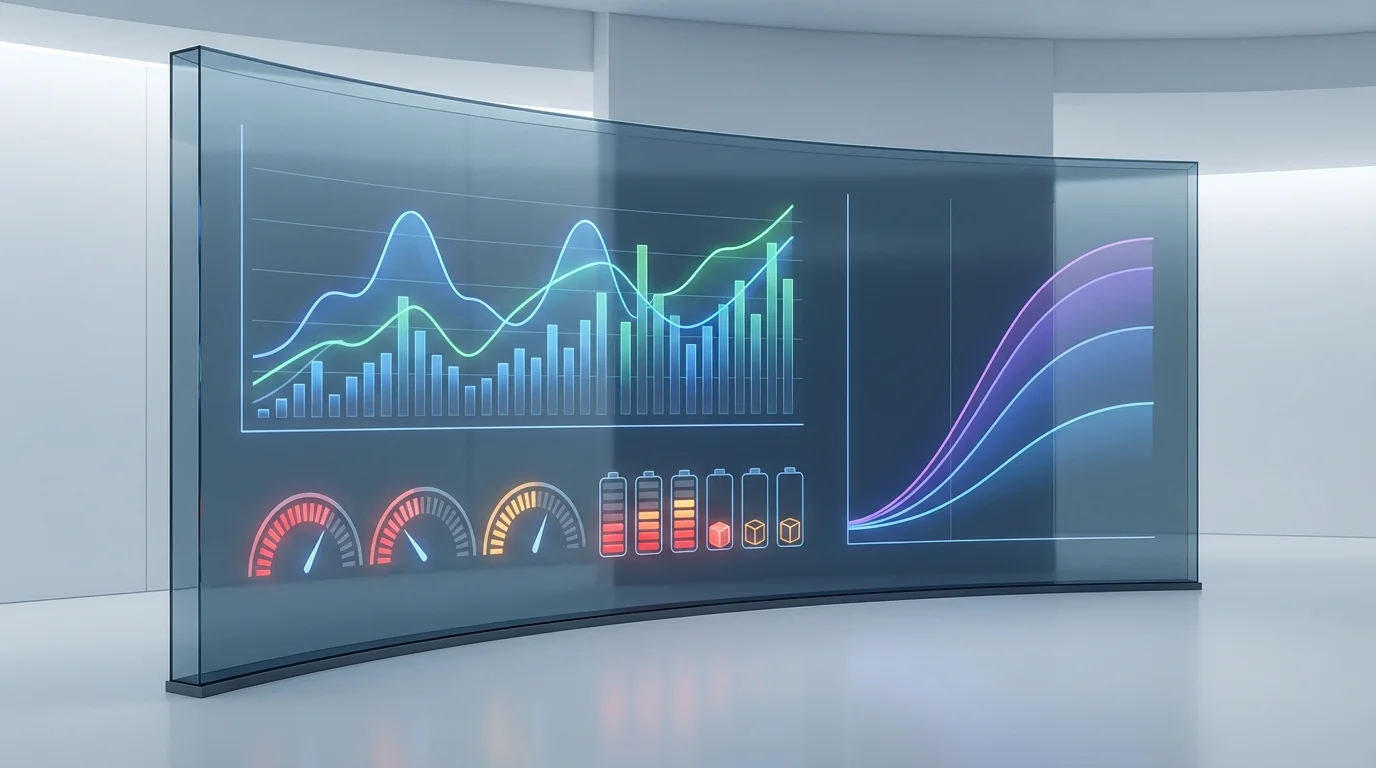
As shown in the graph above, integrating external variables such as "weather" and "events" in addition to historical performance data dramatically improves MAPE. In particular, information on events at large halls or stadiums within a 500m radius of a store is an indispensable data source for predicting sudden increases in demand. Automatically acquiring this data via API integration and incorporating it into the pipeline is the standard in 2026.
2. Feature Engineering: Quantifying Weather and Events
Simply inputting categorical information like "rain" is insufficient. For example, the impact on customer behavior can differ completely depending on the temperature difference from the previous day or the timing of when rainfall begins (before or after the lunch peak). In feature engineering, this qualitative information is processed into "lag features (fluctuations over the past few hours)" or "flag variables (binarization)" to make it easier for the AI to learn.

Furthermore, competitor trends cannot be ignored. Sale periods at nearby stores or information on new store openings are factors that can take away from your own store's market share. By indexing these as a "competitor index" and feeding them into the model, it becomes possible to minimize forecasting "variance." In the latest methods, techniques to score interest in specific events from SNS trend words using Natural Language Processing (NLP) and adding them to features have also been put into practical use.
3. Operational Design of Machine Learning Models to Minimize MAPE
Building the model is not the end. The true value of demand forecasting AI lies in the "retraining cycle (MLOps)" after operations begin. We build a system that automatically detects discrepancies between actual and predicted values and analyzes why the forecast was off (checking for data drift or concept drift). This allows for continued flexible adaptation to seasonal changes and shifts in consumer behavior.

Especially in shift scheduling, it is important to combine a "mathematical optimization solver" that considers staff skill levels, labor laws, and shift preferences based on the predicted customer traffic. As forecasting accuracy (MAPE) improves, just-in-time personnel management—allocating "only the necessary number of people at the necessary time"—becomes a reality, balancing the prevention of overwork with the improvement of service quality.
4. ROI of AI-Driven Shift Scheduling and Implementation in Practice
Companies that have introduced automated shift scheduling based on high-precision demand forecasting have seen an average improvement of 2–4% in labor cost ratios, while simultaneously reducing sales opportunity losses due to understaffing by over 15%. However, the most significant effect is the "reduction in psychological and time costs for store managers." Shift scheduling tasks that used to take several days a month can now be completed in minutes, allowing managers to focus on essential tasks such as improving customer service and staff development. High-precision forecasting by AI is not just a cost-cutting tool; it is a strategic investment that accelerates the DX (Digital Transformation) of store operations.
FAQ
- Q. What should be the target value for forecasting accuracy (MAPE)?
- A. It depends on the business type, but for customer traffic forecasting in restaurants and retail, 10% or less is a common benchmark. With appropriate feature engineering, it is entirely possible to aim for within 15% even for street-level stores with high noise levels.
- Q. How much historical data is required for implementation?
- A. Ideally, there should be at least two years of historical performance data to allow the model to learn seasonal periodicity. If data is insufficient, initial accuracy is secured by heavily weighting transfer learning or external trend data.
- Q. Is it possible to forecast for special events (such as local festivals)?
- A. Yes. By incorporating calendar information and municipal open data as "flags" during training, we can statistically capture demand spikes that deviate from normal days. This is the primary strength of feature engineering.
Take your store operations to the next level with AI
From proprietary demand forecasting engines that minimize MAPE to automated shift scheduling. Our expert consultants support data-driven optimization.
Talk to us for a free strategy consultationSummary
To achieve high-precision demand forecasting with AI, it is essential to optimize external variables such as weather, events, and competitor trends as "features" in addition to historical performance. By applying feature engineering that minimizes MAPE, highly accurate staffing becomes possible, enabling simultaneous labor cost reduction and revenue maximization. In the 2026 competitive landscape, data-driven store management is an essential strategy for sustainable growth.
Published: May 28, 2026 / By: Osamu Yasuda

Related Articles


References
- [1] Hyndman, R.J., & Athanasopoulos, G. (2025). Forecasting: Principles and Practice.
- [2] Ministry of Economy, Trade and Industry (2024). Guidelines for Improving Productivity through AI Utilization in the Retail and Food Service Industries.