

[2026 Latest] Transparency in Real Estate Management Guaranteed by 3D Scan Records
In real estate rental management, "he-said-she-said" disputes over restoration costs at the time of move-out have been a long-standing challenge for management companies and owners. This is because conventional records using digital camera photos had limitations, such as blind spots and insufficient resolution, making it impossible to pinpoint exactly when minor scratches or stains occurred. However, the emergence of "3D scan records"—combining AI and point cloud analysis—has completely changed this situation. By digitally archiving the space before move-in with millimeter-level precision, information asymmetry is being completely eliminated, and a new standard is being established to eradicate security deposit return disputes.
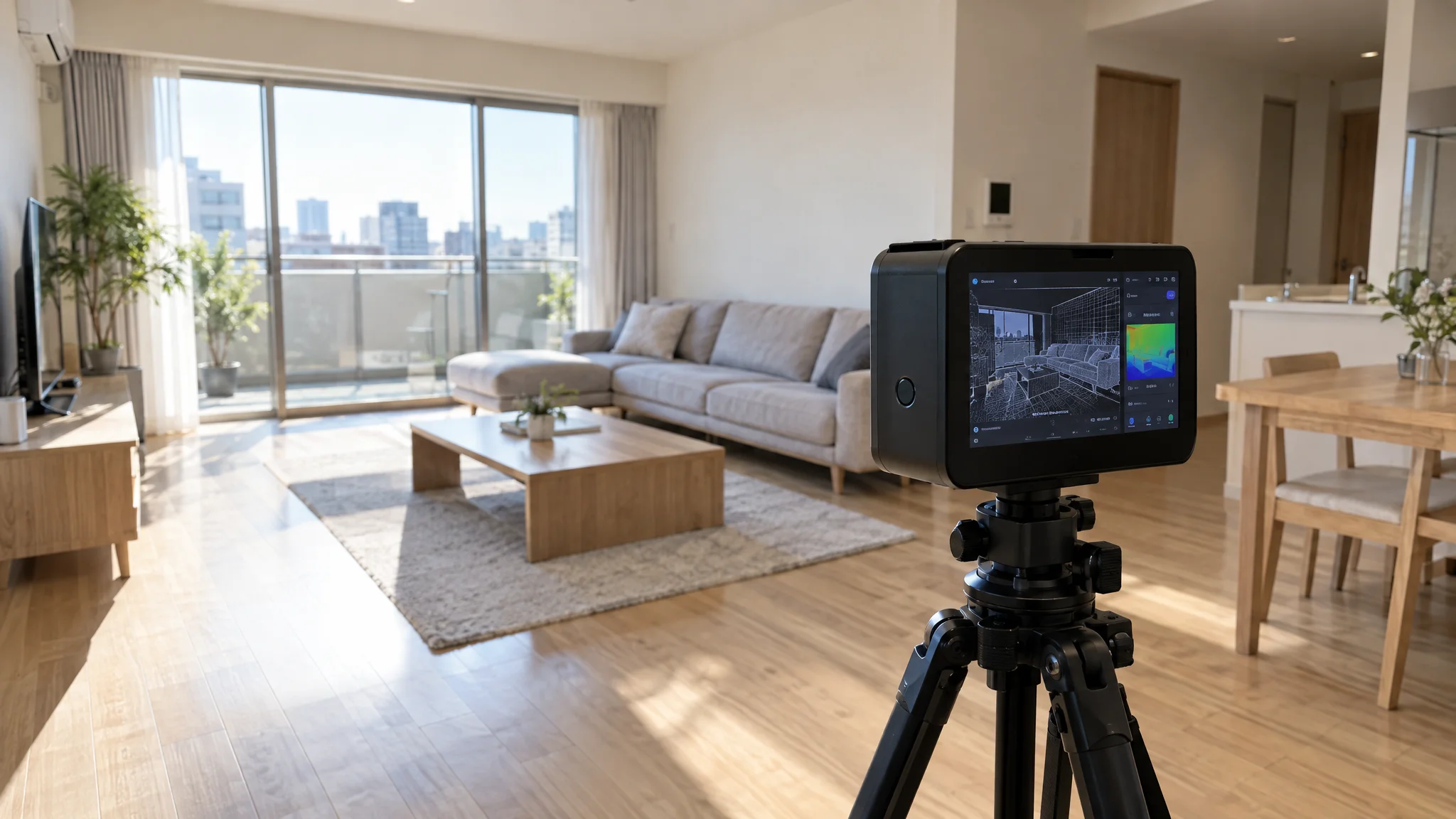
Table of Contents (Click to expand/collapse)
1. The Power of "Digital Truth" to Eradicate Move-out Cost Disputes
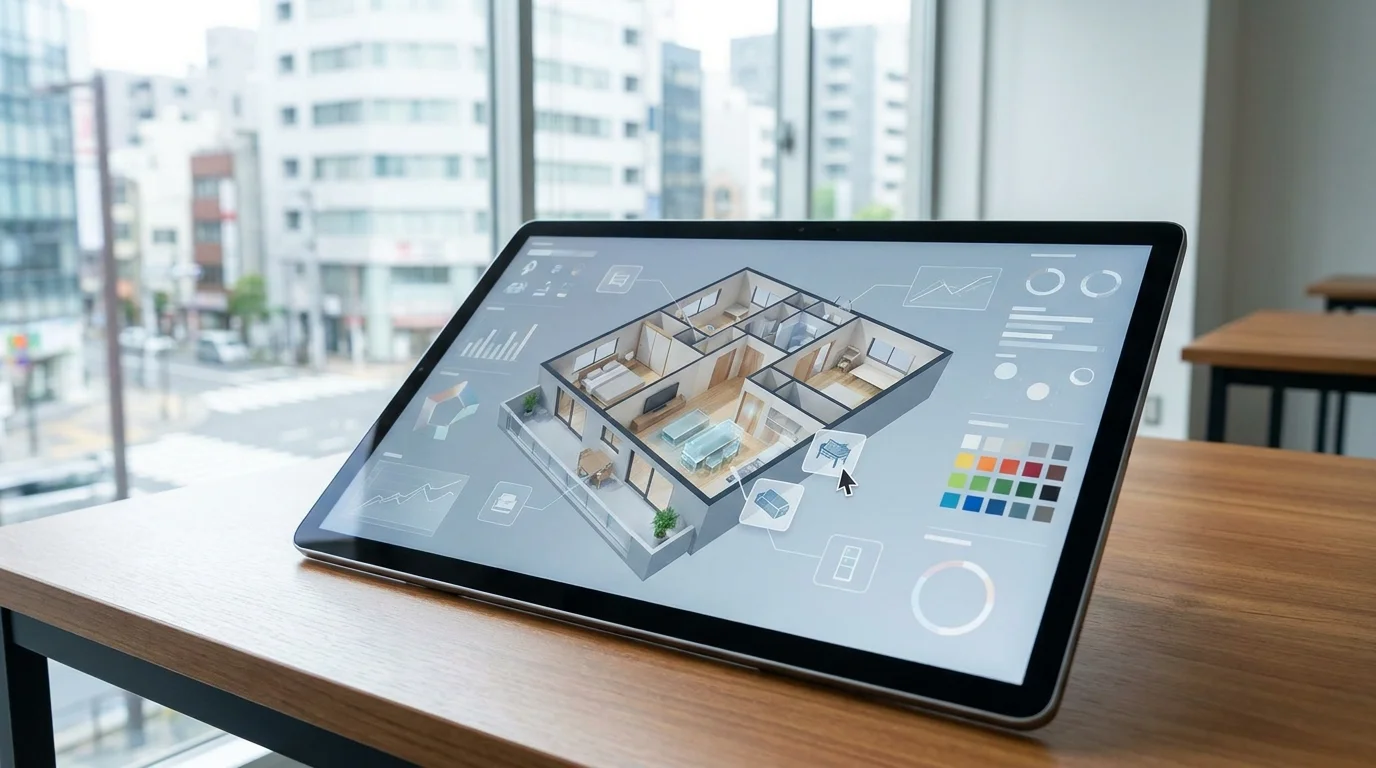
The most unproductive time we witness during on-site support is the back-and-forth during move-out inspections: "This scratch was here when I moved in," versus "No, it wasn't." Conventional still images often lacked evidentiary value because they could only be viewed from specific angles. However, 3D scans performed before move-in simultaneously capture spherical panoramic images and high-precision point cloud data. This creates "unalterable evidence" that allows anyone to zoom in and inspect any location at a later date.
In our actual support projects, we have observed that sharing these 3D records on the cloud as part of the lease agreement increases tenants' psychological awareness of "renting," which in turn tends to reduce damage caused by negligence. Increasing information transparency does more than just avoid disputes; it directly leads to stronger governance for maintaining the asset value of the property. The introduction of such digital technology shares the same philosophy as the "optimization of user experience" cultivated in our In-house EC Construction and Growth Support—namely, the process of eliminating opacity and building trust.
2. Dramatic Efficiency Gains in Management Operations Driven by AI Analysis
A common inefficiency in the field is management staff spending an entire day just organizing hundreds of photos. 3D scan data is not merely image data; it is "numerical data with coordinates." By integrating this with the latest AI models, it is now possible to automatically cross-reference data from before move-in and after move-out to automatically detect peeling wallpaper or floor dents. This prevents human oversight and allows for the presentation of objective criteria.
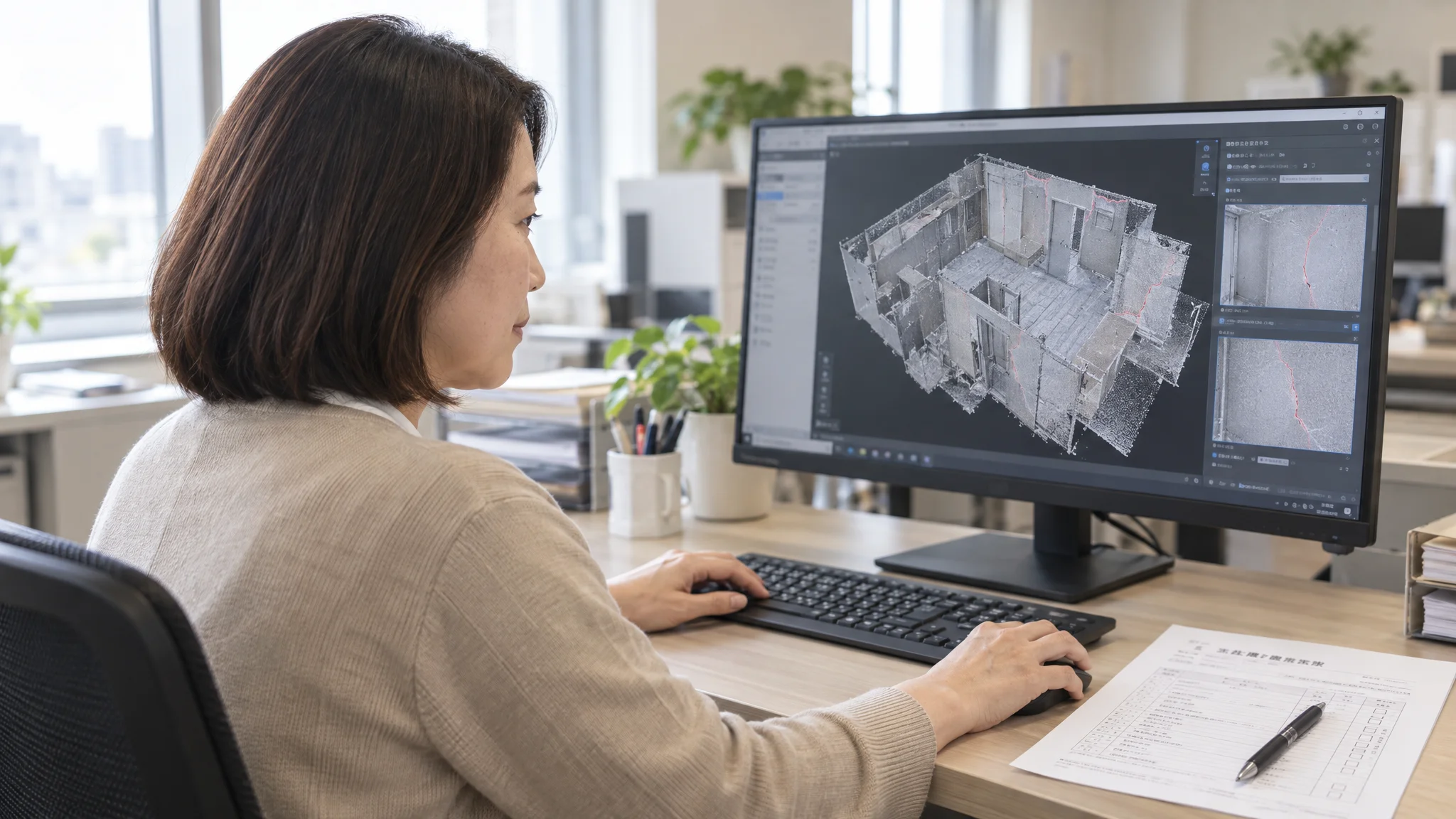
Furthermore, this data contributes to improving the accuracy of repair estimates. Since dimensions can be measured on-screen and precise repair scopes can be communicated to contractors without multiple site visits, lead times are shortened and costs are reduced simultaneously. For example, just as data-driven inventory management is used in In-house EC Construction and Growth Support, "spatial quantification" is the key to unlocking operational excellence in real estate management.
3. The Future of Property Management Utilizing 3D Data
The value of 3D scan data goes beyond dispute resolution. The accumulated high-precision spatial data can be used for virtual viewings, furniture layout simulations, and as foundational material for future renovation plans. PropTech (Property Technology) lies in creating digital twins of physical assets and increasing the fluidity of information.
In our actual support work, we have seen secondary benefits where properties equipped with complete 3D records improve their closing rates because they can demonstrate a "sincere management system" to prospective tenants. Especially for digital natives, primarily Gen Z, contract transparency is a crucial criterion for choosing a property. A system capable of presenting perfect evidence will be the greatest competitive advantage in real estate management from 2026 onwards.

FAQ
- Q. How long does it take to perform a 3D scan?
- A. For a typical 1LDK (approx. 40 sqm) property, it takes about 30 minutes to an hour, including preparation. Operation of the specialized equipment is increasingly automated, making it easy for on-site staff to handle.
- Q. Should the captured data be shared with the tenant?
- A. Yes, it is highly recommended. By mutually reviewing and agreeing on the "condition at move-in" via the cloud at the time of contract, you can lower psychological barriers at move-out and enable smooth security deposit settlement.
- Q. How should we think about the Return on Investment (ROI) relative to the implementation cost?
- A. When you combine the reduction in labor costs for dispute resolution, improved accuracy of repair estimates, and the effect of shortening vacancy periods, the system implementation cost can often be recovered within one year.
Take Your Real Estate Management to the Next Generation with Digital
Talk to us for a free strategy consultationSummary
Pre-occupancy documentation via 3D scanning is a breakthrough solution that fundamentally addresses "information asymmetry" in real estate leasing. Spherical imagery and point cloud data provide objective evidence that eliminates subjectivity, dramatically reducing disputes over move-out costs. Coupled with operational efficiencies gained through AI analysis, this PropTech implementation not only enhances the productivity of management companies but also provides peace of mind to both owners and tenants, making it a strategic investment that maximizes the property's asset value.
Published: October 23, 2026 / By: Osamu Yasuda

Osamu Yasuda
Senior Managing Director & COO
Meets Consulting Inc.
Supported 100+ EC operations & logistics projects; specialist in operations and cost optimization
Related Articles
References
- [1] Ministry of Land, Infrastructure, Transport and Tourism "Guidelines and Troubles Regarding Restoration to Original Condition"
- [2] Proper Execution of Management Operations Based on the Rental Housing Management Business Act