

[2026 Update] ROI of Generative AI-Powered Virtual Home Staging: Cost-Benefit Analysis vs. Traditional CG Production
In the real estate brokerage and management industry, "home staging"—which highlights a property's appeal—has become an essential strategy. However, moving in physical furniture requires significant costs and setup time, and traditional 3DCG production typically costs tens of thousands of yen per image with a lead time of several days. As of 2026, virtual home staging utilizing Generative AI is reshaping this landscape. This article provides a MECE analysis of the return on investment (ROI) of AI implementation from the perspectives of cost, lead time, and closing rates, presenting a next-generation real estate DX strategy.
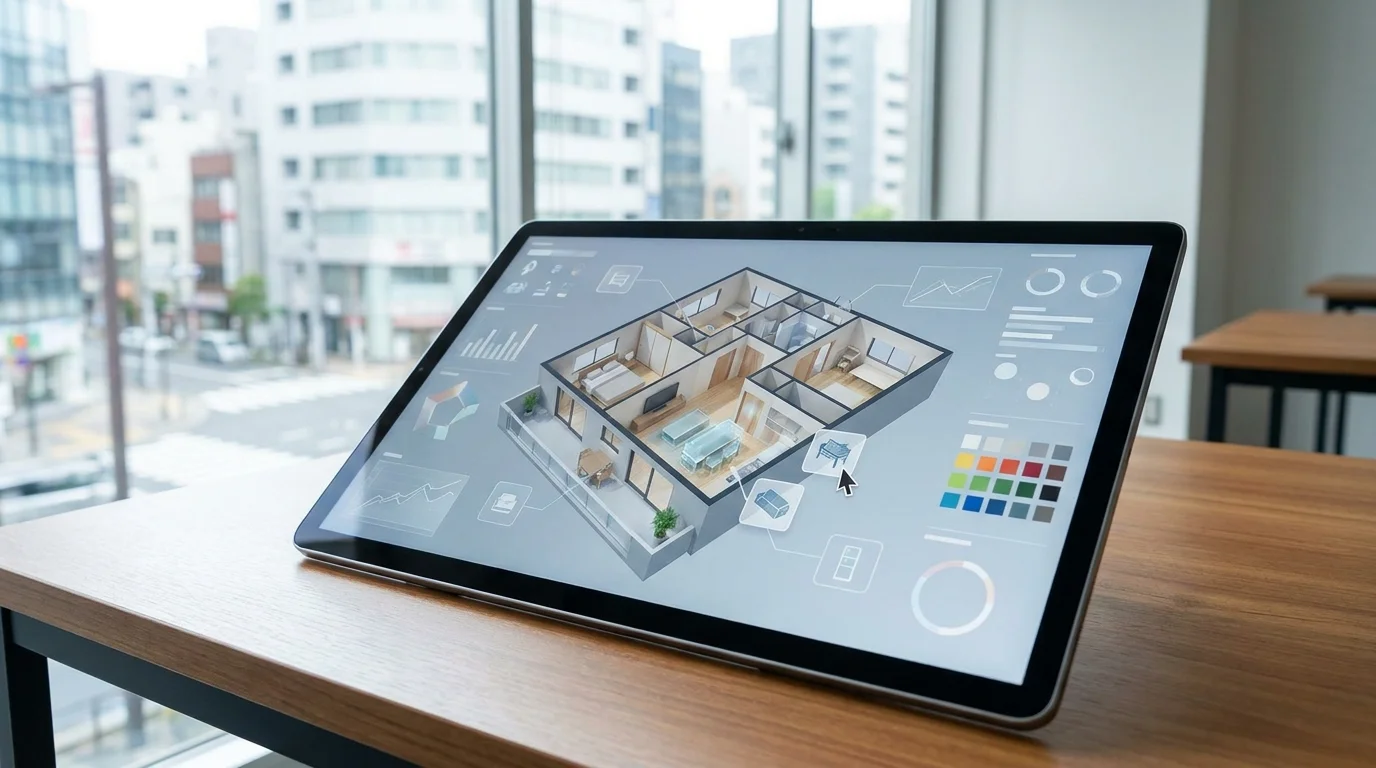
Table of Contents (Click to open/close)
1. Cost Structure Comparison: Traditional CG Production vs. Generative AI
Traditional virtual home staging involved professional designers using tools like 3ds Max or Maya to perform modeling over several days. In contrast, the latest generative AI models instantly analyze the structure of "walls, floors, and ceilings" from photos of vacant rooms and automatically arrange furniture in minutes to match the scale of the space. This technological leap has not only improved operational efficiency but has also led to a dramatic reduction in production costs.
As the data above shows, leveraging generative AI can reduce production costs by approximately 95%. This has realized the "democratization of staging," enabling the full application of home staging—previously limited to high-value properties for sale—to rental units and small-scale properties prior to renovation.
2. Quantitative Impact on Cost Per Acquisition (CPA) and CVR
The true value of AI-powered virtual home staging lies in its performance as an advertising creative. Compared to listing only photos of empty rooms, photos with AI-placed furniture have been shown to increase click-through rates (CTR) on portal sites by an average of 1.8 times. Furthermore, when combined with VR tours, user dwell time increases, leading directly to a reduction in cost per acquisition (CPA).
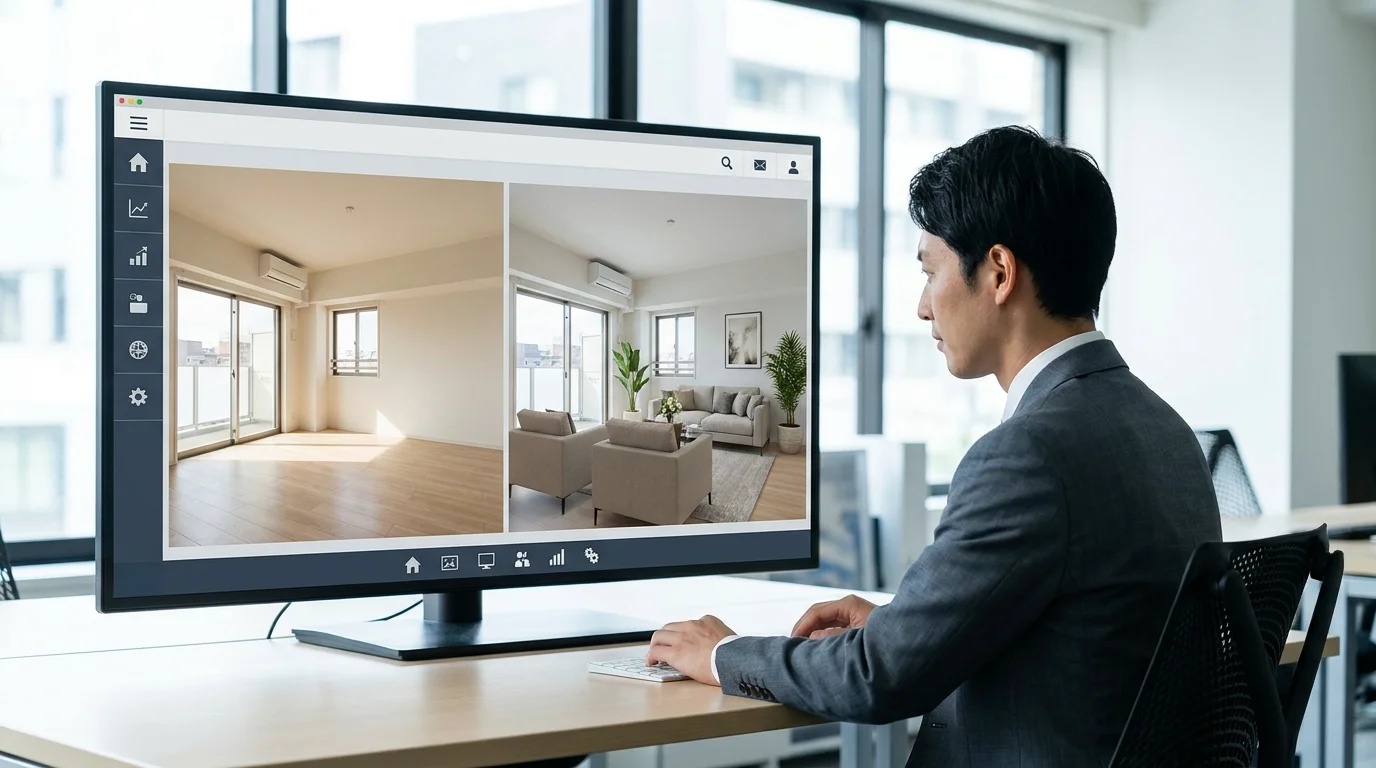
In particular, AI can instantly generate multiple interior patterns tailored to target demographics—such as "Scandinavian," "Japanese Modern," and "Industrial"—making it possible to rapidly iterate through A/B testing. The ability to select visuals that resonate with specific personas based on data is a benefit that was impossible with traditional manual production.
3. Avoiding Opportunity Loss by Shortening Time-to-Market
In real estate brokerage, the first week after a property is listed is the most critical. With traditional CG, properties often go live while waiting for production, risking the period of peak traffic being spent with "unappealing photos of empty rooms." Generative AI enables on-the-spot generation after photography, minimizing time-to-market and helping to shorten vacancy periods.
From the perspective of return on investment (ROI), one should account for not only the reduction in production costs but also the "early realization of rental income" achieved by shortening the time to closing. Reducing the vacancy period by one month represents an ROI improvement of several hundred thousand yen. AI-powered virtual home staging has evolved beyond a simple image creation tool into an asset management optimization tool.
FAQ
- Q. Are there any inconsistencies (unnaturalness) in furniture renderings created with generative AI?
- A. In the latest models as of 2026, lighting reflections, shadow casting, and texture quality are generated based on physics-based rendering, reaching a level where even professionals find it difficult to distinguish them from actual photography.
- Q. Are there any issues regarding copyright or the Act against Unjustifiable Premiums and Misleading Representations?
- A. Since AI-generated furniture consists of "conceptual designs" that do not imitate specific brands, the risk of design right infringement is extremely low. However, from a compliance standpoint, it is important to appropriately include disclaimers such as "*Image is for illustrative purposes only" when running advertisements.
- Q. Are advanced IT skills required for implementation?
- A. Many SaaS tools are now available, allowing you to complete the process simply by uploading a photo and selecting your desired style. Even sales representatives in the field can operate them in about five minutes.
AI Strategies to Accelerate Real Estate DX
We offer free, concrete simulations on maximizing ROI through the utilization of AI.
Talk to us for a free strategy consultationSummary
Virtual home staging powered by generative AI is a revolutionary solution that reduces costs by over 90% and shortens lead times to minutes compared to traditional CG production. It does more than just create "pretty pictures"; it delivers tangible ROI by lowering CPA, improving CVR, and shortening vacancy periods. In the real estate market from 2026 onwards, whether or not this technology can be integrated into standard workflows will be the watershed moment that determines the competitiveness of brokerage and management companies.
Published: June 10, 2026 / By: Osamu Yasuda

Related Articles


References
- [1] Real Estate Tech Trends 2026: Generative AI in Property Marketing
- [2] Analysis of Virtual Staging Impact on Time-on-Market (National Association of Realtors)