

[What is EC AI Utilization? 3 Automation Phases Owners Aiming for 100M Yen Annual Sales Should Introduce]
To break through the wall of 100 million yen in annual sales in the EC business, it is essential for owners to convert their own "working time" into "strategic time." The key there is automation of operations through "EC AI Utilization." In this article, we define AI not merely as a tool, but as a strategic partner to break away from a labor-intensive model to a knowledge-intensive model, and explain the three phases you should introduce.

Table of Contents (Click to expand/collapse)
What is EC AI Utilization? Definition and Impact on ROI
EC AI utilization does not mean simply using ChatGPT. It refers to incorporating machine learning and natural language processing (NLP) into the respective processes of "customer attraction," "customer service," and "logistics" in EC operations, and simultaneously achieving improved accuracy of decision-making and reduction of operational costs.
Especially in the phase of aiming for 100 million yen in annual sales, resources tend to be exhausted. The ROI (Return On Investment) from introducing AI manifests not just in simple reductions in personnel expenses, but in the form of improved CVR (Conversion Rate) through 24/7 immediate responses.
Phase 1: Automation of Customer Service via NLP
The first thing to tackle is the automation of customer support. The latest AI chatbots use NLP (Natural Language Processing) to accurately understand customer intentions such as "I want to know the sizing" or "I want to check the delivery status."

With this, it becomes possible to automate about 80% of inquiry handling. Details are also explained in "Case Study of 80% Man-Hour Reduction via AI Chatbot Introduction", but allocating the freed-up time to new product development and advertising strategy planning is the shortcut to an annual turnover of 100 million yen.
Phase 2: Mass Production of Creatives via Generative AI
The next step to undertake is the generation of product descriptions and ad banners. In an EC site that develops a wide variety of products, it is difficult to apply high-quality copywriting to all products, but if you utilize generative AI, you can instantly create SEO-optimized meta descriptions and product description text.
Especially in mall operations, keyword placement mindful of search algorithms is important. By combining an AI-utilized "2026 Semantic SEO Strategy", you can build traffic channels that do not rely on ad spend.
Phase 3: Demand Forecasting and Inventory Optimization
The final phase is demand forecasting using AI. By multi-dimensionally analyzing past sales data, seasonality, and trends, it calculates the optimal order quantity. Excess inventory squeezes cash flow, and stockouts lead to opportunity loss.
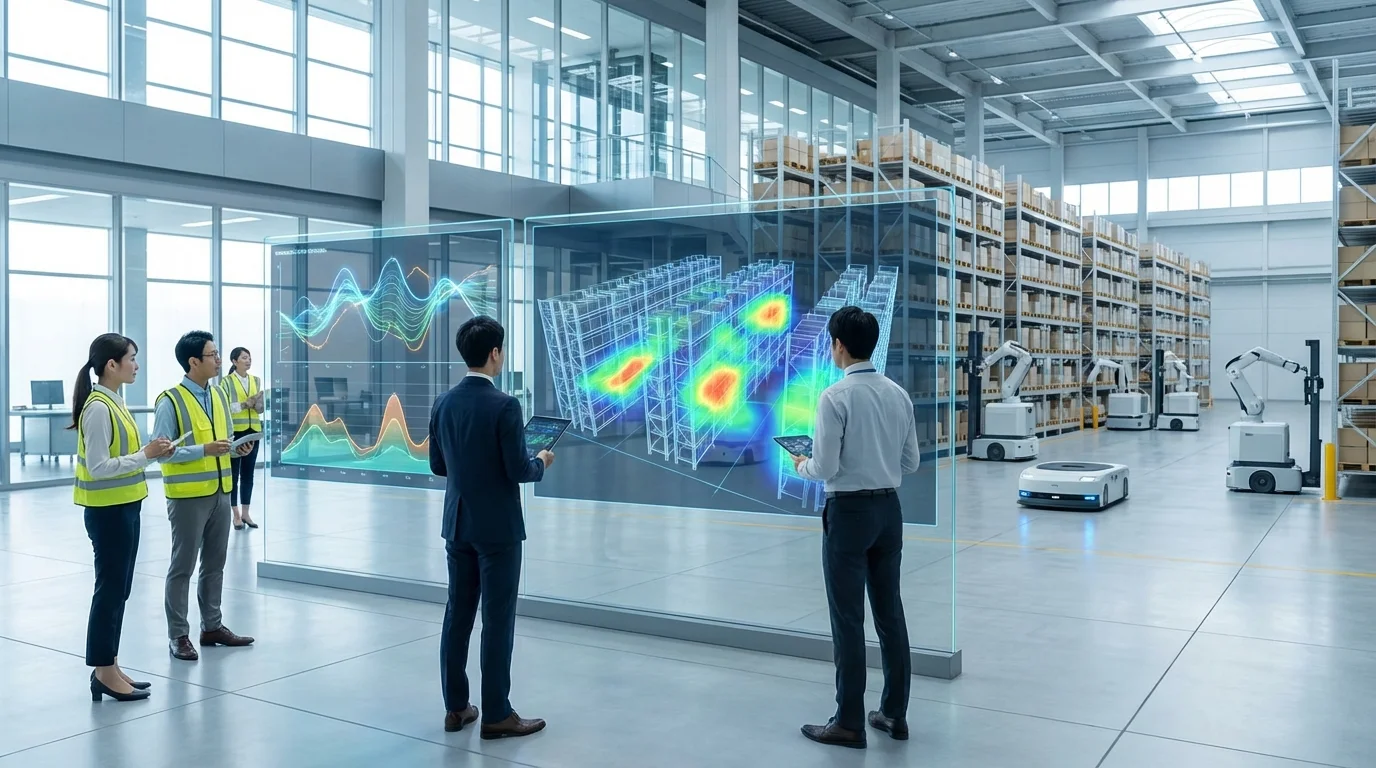
For the sophistication of AI inventory management, refer to "AI Redefining Safety Stock". Data-driven inventory operations are precisely the key to maximizing operating profit margins.
Frequently Asked Questions
- Q Q. Are there merits to introducing AI even for small-scale EC sites?
- A. Yes, they are very large. Especially for small-scale owners with limited resources, entrusting routine work to AI creates an environment where they can focus on strategic tasks directly linked to sales.
- Q Q. Won't introducing AI lower Customer Experience (CX)?
- A. If designed appropriately, it will actually improve. 24/7 zero-wait responses and personalized proposals optimized for individual customers provide a level of CX impossible to achieve manually.
Take Your EC Business to the Next Stage
Our expert consultants will propose a roadmap for business efficiency and sales maximization through AI utilization.
Consult on Strategy for FreeSummary
AI utilization in EC is no longer a "convenient tool to have," but an essential strategy for survival. Customer support, creative production, and demand forecasting. Sequentially automating these with the spirit of MECE (Mutually Exclusive, Collectively Exhaustive) will lead to annual sales of 100 million yen and scaling beyond that. Start by taking inventory of your company's business flow and prioritizing where AI should be substituted.
Published: 2026/3/24 / Author: Osamu Yasuda

Read Also


References
- [1] Ministry of Economy, Trade and Industry: "Market Survey on Electronic Commerce"
- [2] McKinsey & Company "The economic potential of generative AI"