

[2026 Latest] Improving CX with 3D Scanning: Real-Time Proposal-Based Sales with On-Site Visualization
In on-site surveys for housing equipment and renovations, "revisits due to forgotten measurements" are the single biggest factor significantly reducing sales productivity. However, in the support field as of 2026, 3D scanning surveys utilizing the LiDAR scanner on iPad Pro have become commonplace, and this issue is becoming a thing of the past. In this article, we will explain specific methods for real-time proposal-based sales that not only bring back perfect data in a single visit but also dramatically improve CX (Customer Experience) by visualizing and presenting the finished image to the customer on the spot.
1. How to Bring Back a "Digital Twin" to Eliminate Revisit Costs
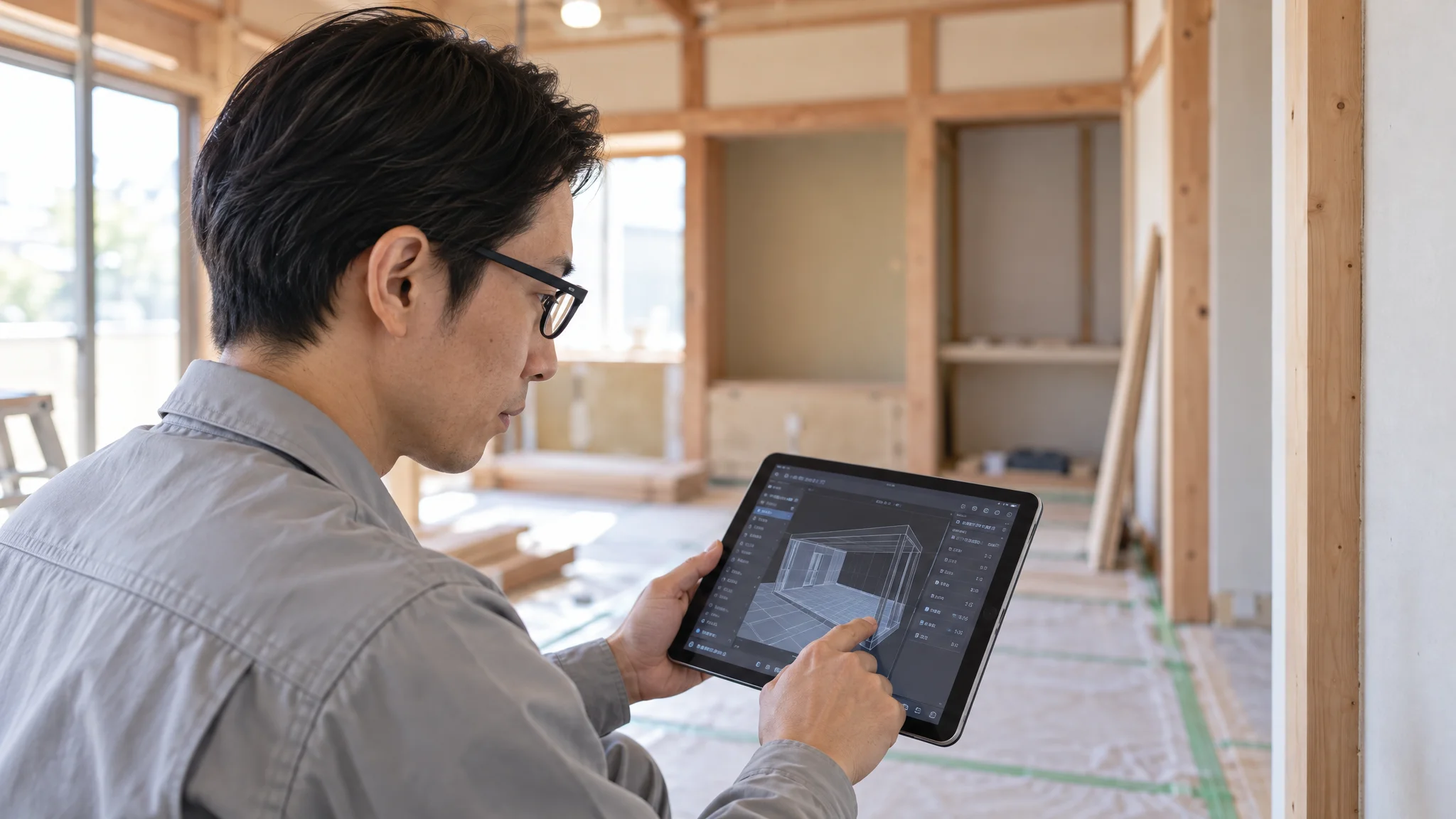
A common occurrence at actual support sites is that even veteran representatives are forced to revisit before creating a quote because they "forgot to measure a beam protrusion" or "forgot to check the location of an outlet." This leads not only to a loss in labor costs but also to critical mistakes that damage customer trust.
By utilizing LiDAR-equipped devices, it is possible to scan an entire space in minutes and bring it back as a "digital twin" with millimeter-level precision. Even if you later think, "I want to know the dimensions of that corner," you can re-measure it on the digital model while staying in the office, eliminating the need for a physical revisit. This reliability serves as a powerful weapon to reduce return risks when considering the sale of large furniture or housing equipment in Own EC Site Construction & Growth Support.
2. Data Integration Systems That Reduce Quote Lead Times by 80%
At many support sites, it is not uncommon for companies to take over a week from the on-site survey to the submission of a quote. The cause of this delay lies in the process of "transcription and interpretation"—taking handwritten notes, converting them to CAD, and selecting components. By utilizing 3D scan data, this process can be automated or significantly simplified.

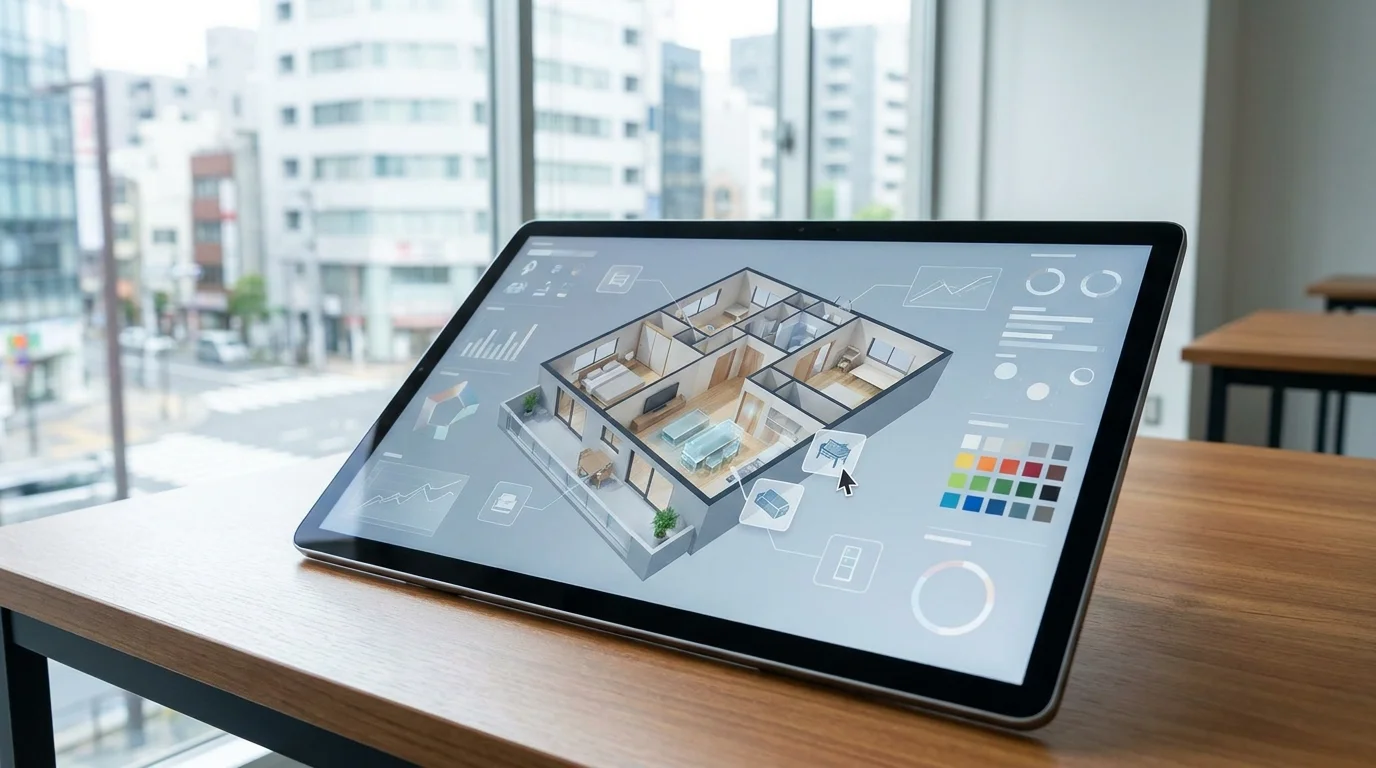
Scanned 3D models can be directly integrated with BIM software and quote simulators. Since the headquarters' design team or an AI quoting system can start working in parallel the moment the scan is completed on-site, it becomes possible to send a quote to the customer as early as the same day. The speed of delivering a precise quote while competitors are still struggling with handwritten drawings is the decisive factor that determines the closing rate.
3. CX Maximization Strategies Through "On-Site Visualization" That Move Customers
The greatest benefit of the latest 3D scanning technology is not just efficiency, but the transformation of the "Customer Experience (CX)." Many customers cannot concretely imagine how their home will change with only 2D drawings or catalog photos, and they postpone their decisions due to uncertainty.
The "AR (Augmented Reality) proposal," which overlays data for new kitchens or wallpaper onto the 3D model scanned on the spot, instantly turns customer anxiety into anticipation. By interacting while showing a full-scale digital model and saying things like, "If we place this here, this much aisle width will remain," the speed of consensus-building increases dramatically.

Such advanced digital experiences also serve as the cornerstone of OMO (Online Merges with Offline) strategies that connect physical stores and online platforms, even in the context of Own EC Site Construction & Growth Support. A system that saves the moving experience on-site as digital data in the customer's My Page, allowing them to review it with their family later, will be an overwhelming differentiator.
FAQ
- Q. Is the accuracy of 3D scanning at a level that can withstand renovation quotes?
- A. Yes, by combining the latest LiDAR-equipped devices with dedicated apps, you can ensure accuracy within a range of a few millimeters to about one centimeter. While we recommend separate manual measurements for areas requiring structural calculations, the accuracy is sufficient for general interior and equipment layout simulations.
- Q. How much time is required for staff training upon implementation?
- A. The operation itself is intuitive, and anyone who can use a smartphone camera can master the basic operations with about half a day of training. Rather, time should be spent on building the workflow for how to utilize the acquired data in sales proposals.
- Q. Do I need to purchase special equipment?
- A. If you have a smartphone or tablet equipped with a LiDAR scanner, you can start without additional hardware. Since there are many high-performance apps available for free, a small start is possible.
Taking Your Sales DX to the Next Stage
We propose strategies that dramatically transform on-site productivity, from 3D scanning utilization to automated estimation.
Talk to us for a free strategy consultationSummary
Forgetting measurements during site surveys or delays in estimation are "debts" that can be resolved with technology. By introducing 3D scan surveys, you can not only eliminate return visits but also maximize customer CX through on-site visual proposals. Building a digital twin simultaneously with measurement and minimizing lead times through "immediate proposal-based sales" is the winning strategy for the future of the housing and equipment industries.
Published: October 21, 2026 / By: Osamu Yasuda

Osamu Yasuda
Senior Managing Director & COO
Meets Consulting Inc.
Supported 100+ EC operations & logistics projects; specialist in operations and cost optimization
Related Articles


References
- [1] Apple Inc. "LiDAR Scanner on iPad Pro and iPhone Pro"
- [2] Meets Consulting "Construction & Real Estate DX Strategy 2026"