

[2026 Latest] Mastering LCP Optimization via Customer Traffic Prediction AI
In many store operations, shift scheduling is the "puzzle task" that causes store managers the most headaches. Traditional shift management relied on vague data such as manager intuition or "year-over-year" comparisons, making it impossible to respond to sudden fluctuations in customer traffic. This led to chronic wasted labor costs due to overstaffing and opportunity losses due to understaffing. In our consulting experience, we frequently see cases where this mismatch in labor allocation squeezes operating profits by several percentage points. This article explores the core of DX that dramatically optimizes LCP (Labor Cost Percentage) by combining the latest AI-driven customer traffic forecasting with automated shift scheduling.

Table of Contents (Click to expand/collapse)
- 1. The Reality of "Hidden Labor Cost Leakage" Driven by Rules of Thumb
- 2. Dramatic LCP Improvement Driven by Customer Traffic Forecasting AI x Automated Scheduling
- 3. Implementing an Algorithm to Eliminate "Puzzle Tasks" for Store Managers
- 4. Three Steps to Successful Frontline-Led Digital Transformation
1. The Reality Behind "Hidden Labor Cost Leakage" Caused by Rules of Thumb
"It seems like it might get busy, so let's schedule one extra person." Such well-intentioned decisions made on the ground can lead to a massive increase in costs when they accumulate. In our actual consulting projects, we frequently see cases where more staff than necessary are assigned during idle periods outside of peak hours when comparing the shifts created by store managers with actual customer traffic trends.
For companies operating multiple locations, "personalized management"—where Store A is profitable while Store B runs a deficit due to excessive labor costs caused by varying skill levels among managers—often becomes a significant challenge. To address this, it is essential to implement demand forecasting models that perform multi-faceted analysis of not only historical POS data but also local event information, weather data, and day-of-the-week characteristics.
2. Dramatic LCP Improvement Through Customer Traffic Prediction AI and Automated Scheduling
The true value of AI-driven customer traffic forecasting goes beyond mere numerical calculation. It lies in automatically calculating the required workload (MH: man-hours) based on the forecasted traffic and generating optimal shifts that account for staff skills and working conditions.
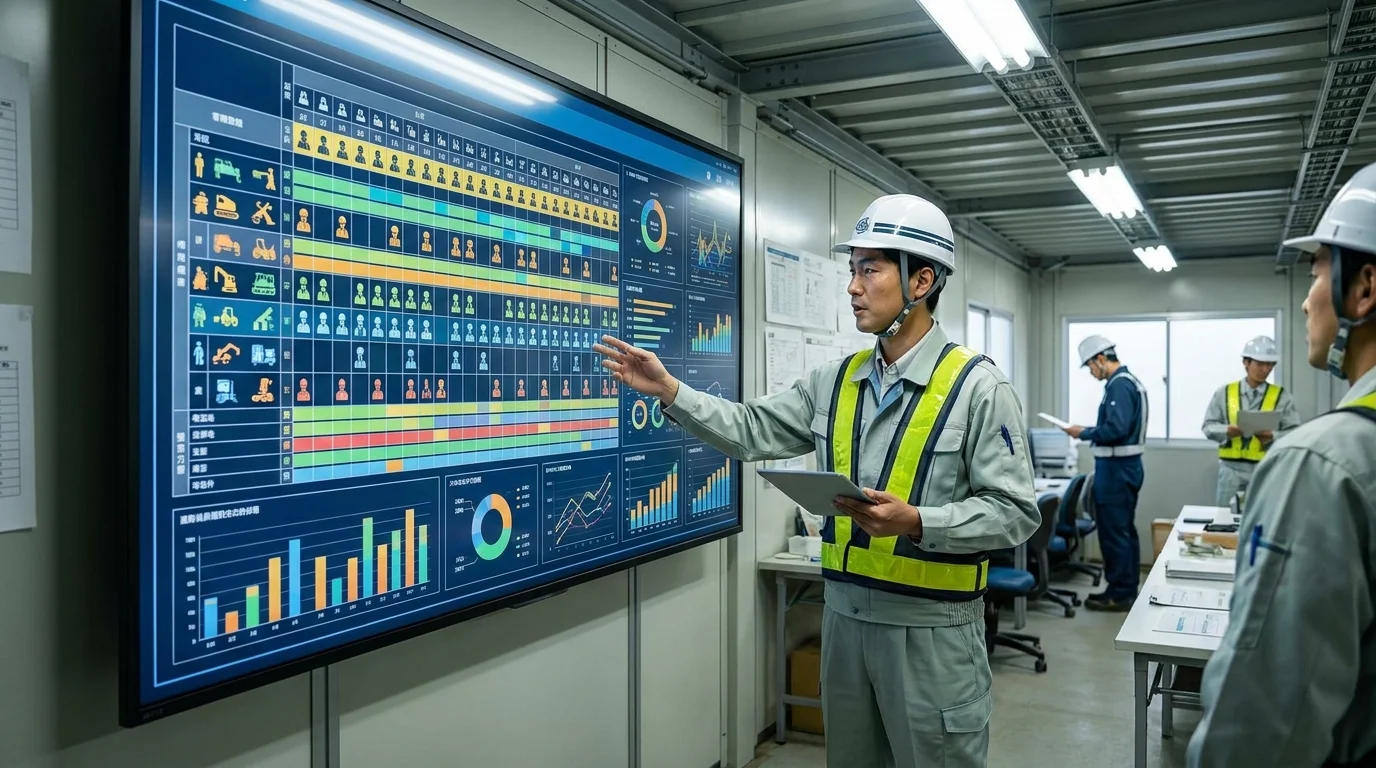
As the data above demonstrates, precise labor allocation using AI allows for keeping LCP below the industry average. In our consulting engagements, we recommend a strategy of reinvesting the resulting cost savings into service quality improvements and funding the expansion of new sales channels through support for building and growing your own EC site.

3. Implementing an algorithm to eliminate "puzzle tasks" for store managers
The "puzzle-like task" of shift scheduling, which store managers used to spend several hours on each week, is a low-value-added task that should be automated by AI. The latest automated shift scheduling engines can incorporate not only headcount requirements but also variables such as staff "proficiency levels" and "compatibility."
A common occurrence on the front lines is pushback against AI-generated shifts, with claims that the system "doesn't understand the reality of the workplace." However, through our actual support projects, we have realized that the key lies in UI/UX design that integrates the "theoretically optimal solution" provided by AI with the "experience of the store manager." Store managers only need to make minor adjustments to the foundation established by the AI, allowing them to redirect their freed-up time toward staff training and improving CX (Customer Experience).
4. 3 Steps to Successful Front-line Led DX
To successfully implement customer traffic prediction AI, the following three steps are essential.
- Data Cleansing: Flag missing POS data and outliers (special demand) to improve AI training accuracy.
- Small Start: Conduct a PoC (Proof of Concept) at specific flagship stores to quantitatively demonstrate the degree of LCP improvement.
- Linking with the Evaluation System: Incorporate shift compliance rates and LCP optimization into store managers' evaluation metrics to make system usage a habit.
A common failure in the field is simply implementing a tool and stopping there. As part of an OMO strategy that integrates physical stores and digital channels, company-wide data integration—such as feeding customer behavior data obtained from Own EC Site Construction and Growth Support back into AI forecasting for physical stores—will become the standard from 2026 onwards.

FAQ
- Q. What level of accuracy can be expected for customer count forecasting?
- A. Based on our support track record, when three years of historical data are available, achieving over 90% accuracy in daily forecasts is common. However, sudden natural disasters or competitor store openings require manual adjustments through event registration by human operators.
- Q. How much will the store manager's workload be reduced after implementation?
- A. The time spent on shift scheduling can be reduced by an average of 50% to 80% compared to traditional methods. We recommend allocating the saved time to tasks directly linked to sales, such as improving customer service quality or enhancing store VMD (Visual Merchandising).
- Q. Are there benefits to implementing this in small-scale stores?
- A. Yes. In smaller stores, the weight of labor costs per person is higher, so even a slight overstaffing can squeeze profits. AI-driven optimized placement directly leads to improved operating profit margins, regardless of the store's scale.
Taking your store operations to the next level
Why not eliminate labor cost waste with AI-driven customer traffic forecasting and automated shift creation?
Our consultants, who possess deep on-site expertise, will propose an effective DX plan.
Summary
It is no exaggeration to say that shift scheduling based solely on a store manager's intuition is now a business risk. In 2026 store management, "dynamic labor allocation" based on customer traffic forecasting AI will be the key to optimizing LCP (Labor Cost Percentage) and maintaining competitiveness. Freeing managers from the "puzzle" of scheduling and building an environment where they can focus on creative tasks unique to humans—that is the true purpose of store DX.
Published: September 11, 2026 / By: Osamu Yasuda

Osamu Yasuda
Senior Managing Director & COO
Meets Consulting Inc.
Supported 100+ EC operations & logistics projects; specialist in operations and cost optimization
Related Articles


References
- [1] Ministry of Economy, Trade and Industry "DX Report 2.1": Transformation of Existing Businesses through Digital Technology
- [2] The Japan Society of Labour Economics: Empirical Analysis of AI Implementation and Productivity Improvement in the Service Industry