

[2026 Latest] Optimizing On-site Staffing with AI! The New Standard for Solving Labor Shortages through "Dynamic Skill Management"
In the construction and manufacturing industries, the shortage of skilled workers and the increasing complexity of projects have become serious challenges. Traditional staffing plans, which relied on the "experience and intuition" of site managers and dispatchers, have reached their limits. This is why resource leveling via "Dynamic Skill Matrices" powered by AI is gaining attention. By multidimensionally analyzing individual workers' certifications, past performance, and real-time proficiency to optimize allocation according to the project's critical path, this method dramatically improves on-site productivity. In this article, we delve into the core of how AI is triggering a paradigm shift in staffing planning.
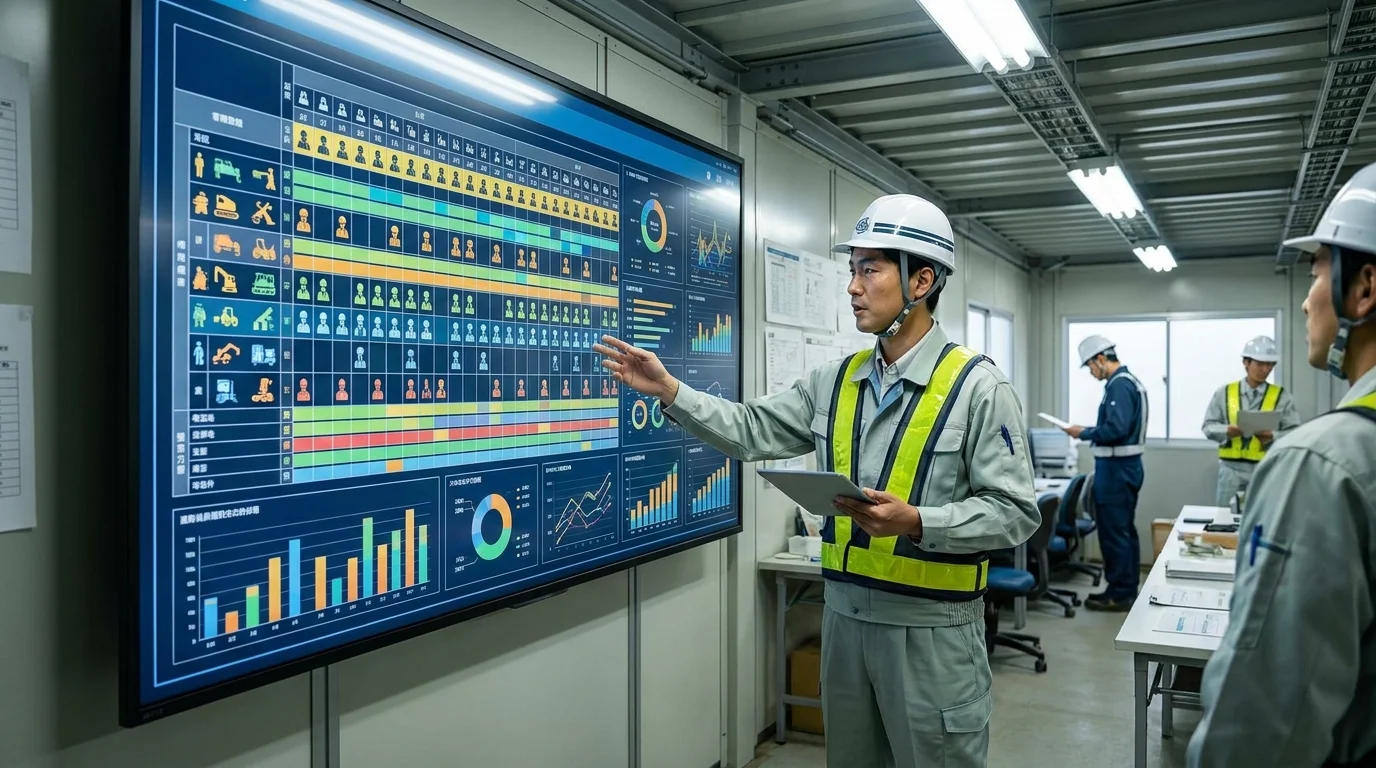
1. Limits of Traditional Staffing Plans and Dynamic Management via AI
In many workplaces, static staffing tables using Excel or whiteboards are still the norm. However, when sudden absences, weather-related delays, or material delivery shifts occur, manually correcting these plans requires an enormous amount of man-hours. Dynamic Skill Matrices powered by AI integrate not only "point" information (such as certifications) but also "linear" information like construction quality and work speed in real-time.
This makes it possible to instantly match workers with the exact skill sets required for the difficulty level of a specific process. By performing simulations on digital twins, the movement toward predicting future resource shortages in advance and automating advance dispatching to subcontractors is also accelerating.
2. AI Algorithms for Optimizing Resource Leveling
The most important aspect of resource leveling is how to distribute "peaks" where the load concentrates during specific periods. The latest AI algorithms combine genetic algorithms and reinforcement learning to derive the solution with the best balance of cost, quality, and lead time from tens of thousands of staffing patterns.
As the data above shows, by introducing advanced AI, the variance (standard deviation) in resource load is reduced by nearly 80% compared to manual planning. This means that cost increases due to on-site "waiting time" or "sudden requests for support" are kept to a minimum.
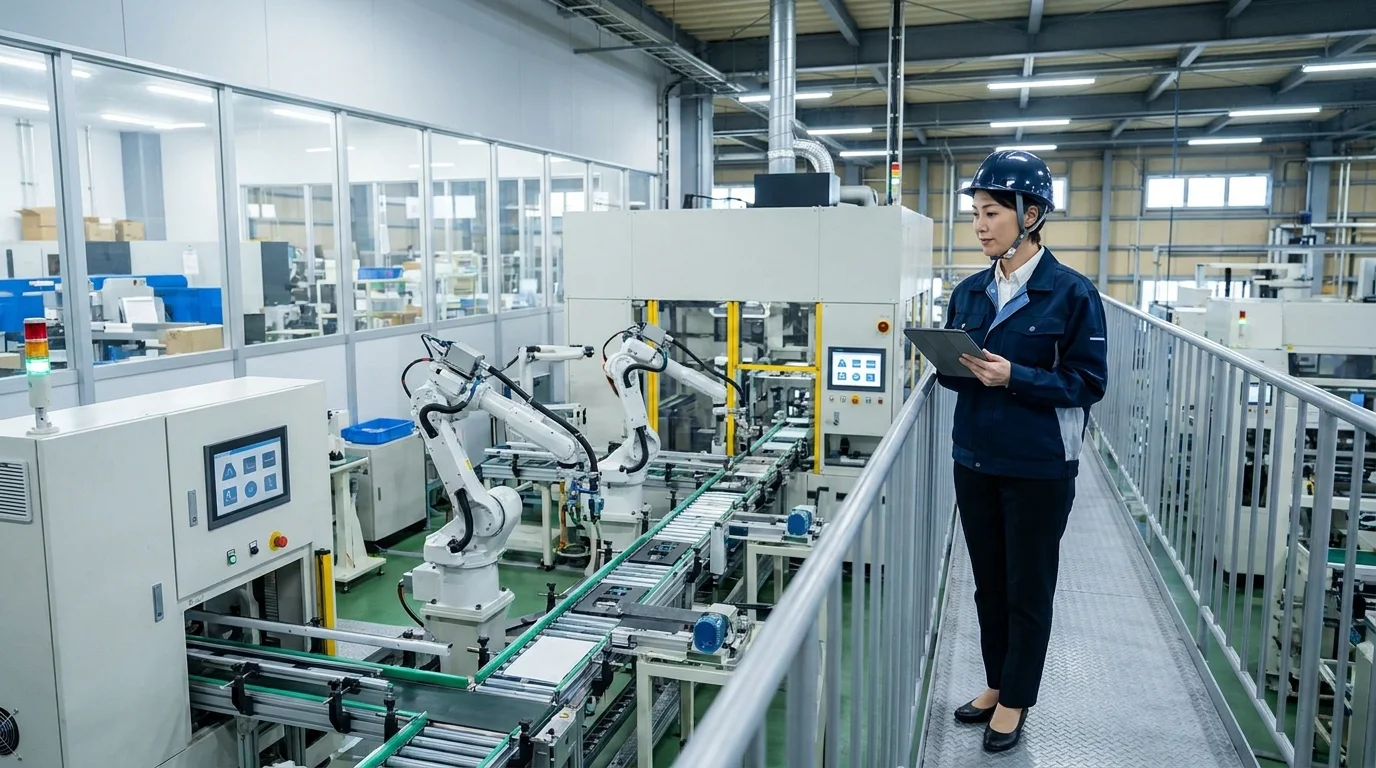
3. Economic Impact of Minimizing Skill Gaps
In worker dispatching, skill mismatches lead directly to risks of rework and accidents. AI recognizes patterns from workers' past construction histories, such as "preferred construction methods" and "compatible team configurations." This allows for driving the skill gap at each site down to its theoretical minimum.
On the economic side, the optimization of travel costs cannot be ignored. AI matching platforms perform dispatching by taking into account the distance between a worker's residence and the site, as well as traffic congestion forecasts, thereby reducing non-productive time associated with travel and contributing to improved profit margins for subcontractors. This is an essential element in building a sustainable construction ecosystem.
4. Automation Roadmap for Dispatching Operations in 2026
Heading toward 2026, staffing planning will shift completely from "something humans create" to "something AI proposes and humans approve." With the evolution of multimodal AI, autonomous agents have emerged that automatically detect progress from on-site voice reports and photos, correcting the next day's dispatching in real-time.
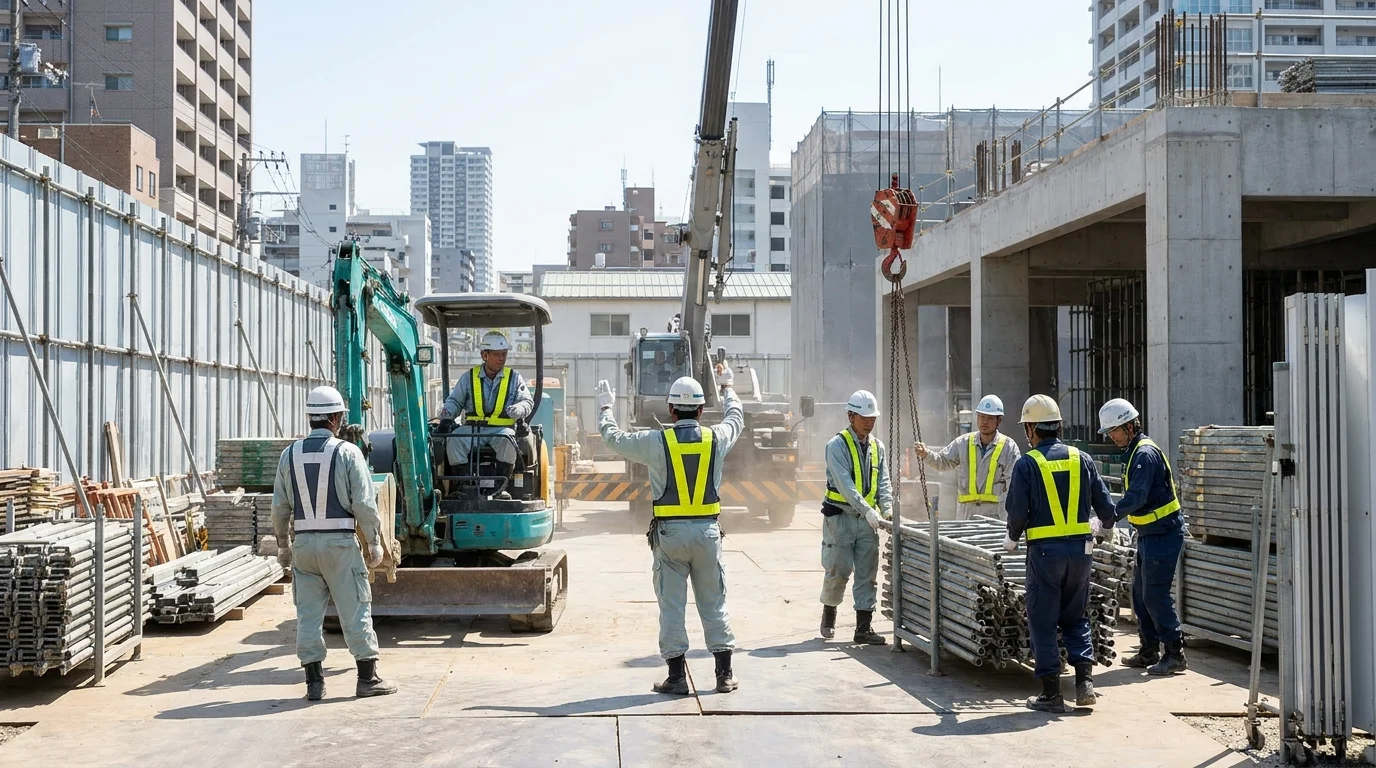
To achieve such advanced automation, there is an urgent need to centralize scattered worker data and introduce standardized skill evaluation axes. Companies that take the lead in digitalization will expand their market share using overwhelming procurement power and cost competitiveness as weapons.
FAQ
- Q. What kind of data is required to implement a Dynamic Skill Matrix?
- A. Data such as basic certifications, past project engagement history, and work completion times for each process is required. By linking this data with attendance management systems and daily report apps via API, high-precision analysis becomes possible.
- Q. Can qualitative factors such as worker "compatibility" or "motivation" be considered?
- A. Yes, by using the latest NLP (Natural Language Processing) to score comments in daily reports and feedback from site managers, it is possible to quantify qualitative factors and incorporate them into the staffing logic.
- Q. Are there benefits to AI-driven optimization even for small-scale sites?
- A. The greatest benefit is realized when performing "wide-area leveling" across multiple small-scale sites. By minimizing travel time for craftsmen and allocating idle time to support other sites, you can boost the overall utilization rate.
Why not optimize your company's dispatch operations with AI?
Our expert consultants offer free advice on staffing strategies in an era of craftsman shortages.
Talk to us for a free strategy consultationSummary
The introduction of AI-driven dynamic skill matrices and resource leveling is more than just an efficiency gain; it is a redefinition of site management. Looking toward 2026, the role of the "Digital Dispatcher"—maximizing the potential of individual craftsmen and eliminating project stagnation—will become increasingly vital. Leverage technological evolution and step into the next generation of staffing planning.
Published: June 24, 2026 / By: Osamu Yasuda

Related Articles

References
- [1] AI and Robot Utilization Roadmap in the Construction Industry: 2026 Edition
- [2] Evolution of Resource Leveling Algorithms and Their Application to Project Management (Engineering Information Journal)