

[2026 Latest] Converting Tacit Knowledge to Explicit Knowledge with AI Video to Accelerate the SECI Model
In Japan's manufacturing and service industries, the "loss of skills due to veteran retirement" has long been a critical management challenge. Tacit knowledge, such as the "intuition" and "knacks" that experts perform unconsciously, simply cannot be reproduced through traditional text-based manuals. However, as of 2026, AI video analysis technology is dramatically changing this situation. Centered on the "SECI Model"—the fundamental framework of knowledge management—this article explains how AI video manual generation eliminates dependency on specific individuals and enhances organizational competitiveness, based on practical insights from the field.

1. The True Nature of Skill Loss: Why Manuals Don't Work
A common sight we encounter during on-site support is: "There is a manual, but no one looks at it, and even if they do, they can't perform the task." This happens because traditional paper or text-centric records strip away crucial "non-verbal information" during the process of converting "tacit knowledge" (individual experience and intuition) into "explicit knowledge" (verbalized knowledge) within the SECI model.
In particular, subtle pressure adjustments, gaze direction, and the timing of decisions lose their essence the moment they are transcribed into text. Actions that veterans can only describe as "doing it by feel" are quantified by AI through skeletal detection and object recognition, then extracted as objective data. As a result, the "master's touch"—previously a black box—is transformed into an asset accessible to everyone.
2. Breakthrough in "Externalization" via AI Video Analysis
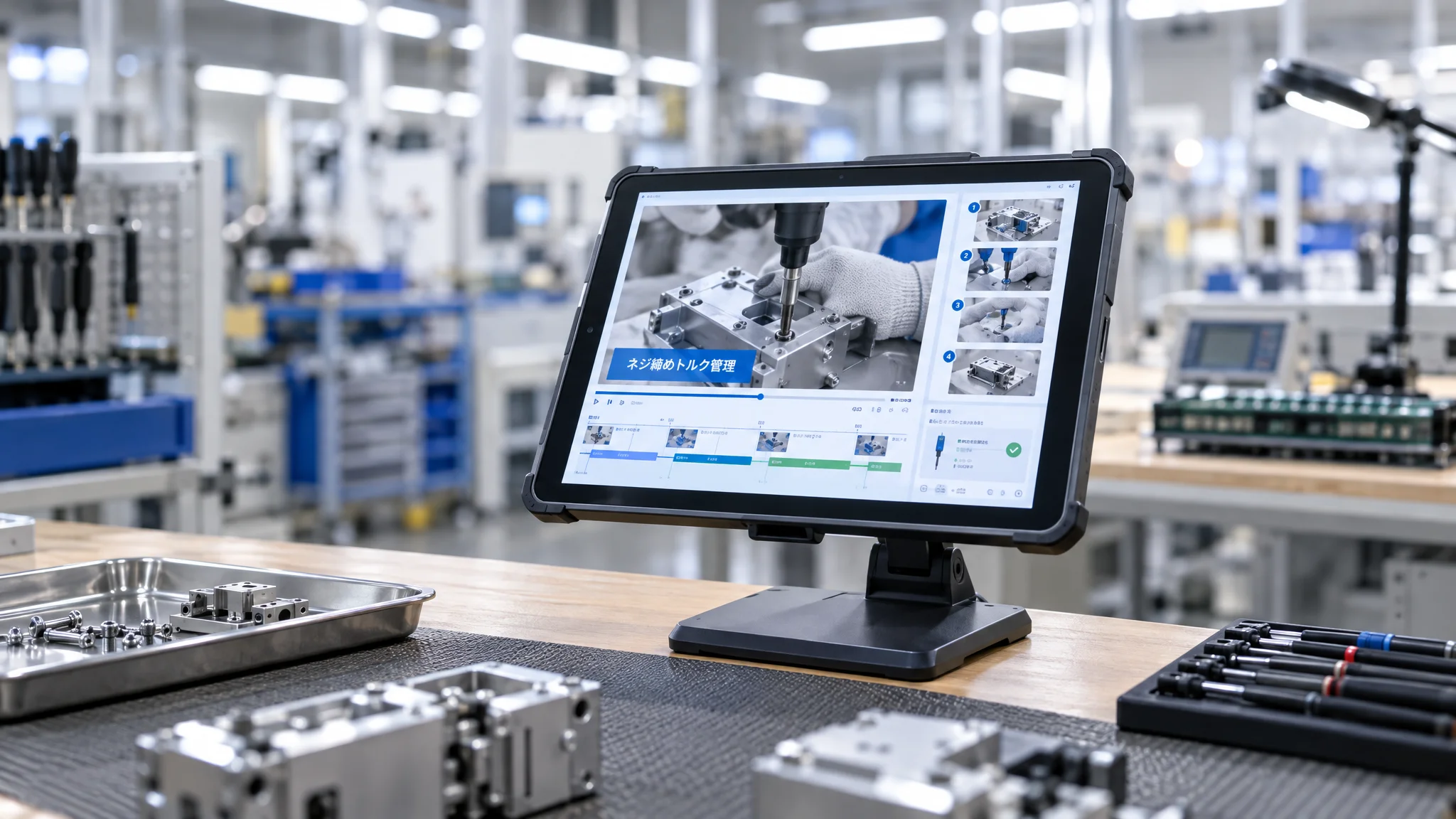
In our actual support projects, we have seen cases where the introduction of AI video manual generation tools reduced manual creation man-hours by up to 80%. AI automatically extracts "meaningful actions" from recorded videos and generates captions and narration. The key here is not just automation, but the "structuring of information" tailored to human cognitive characteristics.
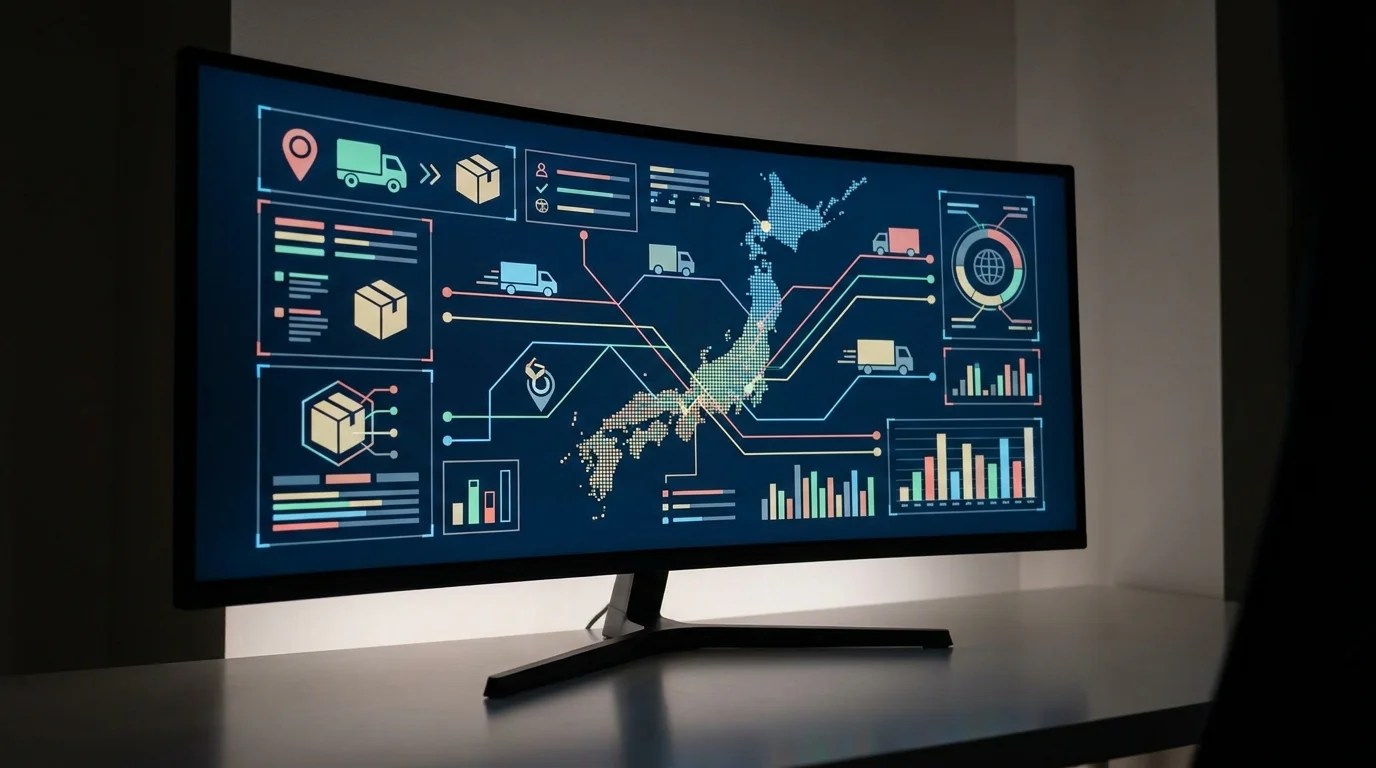
As shown in the graph above, videos structured by AI dramatically improve learner comprehension. This is because AI can highlight the differences between "success patterns" and "failure patterns." Furthermore, in the field of In-house EC Construction and Growth Support, this technology is being applied to standardize packing operations and inspection flows in logistics warehouses, contributing to making new staff members immediately effective.
3. Operational Flow for High-Speed SECI Model Cycles
AI video manuals are not a "one-and-done" effort. The essence of the SECI model lies in the continuous cycle of "Socialization, Externalization, Combination, and Internalization." In our support work, we recommend the following three-step operational flow.
- Socialization: Record a veteran's work "as is" using wearable cameras or similar devices, digitally capturing the experience through the five senses.
- Combination: Combine multiple AI-generated videos to edit and update the optimal "Standard Operating Procedures" (SOPs), integrating them into the organization's knowledge system.
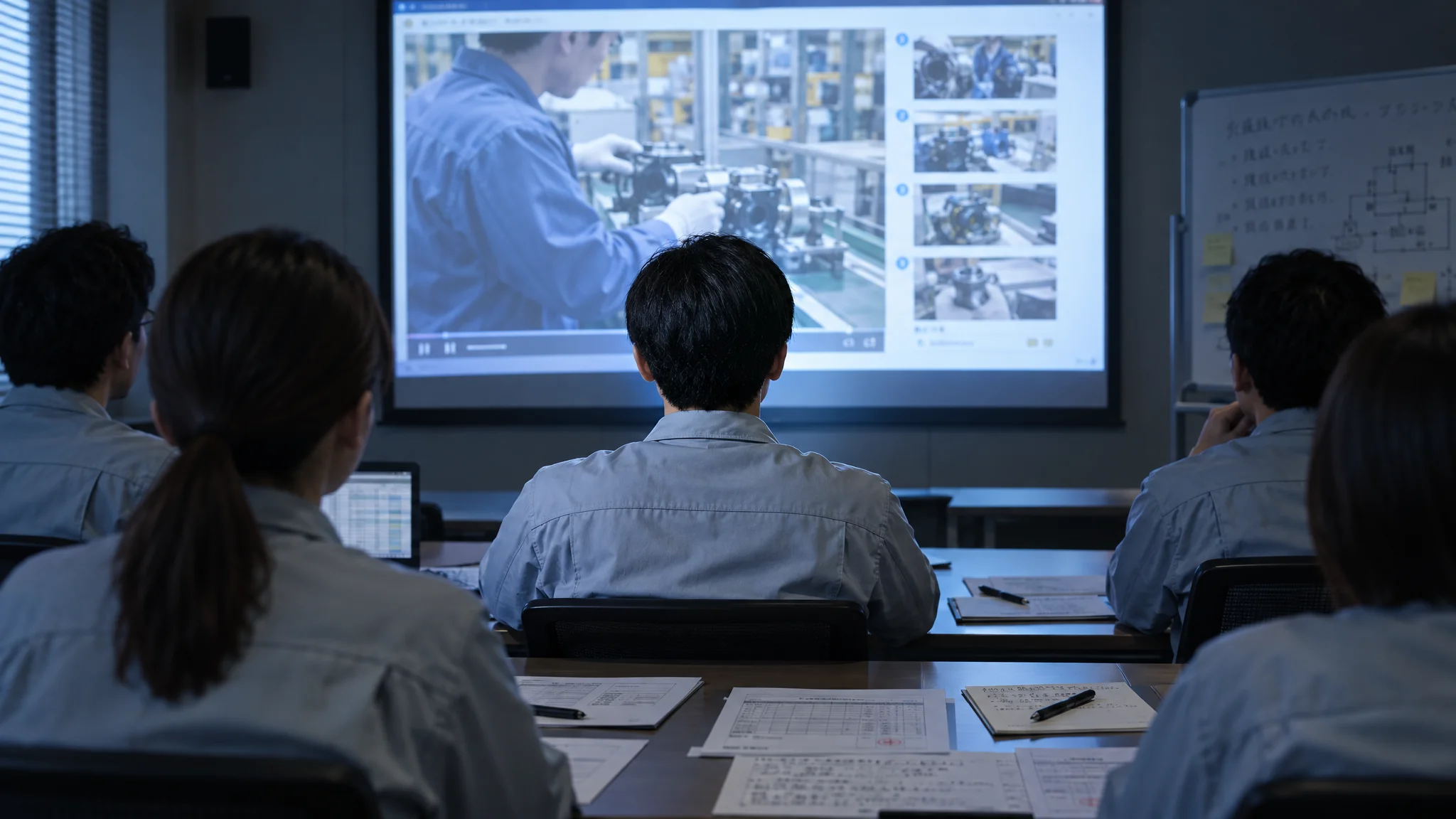
- Internalization: Junior staff practice while watching the videos, comparing their own movements with the AI "model" and receiving feedback to solidify the skill as their own.
By using AI as a "mirror" in this way, junior employees improve their self-correction abilities, raising the overall technical level of the organization. This can be described as an attempt to scale "learning by observation"—traditionally practiced in apprenticeship systems—through the power of digital technology.
4. Organizational Culture and Keys to Adoption After Eliminating Individual Dependency
Even if tools are introduced, they will not take root if the workforce fears their "skills are being stolen." In our actual support, we also design evaluation systems that properly recognize veterans who share their expertise as "Knowledge Leaders." Eliminating individual dependency is not about making specific people redundant; it is about creating an environment where everyone can focus on higher-level decision-making and creative work.
When knowledge is shared and everyone can achieve results above the standard, "psychological safety" is fostered within the organization. The need to hide mistakes disappears, and improvement suggestions based on the videos—such as "wouldn't it be more efficient to do it this way?"—become more frequent. This is the true value that AI video manuals provide.
FAQ
- Q. What measures can be taken for veterans who feel uncomfortable being filmed?
- A. Emphasize that this is "technology succession and preservation" rather than "technology exploitation." An effective approach is to visualize contributions by implementing a system to evaluate those who cooperate with filming and providing feedback on how the created manuals have reduced errors among junior staff.
- Q. Does implementing AI video analysis require expensive equipment?
- A. As of 2026, high-precision analysis is fully possible using commercially available smartphones and tablets. What matters more than equipment specs is fixing the "angle" for optimal analysis and establishing operational rules to link AI-generated results to on-site improvement actions.
- Q. Can this be used in industries other than manufacturing?
- A. Absolutely. It is used in all types of roles where physical movements or screen operations directly impact results, such as customer service, cooking, nursing care, and e-commerce back-office operations. In the field of in-house EC construction and growth support, it is used for sharing lighting techniques for product photography, among other things.
Turn your company's knowledge into assets and eliminate dependency on specific individuals.
We propose specific methods for technology succession and manual standardization using AI video analysis.
Talk to us for a free strategy consultationSummary
To address the challenge of losing veteran skills, AI video manual generation provides a powerful solution: the "visualization of tacit knowledge." By elevating individual skills into organizational explicit knowledge based on the SECI model, it not only reduces training costs but also establishes a sustainable improvement cycle. Breaking away from individual dependency is only achieved through the combination of the latest AI technology and human-centric operational design on the ground.
Published: October 9, 2026 / By: Osamu Yasuda

Osamu Yasuda
Senior Managing Director & COO
Meets Consulting Inc.
Supported 100+ EC operations & logistics projects; specialist in operations and cost optimization
Related Articles


References
- [1] Nonaka, I., & Takeuchi, H. (1995). The Knowledge-Creating Company. Oxford University Press.
- [2] Ministry of Health, Labour and Welfare, "White Paper on Monodzukuri: Current Status and Issues of Skill Succession"
- [3] Ministry of Economy, Trade and Industry, "Digital Transformation (DX) Promotion Guide in the Manufacturing Industry"