

[2026 Latest] Formalizing Construction Knowledge with RAG Architecture: The Optimal Solution for Avoiding Construction Issues
One of the biggest challenges in the construction industry is that past construction trouble cases remain as "tacit knowledge" within individual experience and are not shared or utilized across the entire organization. While vast amounts of accident reports and construction plans accumulate on servers, retrieving the necessary information when needed has been extremely difficult. However, as of 2026, semantic search systems utilizing RAG (Retrieval-Augmented Generation) architecture are dramatically changing this situation. We will detail a next-generation technical management strategy where AI presents the optimal avoidance measures from tens of thousands of unstructured data points simply by inputting site conditions as a prompt.
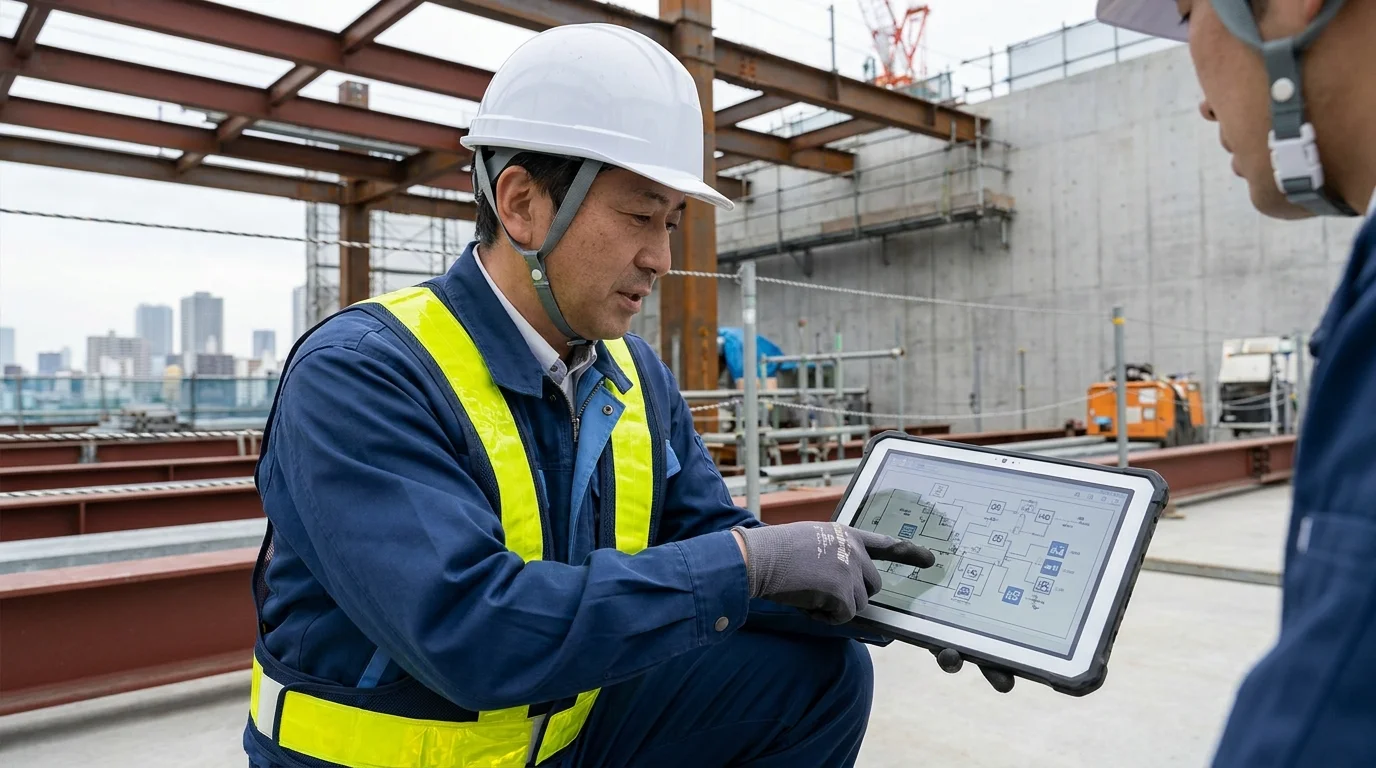
Table of Contents (Click to expand/collapse)
Structural Factors Turning Construction Knowledge into "Dead Data"
In many construction companies, decades of construction data are stored as PDF or Word files. However, while these support "keyword searches," they do not support "extracting similar cases tailored to the site context." For example, searching for "piling trouble in soft ground" only returns hits where those specific words are in the title; searching that considers complex parameters such as geological conditions, construction methods, and special soil types has had to rely on the memory of veteran engineers.
This information asymmetry delays the transfer of technology to young site managers and creates a "negative spiral" where the same troubles recur at different sites. To achieve organizational risk hedging, a system is needed that integrates scattered unstructured documents as AI-interpretable "vector data" that can be recalled instantly.
The Leap in Search Accuracy Brought by RAG-based "Vector Search"
RAG (Retrieval-Augmented Generation) is a technology that dynamically links Large Language Models (LLMs) with external specialized knowledge bases. Unlike traditional full-text search, RAG places documents in a multi-dimensional vector space and calculates semantic proximity. This allows the AI to identify cases with high semantic similarity from vast past construction reports and generate specific, evidence-based countermeasures simply by having the user input "current site soil and groundwater conditions" in natural language.
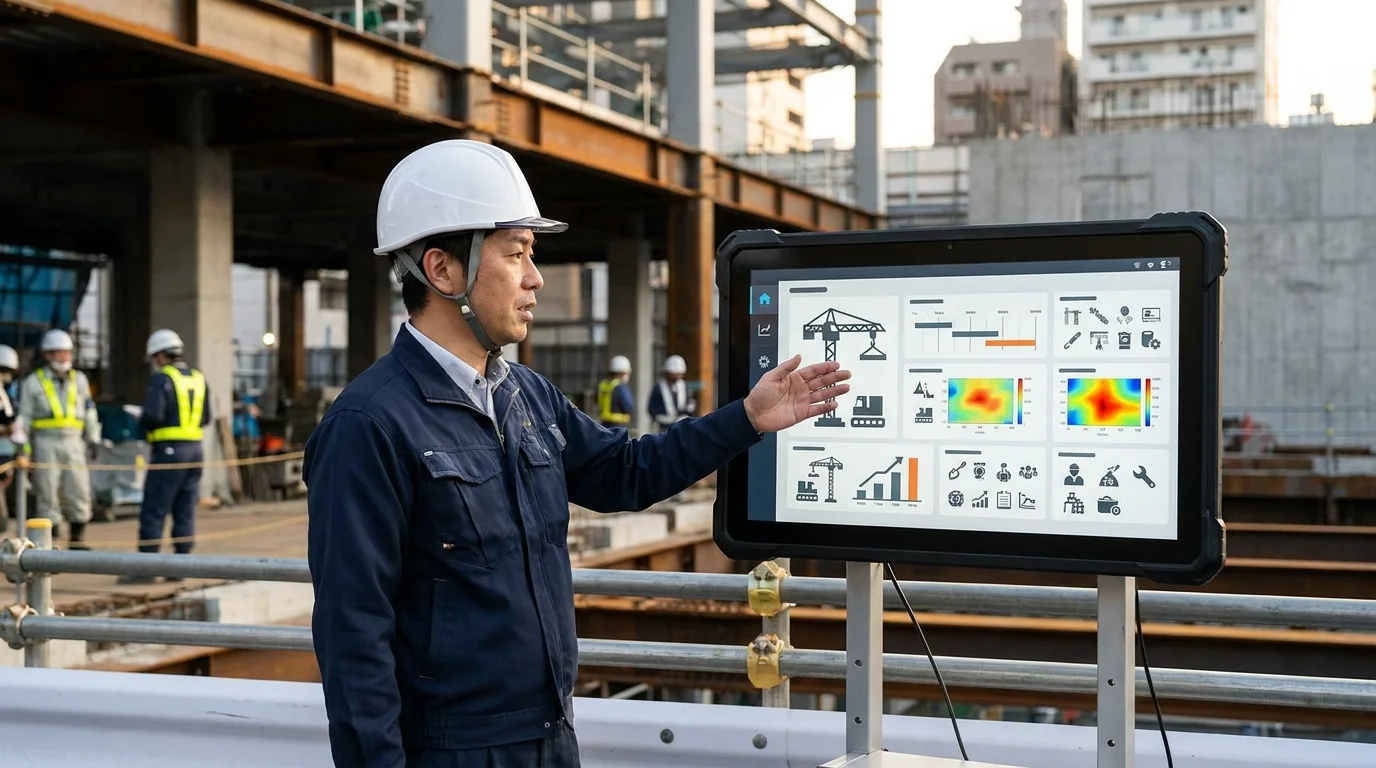
As the data above shows, systems that have implemented RAG have reduced the time required for information gathering by over 90% compared to conventional methods. This is not just about efficiency; it means that before a site manager makes an "uncertain judgment," the AI issues proactive warnings based on objective past data.
Specific Processes and Implementation Effects of Construction Trouble Avoidance
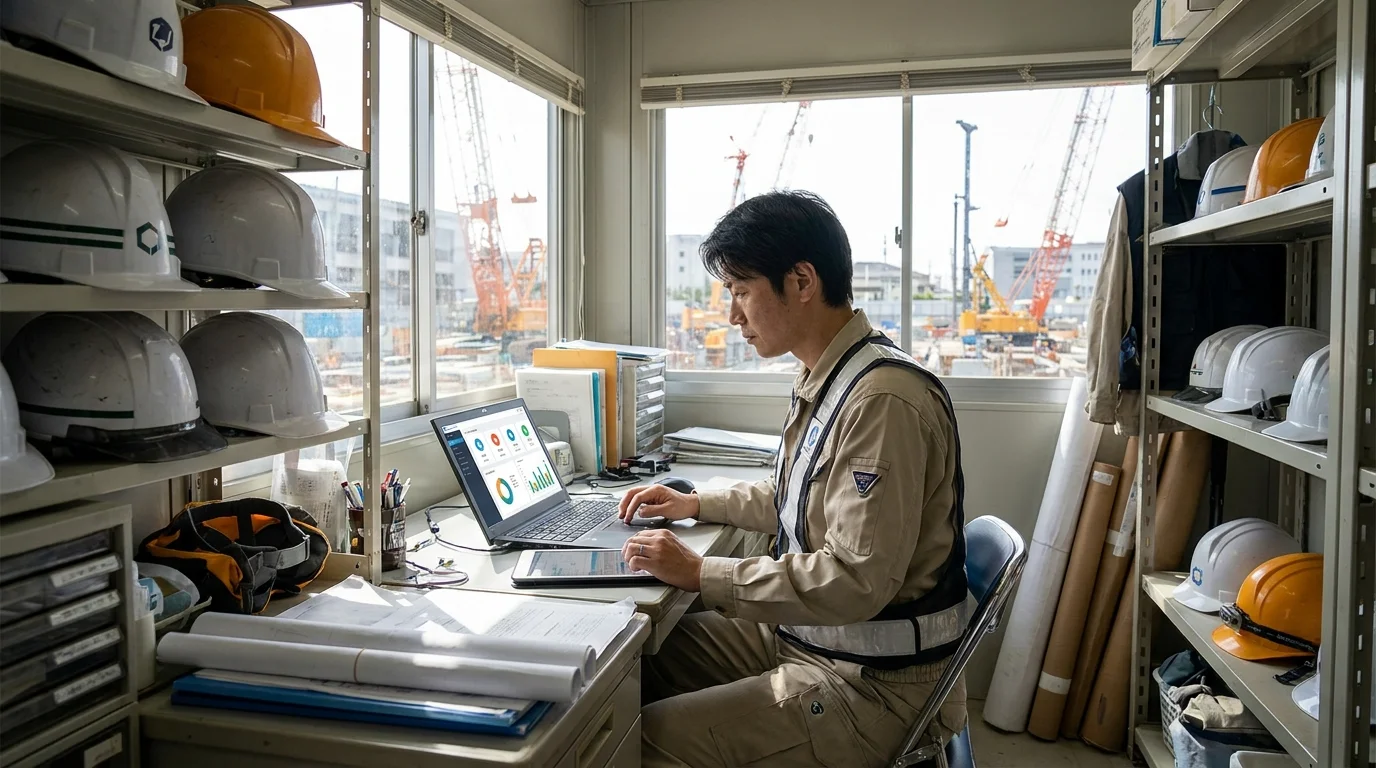
In terms of the specific operational flow, the AI first reads the construction plan during the pre-construction planning stage. The AI automatically cross-references the planned construction methods and ground conditions with a past "non-conformance event database" and provides advanced technical suggestions such as, "There have been multiple past cases of boiling under these geological conditions. We recommend considering the wellpoint method."
In companies that have implemented this, not only has the man-hours for plan review and drawing checks by technical management departments been significantly reduced, but empirical results also show a significant decrease in the occurrence rate of major accidents. The core of Construction DX is not mere digitalization, but incorporating AI into the organization's decision-making flow as a "super-veteran technical consultant operating 24 hours a day."

FAQ
- Q. Can past reports be imported into the system even if they are handwritten or in PDF format?
- A. Yes, by combining the latest AI-OCR technology with layout analysis, even handwritten daily site reports and old paper drawings/reports can be structured with high precision and utilized as knowledge sources for RAG.
- Q. Regarding security, is there a risk of technical information leaking outside the company?
- A. By utilizing enterprise-grade closed-network environments (such as Azure OpenAI Service or AWS Bedrock) and ensuring settings where input data is not used for model training, highly confidential technical information can be operated safely.
- Q. How much preparation time is required for implementation?
- A. It depends on the digitalization status of the data, but typically, a PoC (Proof of Concept) takes a minimum of one month, and the start of full-scale company-wide production operation takes about 3 to 6 months.
Turning Your Construction Knowledge into Your Strongest Asset
Why not build an "AI Technical Advisor" that integrates scattered construction data to prevent issues before they happen?
From RAG architecture selection to data cleansing, our expert consultants will support you every step of the way.
Summary
The key to avoiding trouble at construction sites lies in how effectively past failures can be directly linked to decisions at the "current site." An AI search system powered by RAG architecture is a powerful solution that transforms veteran experience into explicit knowledge and elevates the technical level of the entire organization from the bottom up. In the competitive landscape of 2026, this "ability to instantly utilize knowledge" will be the decisive factor determining a company's reliability and profitability.
Published: June 24, 2026 / By: Osamu Yasuda

Related Articles
References
- [1] Ministry of Land, Infrastructure, Transport and Tourism: Promoting Digital Transformation at Construction Sites
- [2] Lewis, P., et al. (2020). Retrieval-Augmented Generation for Knowledge-Intensive NLP Tasks.
- [3] Construction IT Guide: The Forefront of Construction Management Knowledge Sharing Systems Using RAG