

[2026 Latest] Quantitative Capture of "Unsafe Acts" at Construction Sites: Advanced Risk Assessment via Edge AI Cameras
Approximately 80% of occupational accidents in the construction industry are triggered by "unsafe acts" resulting from human error. Traditional safety management has relied on visual inspections by site supervisors, making it physically impossible to monitor every corner of a vast site 24 hours a day. However, as of 2026, the widespread adoption of edge AI cameras has made it possible to capture unsafe acts in real-time as "quantitative data." This article explains the technical background and practical applications of how AI-driven automation of risk assessment is transforming safety culture on-site.
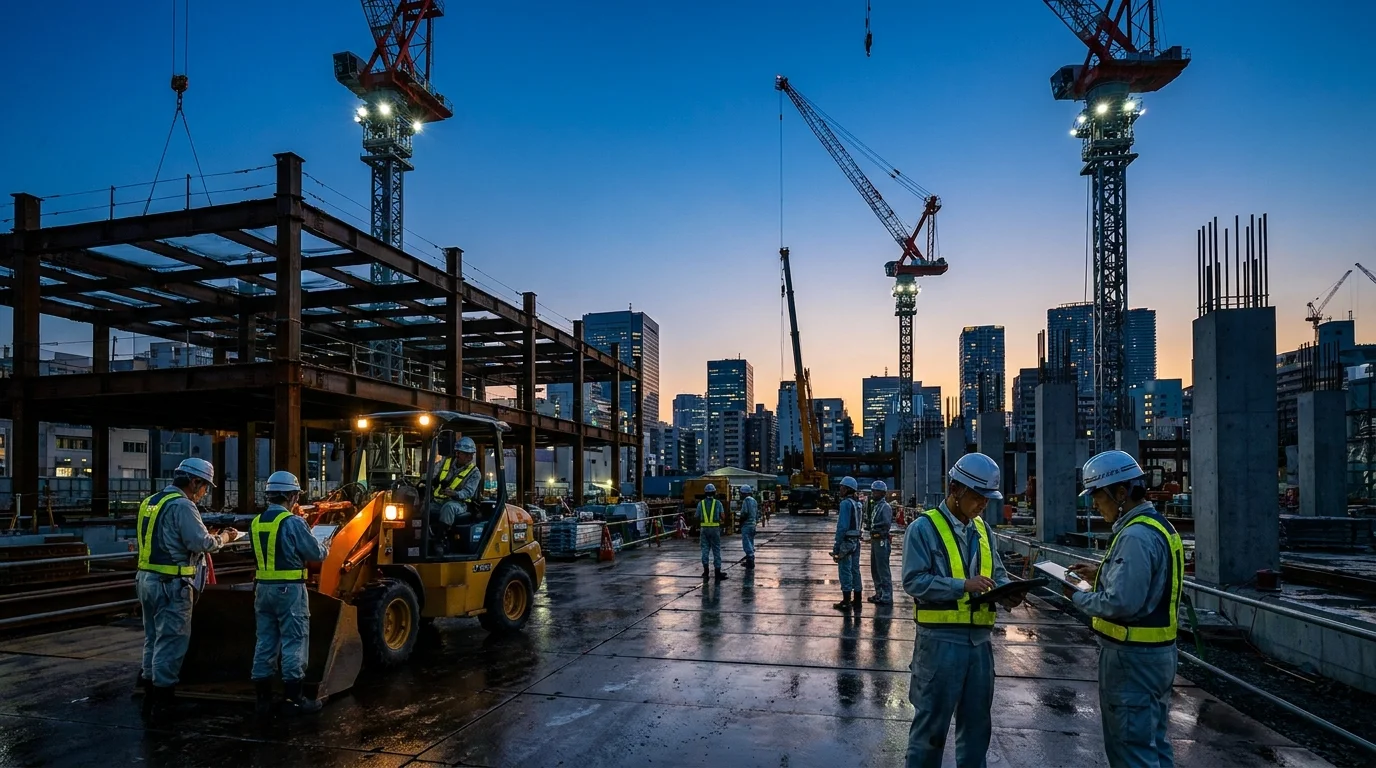
1. Automated Detection of Unsafe Acts: The Reality of "Risk" Identified by Edge AI
The role of edge AI cameras on-site goes beyond mere recording. The processor inside the camera analyzes images and uses specific skeletal detection models to identify unsafe acts within milliseconds, such as "failure to wear a helmet," "entering the operating radius of heavy machinery," or "failing to hook safety belts when working at heights." Since processing occurs without sending video to the cloud, there is no communication latency, allowing for immediate alerts to be issued via on-site sirens or managers' smart devices.
According to statistical data post-implementation, sites that have introduced AI monitoring show a significant trend, with the frequency of unsafe acts decreasing by an average of approximately 65% compared to pre-implementation levels. This effect is particularly maximized during evening and nighttime material delivery operations, which are difficult for humans to monitor.
2. Data Integration into Occupational Health and Safety Management Systems (OHSMS)
The true value of AI cameras lies in their ability to accumulate detected information as metadata and integrate it into the PDCA cycle of an Occupational Health and Safety Management System (OHSMS). Areas that were previously felt to be "somewhat dangerous" are now visualized as concrete statistics, such as "contact risks with heavy machinery frequently occurring in Area A at 10:00 AM every Tuesday."

Based on this quantitative data, Evidence-Based Policy Making (EBPM) for risk reduction is realized by changing the focus of safety education (toolbox meetings) on a weekly basis or optimizing the placement of physical barricades. We are shifting into an era where "numerical data" complements the "intuition" of site supervisors.
3. 2026 Trends: Predictive Safety Management via Multimodal AI
In the latest AI safety management systems, "multimodal analysis"—which integrates not only video data but also vital sensors, weather data, and work plans—is becoming mainstream. For example, on a sweltering day exceeding 35 degrees Celsius, if a specific worker's heart rate rises and their gait becomes unstable, the AI predicts the risk of a fall due to heatstroke and recommends a work stoppage.
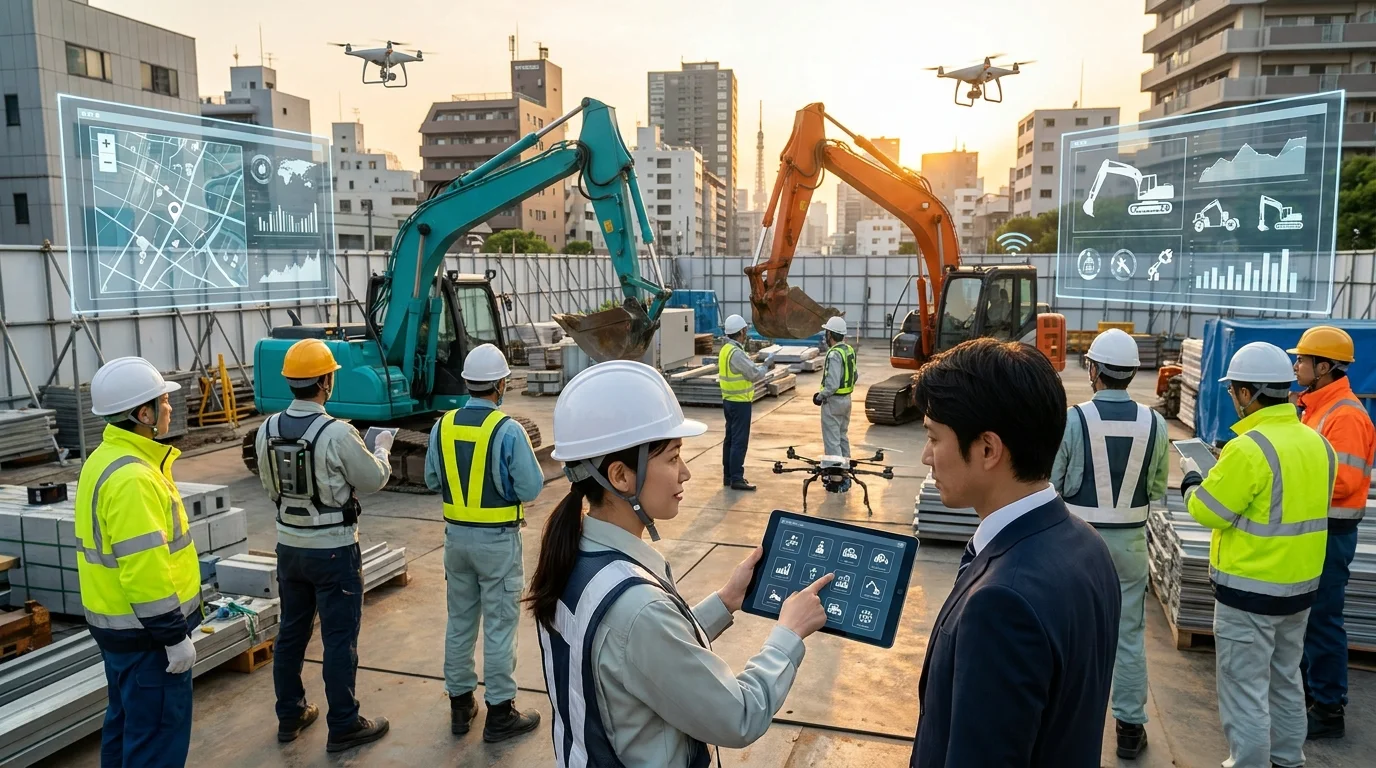
Furthermore, predictive safety management is being put into practical use, issuing alerts such as "the current combination of crane work and strong winds is 80% similar to the conditions of a contact accident that occurred three years ago" by cross-referencing past accident data with current site conditions. This enables "proactive" safety measures that nip accidents in the bud before they occur.
FAQ
- Q. Can existing security cameras be repurposed as AI safety management cameras?
- A. It depends on the resolution and angle of view, but in many cases, they can be repurposed by adding a device for edge analysis. However, for advanced analysis such as skeletal detection, we recommend implementing dedicated edge AI cameras specialized for AI processing.
- Q. From a privacy protection perspective, how are workers' faces and other personal information handled?
- A. Most systems are equipped with functions that perform analysis on the edge side, save only the metadata from the moment an unsafe act is determined, and automatically apply masking to individuals' faces. Operations that respect privacy are standard.
- Q. How should we think about implementation costs (ROI)?
- A. We compare the economic losses incurred during an accident (work stoppage, compensation, loss of trust) with the reduction in labor costs for safety patrols. In some cases, digitizing data on unsafe acts can lead to preferential insurance rates, making the medium-to-long-term return on investment extremely high.
Take Your Site Safety to the Next Level with AI
Our experts provide advice on advancing safety management through construction DX and strategies for implementing edge AI cameras.
Talk to us for a free strategy consultationSummary
Safety management at construction sites has evolved from "monitoring" to "prediction and prevention" through the power of AI. By quantitatively capturing unsafe behaviors, potential risks on-site are visualized, enabling concrete actions toward the elimination of industrial accidents. In 2026, edge AI cameras serve as the "eyes" of the site, becoming an essential infrastructure that protects the lives of everyone working there.
Published: June 4, 2026 / By: Osamu Yasuda

Related Articles

Advancing Medical Safety Management: Strategies to Eliminate Near-Misses with AI Prescription Audits

Evidence-Based Nursing Care: Optimizing Night Shift Costs and Reducing Turnover Rates with AI Monitoring Sensors

Leveling the Skill Gap with Edge AI: Analytical Models to Boost Closing Rates for Junior Staff
References
- [1] Ministry of Health, Labour and Welfare: Guidelines on Occupational Safety and Health Management Systems
- [2] Fund for Construction Industry Promotion: Guidelines for AI and IoT Utilization at Construction Sites, 2026 Edition