

[2026 Latest] Full HACCP Compliance: Automating Handwashing Records and Audit Trail Management with AI Cameras
In food manufacturing facilities, since the full implementation of HACCP became mandatory, the management of "handwashing records" is likely the single most exhausting task for frontline workers. Entries in paper logbooks often become a mere formality, and it is common to see improper practices where records are "filled in all at once later" during busy periods. In our consulting experience, many companies face the risk of having the reliability of their records questioned during audits due to such analog management methods. This article explains specific measures from a practitioner's perspective regarding the latest hygiene management DX, which uses AI cameras to automatically verify handwashing movements and maintain tamper-proof digital evidence.

Table of Contents (Click to open/close)
1. Business Risks Caused by Perfunctory Handwashing Records
A common sight we encounter during on-site support is a binder placed next to the hand-washing station, where everyone has recorded "○" in nearly identical handwriting. This is an extremely weak form of the "evidence of appropriate hygiene management" required by HACCP. In the event of a food poisoning incident, such analog records lack evidentiary value and could fundamentally undermine the company's credibility.
Furthermore, the time spent interrupting work to keep records represents a massive loss for the factory as a whole. For example, if 100 workers wash their hands four times a day and spend just 30 seconds recording it, it calculates to approximately 2,000 man-hours per year lost "just for record-keeping." Eliminating this inefficiency while ensuring 100% accuracy is the standard that will be required of the food manufacturing industry from 2026 onwards.
2. Mechanism and Automatic Recording of "Handwashing Assessment" via AI Cameras
The latest AI camera hand-washing evaluation system does not simply detect that a person is standing there; instead, it uses skeletal detection technology to analyze the "correct hand-washing procedures" recommended by the Ministry of Health, Labour and Welfare. It evaluates in real-time whether each area—such as fingertips, between fingers, the back of the hands, and wrists—is being washed for the required number of seconds, and issues an alert if the conditions are not met.
The greatest advantage of this process is that data on "who," "when," and "with what level of precision" the washing was performed is automatically stored in the database at the same time as the assessment. By combining this with facial recognition technology, identity fraud and missing records can be physically eliminated. On-site staff are completely freed from recording tasks simply by washing their hands in front of the camera. This type of data utilization also serves as a powerful "story" to appeal to consumers regarding the transparency of the manufacturing process within D2C E-commerce Development & Growth Support.
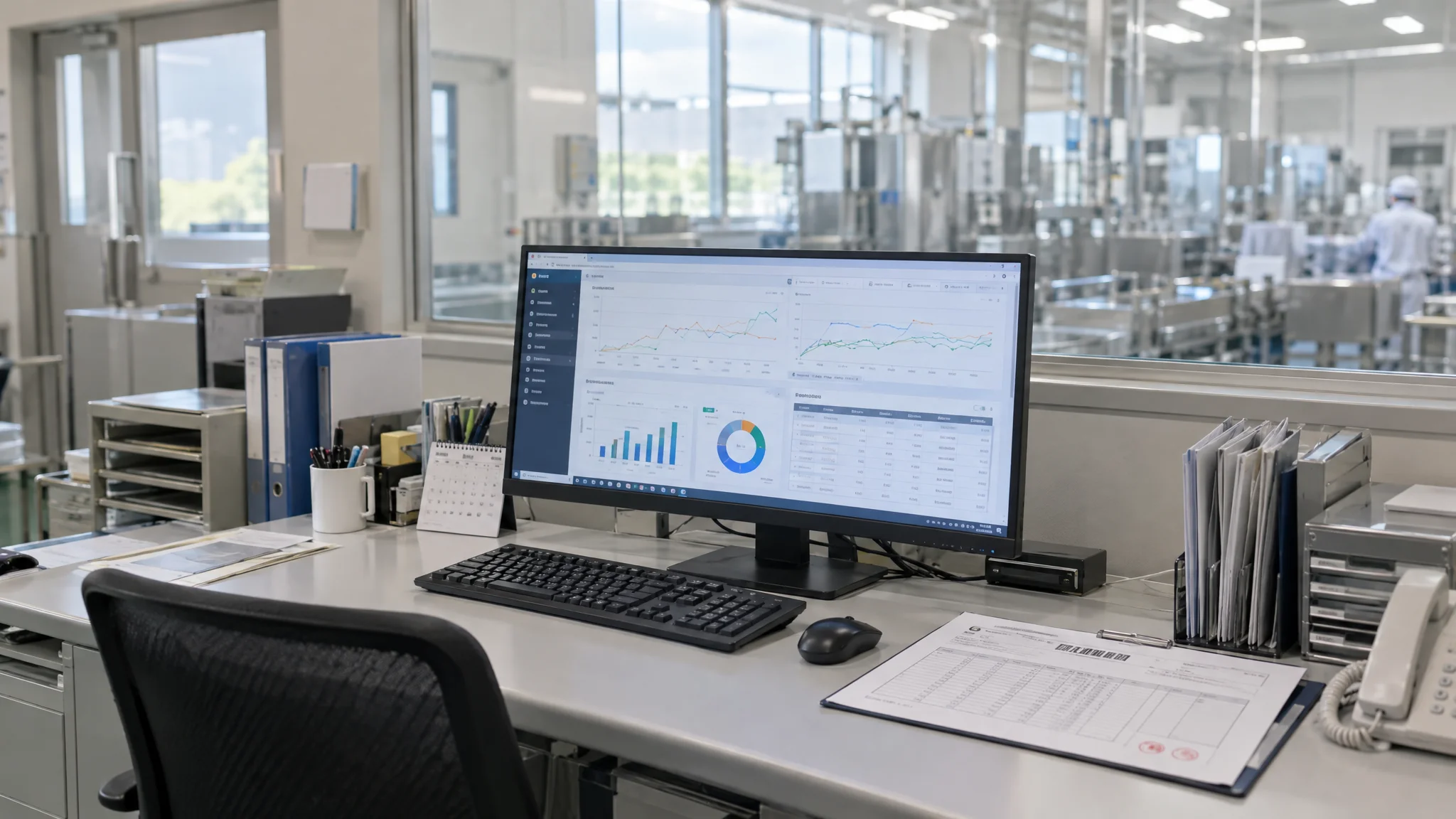
3. Reducing Man-hours and Enhancing Audit Compliance through Hygiene DX
Based on field observations, the most significant change following AI implementation is the "reduction of the mental burden on managers." Previously, it was necessary to manually check hundreds of sheets of paper daily, keeping a close watch for any missing entries. Following automation with AI cameras, the system flags only anomalies (such as improper handwashing), allowing managers to focus exclusively on addressing those exceptions.
Furthermore, during external audits, simply presenting log data exported from the system is accepted as "objective evidence." If saved as video data, the validity of procedures can be proven on the spot. This is nothing less than the advancement of "Quality Assurance (QA) in hygiene management," going beyond mere labor-saving. In fact, among our client companies for Own EC Site Construction & Growth Support, there are increasing cases where the digital transformation (DX) of back-end manufacturing processes directly leads to an improvement in final brand value.
4. Implementation Steps and Key Points for Operational Adoption
When implementing AI cameras, the most critical factor is a "design that avoids triggering resistance on the ground." It is essential to position the technology not as a surveillance tool, but as a "tool that liberates staff from tedious record-keeping." For the initial rollout, we recommend a "small start" beginning with a single sanitary area to fine-tune the detection accuracy.
A common pitfall in the field is setting judgment criteria so strictly that entry is blocked until requirements are met, causing production lines to grind to a halt. The key to preventing operations from becoming a mere formality is to start with automated logging of "whether the task was performed" and then gradually raise the required standard to "procedural accuracy."

FAQ
- Q. Is it necessary to extensively renovate existing hand-washing facilities?
- A. No, the AI camera unit can basically be retrofitted onto your existing sink. Since it can be installed without the need for plumbing work, it can be operational in a short period of time.
- Q. Will the judgment accuracy decrease due to soap bubbles or water splashes?
- A. Modern deep learning-based skeleton detection is trained to minimize the impact of bubbles and water. Furthermore, high detection accuracy can be maintained by optimizing the camera installation angle.
- Q. How soon can the implementation costs be recovered?
- A. While it depends on the number of employees, it is common to achieve a return on investment (ROI) within approximately one to two years by reducing recording man-hours and eliminating paper management and storage costs. When considering qualitative benefits such as faster audit response times, an even earlier return can be expected.
Turning your company's hygiene management from "records" into "assets".
Break away from obsolete analog management and achieve both reliability and efficiency through AI-driven automation.
We propose the optimal DX implementation plan tailored to your specific operational needs.
Summary
In the era of full HACCP compliance, automating handwashing records is no longer just a "nice-to-have tool" but is becoming an "essential infrastructure" for fulfilling a company's legal and social responsibilities. Hygiene management DX utilizing AI cameras not only reduces the workload on-site but also strongly protects a company's brand value through tamper-proof evidence. If you are facing challenges with perfunctory record-keeping practices, we highly recommend considering the implementation of an automated verification system.
Published: October 16, 2026 / By: Osamu Yasuda

Osamu Yasuda
Senior Managing Director & COO
Meets Consulting Inc.
Supported 100+ EC operations & logistics projects; specialist in operations and cost optimization
Related Articles

Preventing Delivery Mishaps for Frozen Sweets with IoT Temperature Management and AI Analysis

Objective Record Management via Facial Recognition: Compliance with the Industrial Safety and Health Act and Improving On-site Efficiency
Process Mining in Food Manufacturing: Techniques for Visualizing Hidden Idle Loss
References
- [1] Ministry of Health, Labour and Welfare "Guidebook for Hygiene Management Incorporating HACCP Principles"
- [2] Japan Food Hygiene Association: "The Importance of Handwashing Records and Prospects for Automation"