

[2026 Latest] Ensuring Objective Records and Industrial Safety and Health Act Compliance via Facial Recognition
As work styles diversify, many companies face the significant challenge of "accurately tracking working hours." Particularly since the amendment of the Industrial Safety and Health Act, it has become mandatory to record the working hours of all workers, including managers and supervisors, using objective methods. In our consulting practice, we still see many cases where companies rely on self-reporting, leaving records that deviate significantly from reality. The trump card for fundamentally eliminating these compliance risks and transforming labor management through DX (Digital Transformation) is "Facial Recognition Cloud Attendance." This article explains the latest labor time management techniques that balance legal compliance with operational efficiency.

Table of Contents (Click to expand/collapse)
1. The Reality of "Objective Records" Required by the Industrial Safety and Health Act
Currently, based on the "Guidelines on Measures to be Taken by Employers for the Proper Monitoring of Working Hours," companies are required to manage hours through objective records such as time cards, IC cards, and PC logs. In our actual support cases, many executives mistakenly believe that those under discretionary work systems or in management positions are exempt from recording; however, under the Industrial Safety and Health Act, "all workers" are covered from a health management perspective.
As statistical data shows, the shift from self-reporting to biometric authentication is accelerating. The primary objective is not just improving the convenience of clocking in, but avoiding legal risks caused by "impersonation" or "forgetting to clock in." Even in the field of proprietary EC site construction and growth support, facial recognition functions very effectively for managing the working hours of staff in roles without PCs, such as warehouse and retail store employees.
2. The Limitations of Self-Reporting and Why Facial Recognition is Chosen
A common issue on the ground is "hidden overtime," where employees under-report their hours out of consideration for reducing overtime costs. Under self-reporting systems, the excuse that the company "did not know the actual situation" is becoming increasingly invalid. By implementing Facial Recognition Cloud Attendance, clocking in is completed within 0.3 seconds just by standing in front of the device, and the data is stored in the cloud in an unalterable format.
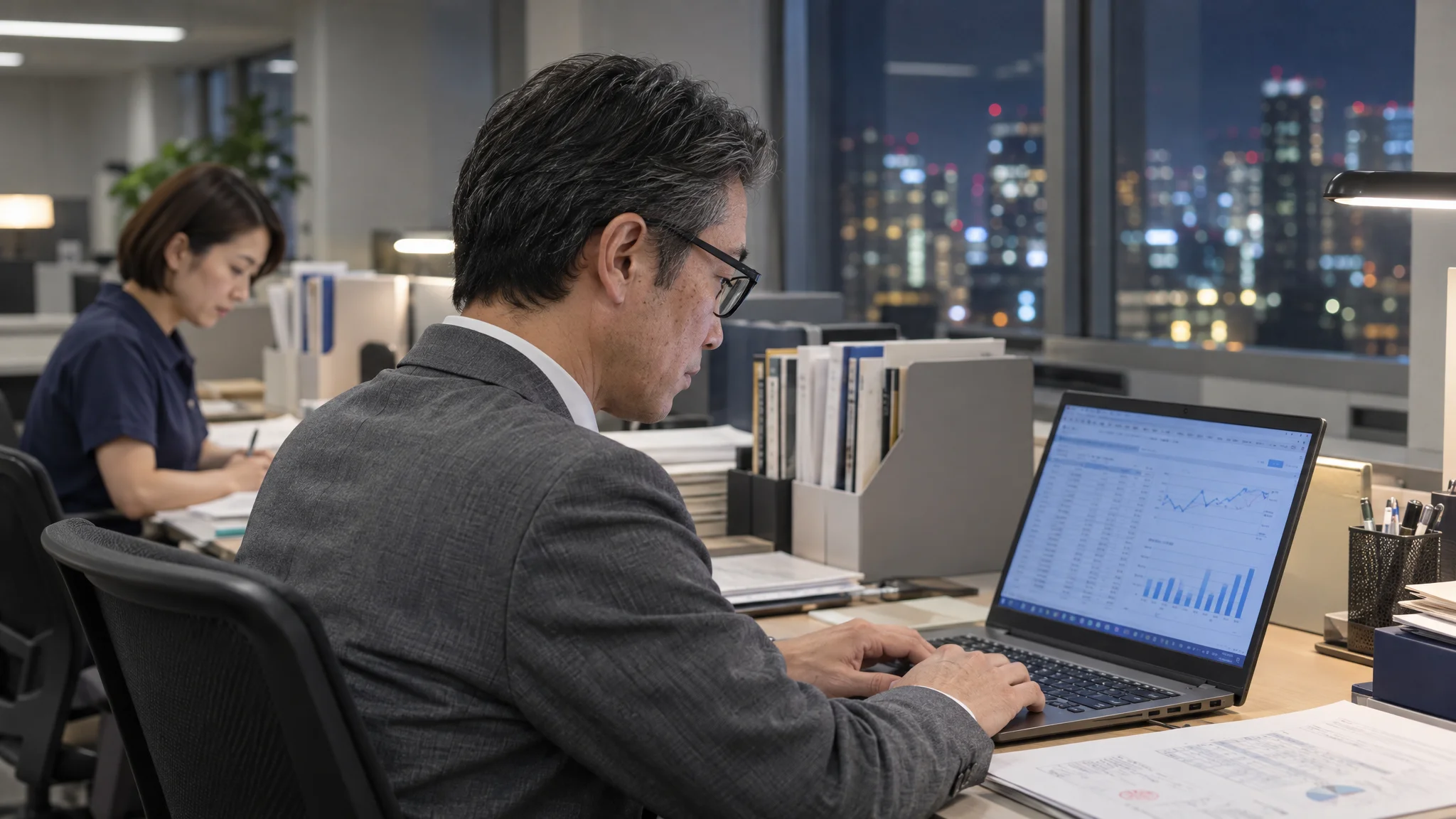
The greatest advantage of facial recognition is that it is "contactless" and "requires no physical keys." There is no risk of losing or lending IC cards, and team members who are extremely busy with proprietary EC site construction and growth support projects can leave accurate records without stress. This frees managers from end-of-month aggregation tasks, allowing them to focus on checking for anomalies.
3. Strengthening Compliance Systems through Labor DX
The goal of labor DX is not merely digitalization, but "proactive defense" through the utilization of collected data. Real-time working hour data obtained via facial recognition can be configured to send automated notifications to both the individual and their supervisor the moment a threshold is about to be exceeded. In our actual consulting engagements, we have seen cases where implementing this "predictive management" framework reduced the risk of health issues from overwork and legal citations by more than 80%.
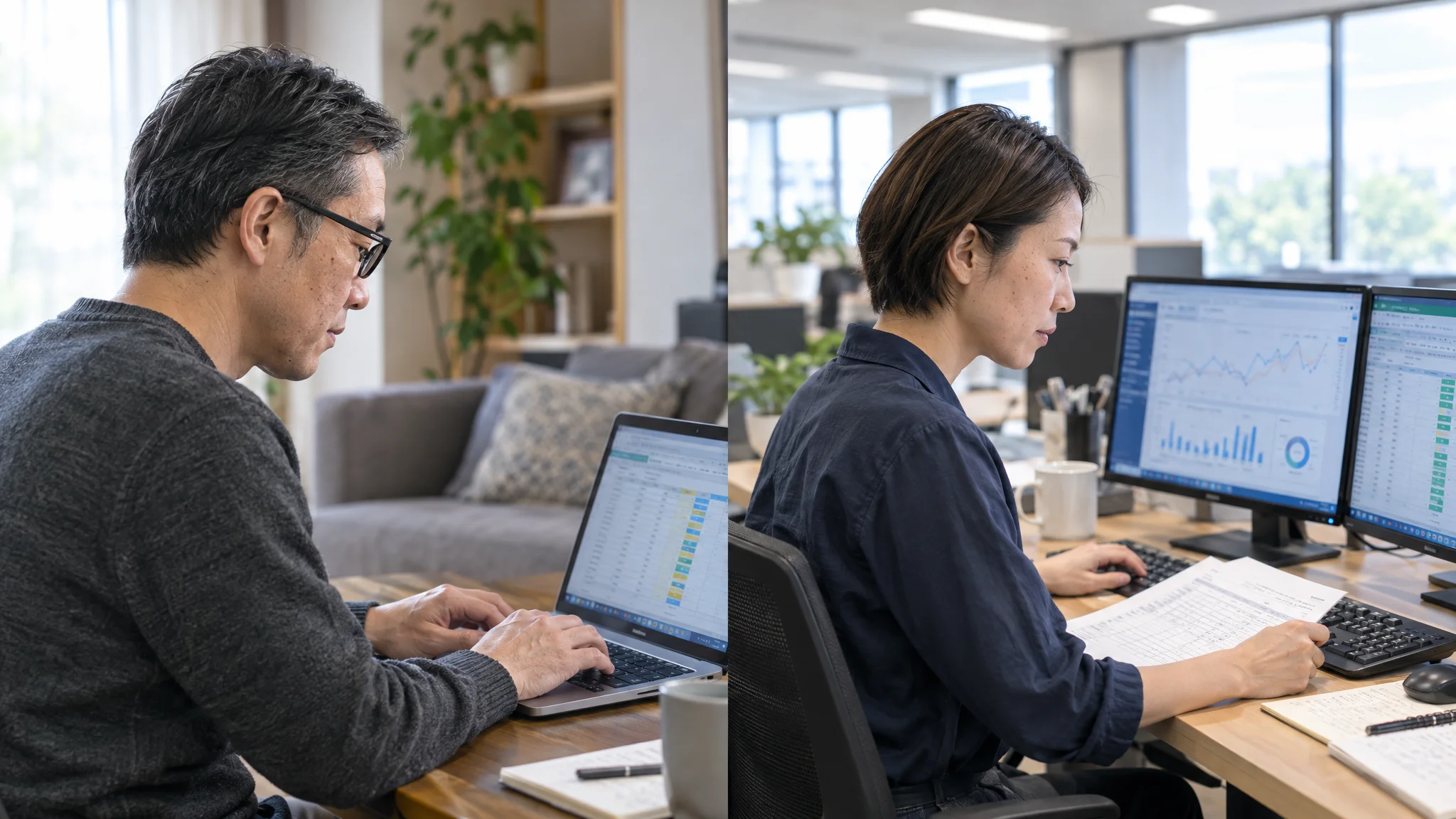
Furthermore, being cloud-based allows for centralized management of staff movements across telework locations, satellite offices, and even between different stores. The ability to maintain detailed oversight while accommodating diverse work styles is precisely why facial recognition has become indispensable in modern corporate management.
4. Common Implementation Challenges and Steps to Resolution
Concerns during implementation include privacy considerations and the setup of the network environment. In support settings, we begin by carefully explaining security specifications to employees, such as "facial data is stored as feature values, and the images themselves are discarded." Additionally, it is crucial to design the system to prevent missed records due to communication failures by selecting terminals that allow for offline clock-ins. By reliably following these steps, you can minimize resistance on the ground and transition to smooth operations.
FAQ
- Q. Is authentication possible while wearing a mask?
- A. Yes, facial recognition terminals equipped with the latest AI algorithms can identify individuals with high accuracy even when they are wearing masks or glasses.
- Q. Can facial recognition data serve as evidence during an inspection by the Labor Standards Inspection Office?
- A. Yes, it will. Since time recording via facial recognition is recognized as a "record by objective methods," it functions as a more reliable piece of evidence than self-reporting systems.
- Q. How much are the implementation costs?
- A. For cloud-based solutions, in addition to initial costs (such as device fees), running costs of around several hundred yen per user per month are typical. These costs can be easily offset by the savings gained from reducing manual tabulation efforts.
Taking your company's HR DX to the next stage
We offer optimal solutions that balance compliance with operational efficiency.
Talk to us for a free strategy consultationSummary
Properly tracking working hours is no longer just a best-effort obligation for companies; it is a management priority directly linked to legal risks. Implementing facial recognition cloud-based attendance systems provides convenience for employees and the peace of mind of compliance for management. If you are concerned that your self-reporting system has become a mere formality, you should take the first step toward ensuring thorough, objective records immediately. By leveraging digital technology, let's shift from defensive labor management to proactive organizational development.
Published: October 9, 2026 / By: Osamu Yasuda

Osamu Yasuda
Senior Managing Director & COO
Meets Consulting Inc.
Supported 100+ EC operations & logistics projects; specialist in operations and cost optimization
Related Articles
References
- [1] Ministry of Health, Labour and Welfare: Guidelines on Measures to be Taken by Employers for the Proper Monitoring of Working Hours
- [2] Industrial Safety and Health Act, Article 66-8-3 (Monitoring the Status of Working Hours)