

[2026 Latest] Financial Management to Mitigate FX Risk: Cross-Border EC "EC Cost Ratio Benchmark" and Multi-Currency Basics
As the cross-border EC market expands rapidly in 2026, one of the biggest challenges facing businesses is "foreign exchange (FX) risk." Unlike domestic sales, the mismatch between settlement and procurement currencies directly impacts profits. This article explains the latest "EC Cost Ratio Benchmark" that accounts for FX risk, along with multi-currency support and financial management principles to ensure profit protection.

Table of Contents (Click to expand/collapse)
1. Redefining the "EC Cost Ratio Benchmark" for Cross-Border EC
While the standard cost ratio benchmark for domestic EC is said to be 30%–40%, cross-border EC requires a more conservative design that accounts for "FX hedging costs" and "fluctuations in international logistics fees." In the 2026 market environment, rising raw material costs and FX spreads are significant factors squeezing profit margins.
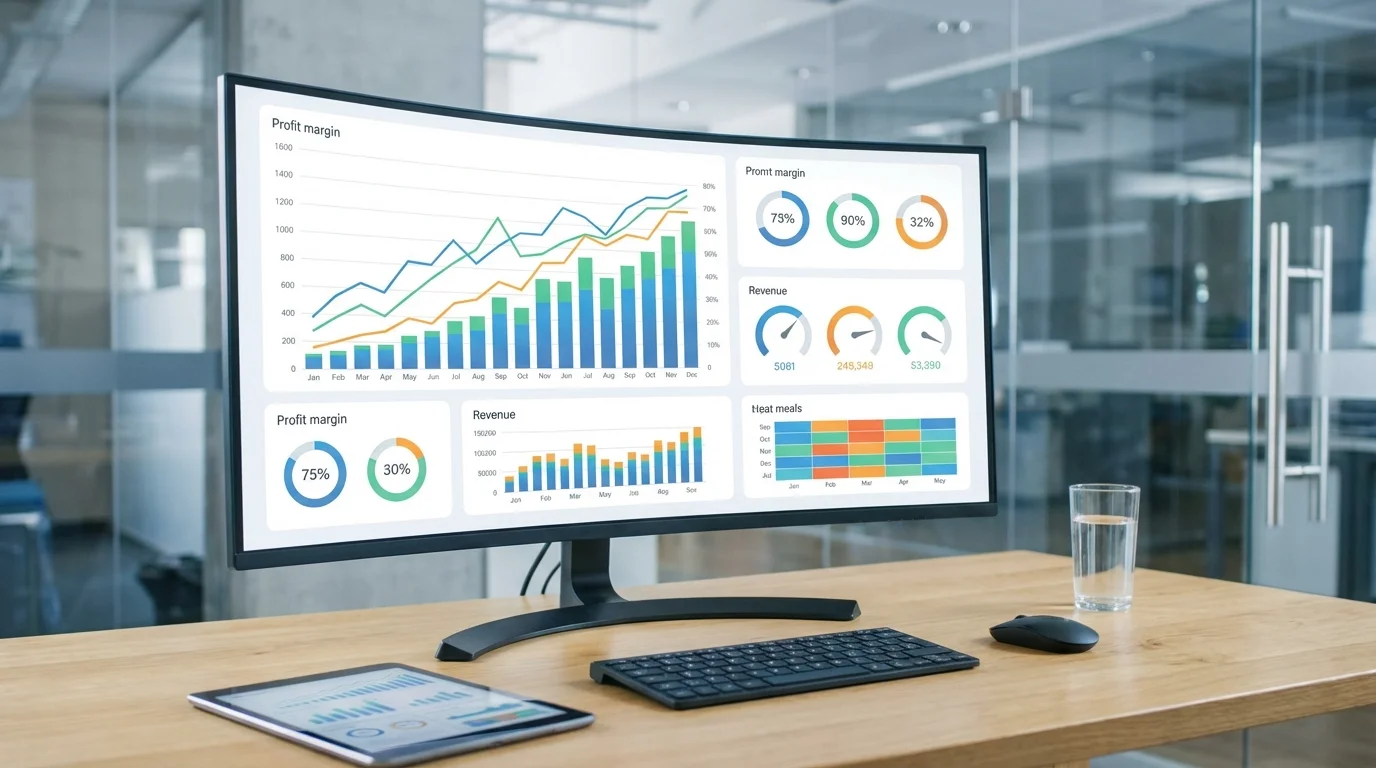
The following chart shows the projected changes in profit margins by category when a 10% FX fluctuation occurs.
When calculating the cross-border EC-specific "EC Cost Ratio Benchmark," it is necessary to use the "Landing Cost"—which combines manufacturing costs with customs duties, platform fees, and FX conversion fees—as the standard, rather than just the manufacturing cost alone.
2. The Importance of Currency Portfolios and Multi-Currency Support
A sales strategy that relies on a single country (e.g., the US only) leaves your entire fate to the USD/JPY pair. From a risk diversification perspective, it is essential to build a settlement infrastructure that supports multi-currency transactions, including the Euro, Pound, and Yuan.

Multi-currency support does not simply mean being able to process payments in multiple currencies. It refers to achieving a "natural hedge" by holding received foreign currency as-is and using it to pay for local advertising and logistics costs. This allows businesses to reduce FX fees (typically 1%–3%) incurred by forced conversion to Yen, effectively lowering the actual cost ratio.
3. Implementing Dynamic Pricing to Absorb FX Fluctuations
Fixed pricing can be fatal during periods of rapid FX volatility. In 2026, the adoption of "dynamic pricing," which automatically adjusts sales prices in sync with exchange rates, is advancing in cross-border EC.
For example, if the "EC Cost Ratio Benchmark" is set at 35% based on 1 USD = 140 JPY, the profit margin will deteriorate significantly the moment the Yen strengthens to 1 USD = 130 JPY. To prevent this, implement an algorithm that updates local currency prices hourly or daily via API integration to always ensure a constant gross profit amount.

4. Financial Governance: Optimizing Cash Flow
An often-overlooked aspect of cross-border EC financial management is the Cash Conversion Cycle (CCC). In international sales, payment cycles tend to be longer than domestic ones. Even when performing FX hedging, failing to accurately grasp this cash flow time lag can lead to the risk of insolvency despite being profitable.
To strengthen financial governance, it is recommended to not only manage monthly P&L but also create cash flow statements by currency and constantly monitor the sensitivity of cash flow to FX fluctuations.
FAQ
- Q. What is the ideal "EC Cost Ratio Benchmark" to aim for in cross-border EC?
- A. While it depends on the category, considering FX risk, it is ideal to keep manufacturing costs below 25%–30% on a manufacturing cost basis. Maintaining a total landed cost (including logistics and duties) of 50% or less is the key to long-term survival.
- Q. Is FX hedging necessary even for small-scale businesses?
- A. While complex forward exchange contracts through direct transactions with banks can be challenging to implement, an increasing number of payment platforms now offer "exchange rate locking" features. For businesses dealing with low-margin products, even a few percentage points of fluctuation can be critical, so these services should be actively considered.
- Q. Which is a risk for cross-border EC: a weak yen or a strong yen?
- A. When selling from Japan to overseas, a weak yen is generally a tailwind (as it allows for lower local prices or increases profits in yen terms); however, if raw materials are imported from overseas, procurement costs will increase. It is crucial to view 'fluctuation itself as a risk' and establish a structure that ensures profitability regardless of currency movement during the design phase of your 'EC Cost Ratio Benchmarks'.
Taking your EC business to the next stage
From financial strategies accounting for foreign exchange risks to execution support, our team of experts supports your company's global expansion.
Talk to us for a free strategy consultationSummary
Financial management in cross-border EC is not merely a bookkeeping task; it is a proactive management strategy in its own right. By designing "EC Cost Ratio Benchmarks" that factor in exchange rate fluctuations, reducing costs through multi-currency payments, and protecting profits via dynamic pricing—and advancing these three in unison—you can build a resilient business foundation that is not dictated by the external environment. To succeed in the uncertain economic landscape of 2026, take this opportunity to re-examine your company's financial design.
Published: May 15, 2026 / By: Osamu Yasuda

Related Articles


References
- [1] Japan External Trade Organization (JETRO) "Foreign Exchange Risk Management Practices in Cross-border E-commerce"
- [2] Financial Services Agency, "Basic Guidelines for Currency Hedging Using Derivative Transactions"