

What Is the EC Profit Margin Benchmark? PL Management and Marginal Profit Basics New Managers Must Know
The first wall that managers newly assigned to EC operations face is the complexity of the revenue structure — "sales are going up, yet somehow no money is left." For sound business operations, the ability to not just set sales targets but to correctly grasp EC profit margin benchmarks and manage each indicator on the PL (Profit and Loss statement) in a MECE (Mutually Exclusive, Collectively Exhaustive) manner is indispensable. In this article, we thoroughly explain the concepts of marginal profit and operating profit in a way that can be understood even without specialized financial knowledge.

Table of Contents (Click to Expand)
1. Defining Profit Margin in EC Business
In EC business, profit margin is not just a metric — it is a barometer of business sustainability. What new managers often confuse is the difference between "gross profit (margin)" and "operating profit."
- Gross Profit Margin: Revenue minus cost of goods sold. Indicates the competitiveness of the product itself.
- Operating Profit Margin: Gross profit minus selling, general and administrative expenses (promotional costs, logistics costs, personnel costs, etc.). Indicates the business's ultimate earning power.

2. Industry and Model Benchmarks: EC Profit Margin Guidelines
Generally, the benchmark for EC operating profit margin is said to be 5% to 10%. However, this varies significantly depending on the products handled and the sales format (own site vs. marketplace).
Standard products tend to have lower profit margins due to intense price competition, while D2C models with unique brand value have a structure that makes it easier to secure higher profit margins. It is important to always compare with benchmarks to understand where your own position lies.
- Sales: Net sales after deducting discounts and points used
- Variable Costs (COGS & EC Variable Costs): Product cost, packaging materials, shipping fees, payment processing fees (MDR), variable platform fees
- Marginal Profit: Sales minus Variable Costs (funds available directly for investment)
- Direct Fixed Costs (SGA): Advertising expenses (CPA/ROAS), system usage fees, dedicated personnel costs
- Operating Profit: Marginal Profit minus Direct Fixed Costs
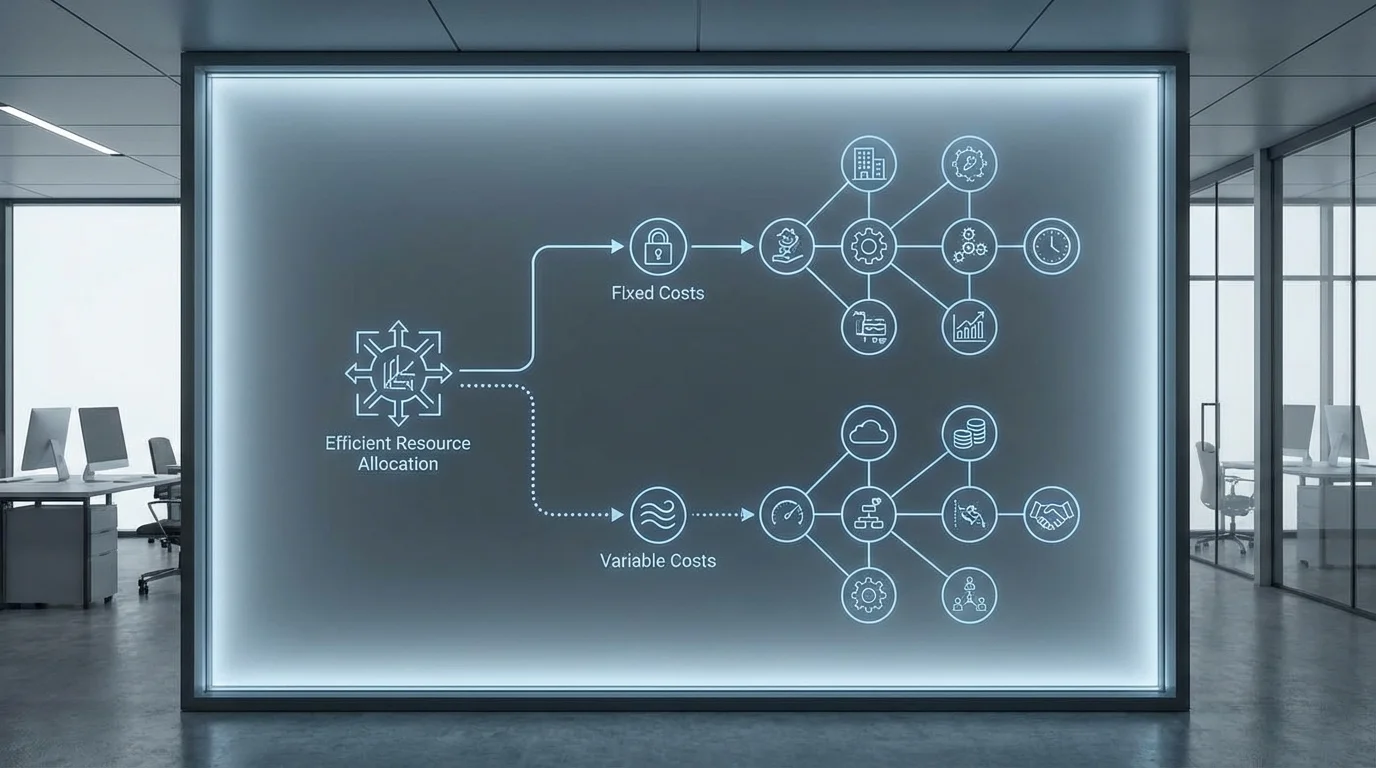
3. MECE Decomposition of Variable and Fixed Costs
The most important aspect of P&L management is separating costs into "variable costs" and "fixed costs." This enables you to simulate how profits move when sales increase.
| Classification | Main Items | Nature |
|---|---|---|
| Variable Costs | Cost of goods, shipping fees, payment processing fees, advertising expenses (performance-based) | Increases/decreases proportionally with sales |
| Fixed Costs | System usage fees, personnel costs, rent | Incurred regardless of sales volume |
4. Marginal Profit and Break-Even Point (BEP) Calculation
The first formula new managers should learn is: Marginal Profit = Revenue - Variable Costs. The moment this marginal profit exceeds fixed costs, "profit" begins to emerge for the first time. This point is called the Break-Even Point.
For example, if you earn 500 yen of marginal profit per unit sold and your fixed costs are 1 million yen, you need to sell 2,000 units just to break even (zero profit). It is from the 2,001st unit onward that true profit contribution begins.
5. Three Levers for Improving Profit Margins
To break out of a low-profit structure, you must systematically execute the following three measures.
- Improve LTV (Customer Lifetime Value): Reduce acquisition cost (CPA) and increase repeat purchase rate.
- Optimize Logistics Costs: Improve delivery efficiency and review bundled items.
- Refine Advertising Operations: Manage bids based on marginal profit, not just ROAS (Return on Ad Spend).
Frequently Asked Questions (FAQ)
- Q. What is the minimum operating profit margin to aim for in EC?
- A. Generally, 5% operating profit margin is considered the minimum. Below this, there is a high risk of falling into the red due to sudden spikes in advertising costs or return risks.
- Q. Do mall sales (Rakuten/Amazon) tend to result in lower profit margins?
- A. Yes. Sales commissions, point subsidies, and in-mall advertising costs mean profit margins are more compressed compared to in-house EC. However, since traffic acquisition is strong, strategies that compensate through 'turnover rate' are common.
Take Your EC Business to the Next Stage
Improving profit margins requires meticulous strategy design based on data. Our specialist consultants will advise you from a current P&L diagnosis to the optimal improvement plan.
Get Free Strategy ConsultationSummary
Understanding the EC profit margin benchmark is not just number management, but the health checkup of the business itself. Make it a habit to think on an operating profit basis that clearly separates variable and fixed costs, rather than just gross profit. If you can operate while conscious of the breakeven point, it can be said you've taken a big step forward as a new manager.
Published: 2026-03-04 / Author: Yuta Ito

Related Articles



References
- [1] EC Industry Profit Margin Benchmark Report
- [2] PL Management Framework for E-Commerce Operations