

【Is Amazon Export Not Profitable? How to Maximize Marginal Profit Through Cost Structure Analysis and FBA Tips】
"I tried Amazon export but profits aren't materializing as expected." "Sales are coming in but no cash remains."—Many Japanese SMEs and sole proprietors face this challenge, which stems not from a lack of selling ability but from insufficient understanding of global EC-specific cost structures. Even in a weak-yen environment, platform fees, international shipping, customs duties, and advertising costs are intricately intertwined, making rough estimates potentially fatal. This article explains strategic approaches to break through the "not profitable" situation and maximize marginal profit in Amazon export.

Table of Contents (Click to Expand)
- 1. Three Structural Factors Behind the "Not Profitable" Misconception
- 2. MECE Analysis of "Hidden Costs" That Erode Marginal Profit
- 3. The Logic of Improving Profitability Through FBA Utilization
- 4. Data Analysis: Self-Fulfillment vs FBA Cost Simulation
- 5. Roadmap to Success: Chase "Marginal Profit" Over ROAS
Three Structural Factors Behind the "Not Profitable" Misconception
The biggest factor that causes Amazon exporters to fall into a "revenue without profit" state is setting break-even points with the same mindset as domestic Japanese EC. The following three points in particular are areas many sellers tend to underestimate.
- Currency Fluctuation Risk and Exchange Fees: The rate difference between the time of sale and when Amazon deposits in Japanese yen, plus exchange fees of approximately 1.5%-2%, compress profits.
- Multi-layered Platform Fee Structure: On top of referral fees (typically 8-15%), category-specific closing fees and advertising costs (Amazon Advertising) can stack up, with effective fee rates exceeding 30% not being uncommon.
- High Return Rates: In Western markets, the barrier to returns is lower than in Japan, and return shipping costs and re-inspection fees directly cut into profits.
MECE Analysis of "Hidden Costs" That Erode Marginal Profit
To improve profitability, you need to grasp costs without gaps or overlaps (MECE). Rather than simply tracking 'shipping costs,' individually managing the following items is essential.
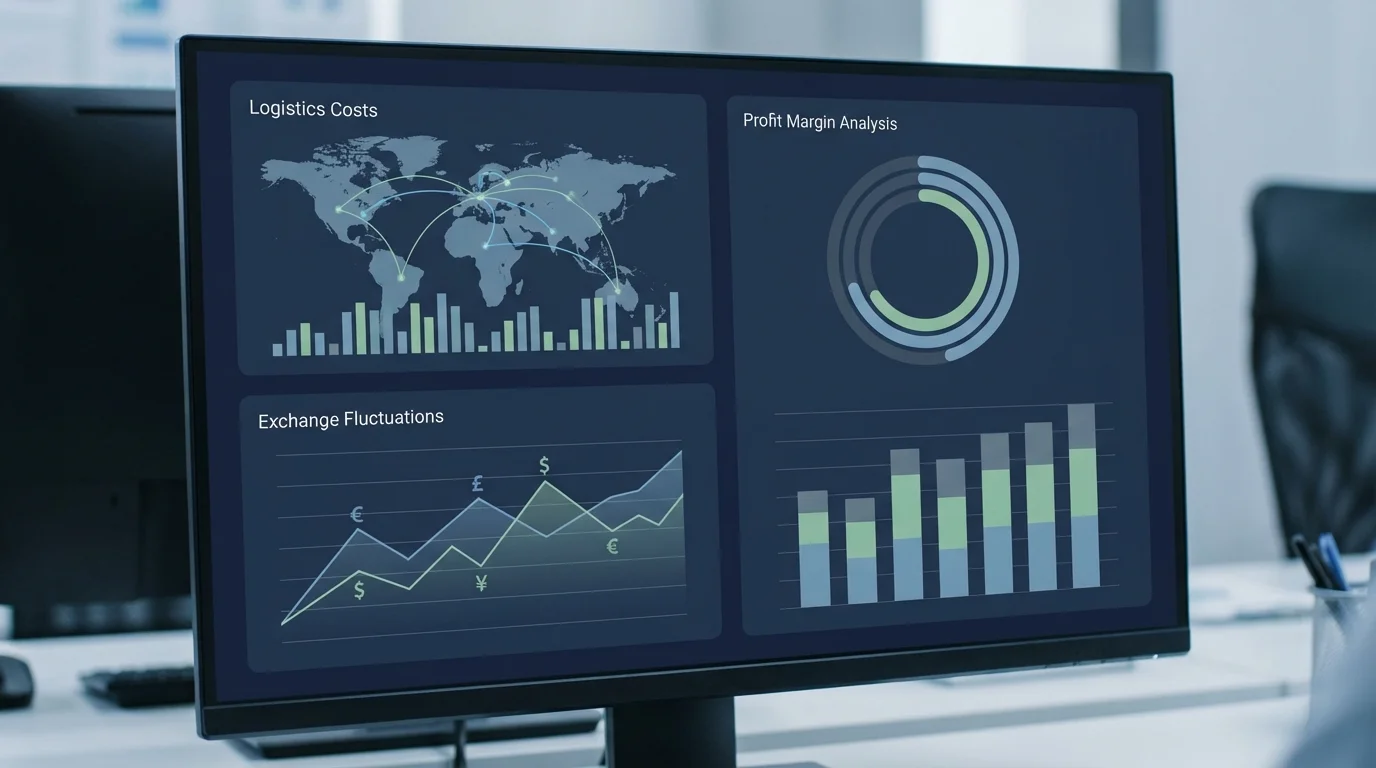
Particularly easy to overlook are "Customs Duty" and "Import Tax (VAT/Sales Tax)". Many sellers fall into sudden losses due to failing to properly pass these costs onto selling prices, or making incorrect choices between DDP (Delivered Duty Paid) and DDU (Delivered Duty Unpaid).
The Logic of Improving Profitability Through FBA Utilization
Thinking "FBA fees are too high to be profitable" is premature. By utilizing FBA, you can create the following "invisible profits."
- Improved Buy Box Win Rate: FBA products receive the Prime badge, making them overwhelmingly easier to win the Buy Box compared to self-fulfillment. Increased turnover leads to reduced inventory storage costs.
- Customer Service Outsourcing: Amazon handles customer inquiries in the local language, reducing human resource costs.
- Logistics Scale Benefits: Shipping in bulk to FBA warehouses rather than individual shipments can significantly reduce international shipping costs per unit.

Data Analysis: Self-Fulfillment vs FBA Cost Simulation
The graph below compares the cost breakdown between self-fulfillment (MFN) and FBA for typical small and medium-sized products. While FBA has higher initial costs, you can see how the per-unit operation cost reverses as sales volume increases.
Roadmap to Success: Chase "Marginal Profit" Over ROAS
To survive in Amazon export, you must not be fixated solely on advertising return on ad spend (ROAS). The metric you should truly pursue is "Contribution Margin". Understand for each SKU (Stock Keeping Unit) how much the amount remaining after subtracting variable costs (procurement, shipping, fees, advertising) covers fixed costs and contributes to final profit. The "cut-loss" decision to early identify SKUs bleeding losses and withdraw or reprice is the shortcut to making the entire business profitable.
Frequently Asked Questions
- Q. What factor most compresses profits in Amazon export?
- A. In most cases, it's the imbalance between 'international shipping costs' and 'advertising costs (ACOS).' Logistics costs devour profits especially when lightweight, high-value products aren't selected.
- Q. Why isn't it profitable even with a weak yen?
- A. While a weak yen contributes to increased revenue, it also effectively raises procurement costs, overseas advertising expenses, and local FBA fees (denominated in foreign currency). You need to factor in the foreign currency ratio on the cost side.
- Q. Is there a way to avoid price competition with competitors?
- A. Completing Amazon Brand Registry and creating your own catalog to prevent piggyback listings and maintain pricing control is an effective strategy.
Take Your EC Business to the Next Stage
From Amazon export cost structure diagnosis to FBA optimization and brand strategy—our specialist consultants support your revenue maximization.
Get Free Strategy ConsultationSummary
The reason Amazon export feels "not profitable" lies in being misled by surface-level revenue and losing sight of actual contribution margin. By conducting MECE cost analysis and redefining FBA not as mere outsourcing but as a "strategic tool for Buy Box acquisition and operational efficiency," your revenue structure will dramatically improve. Start by visualizing profit margins for each SKU.
Published: 2026-02-25 / Author: Yuta Ito

Related Articles


You May Also Like
References
- [1] Amazon Global Selling - Pricing and Fees Overview (2025)
- [2] JETRO - Cross-border E-commerce Handbook for Japanese SMEs
- [3] Fulfillment by Amazon (FBA) Revenue Calculator Documentation