

[2026 Latest] Automating Drawing Difference Extraction and Synchronization via CV
"Rework" at construction and manufacturing sites is one of the biggest factors squeezing profit margins. In particular, errors where work proceeds based on old drawings that do not reflect design changes lead to fatal losses, as they involve physical demolition and reconstruction. In the field sites we support, this risk tends to manifest more easily in organizations that rely on individual memory or manual paper replacement for drawing update management. This article explains 2026-standard field DX (Digital Transformation), which utilizes Computer Vision (CV) to automatically extract drawing differences and synchronize them to the field in real-time via the cloud.
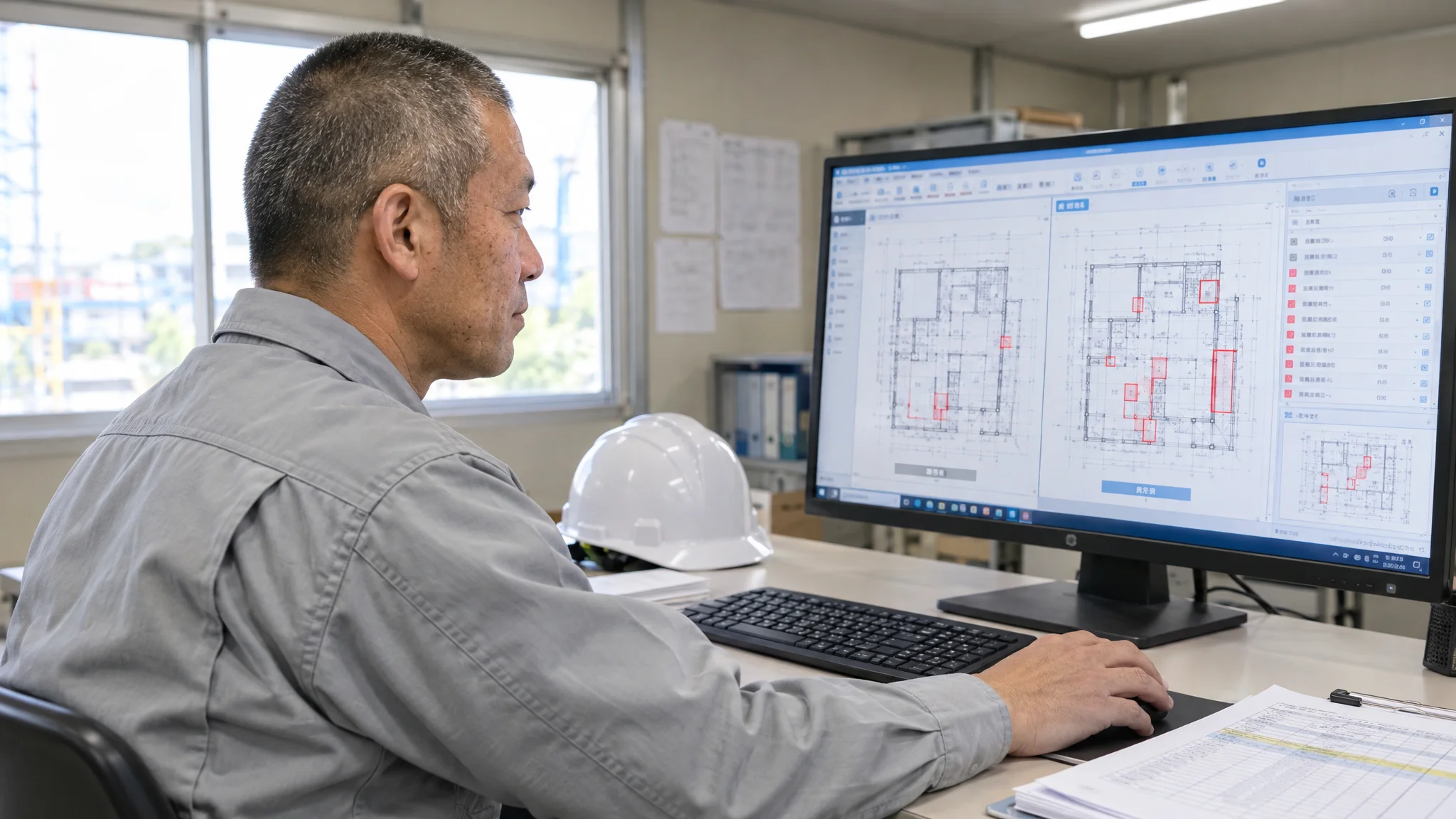
Table of Contents (Click to open/close)
1. Mechanisms for CV Difference Extraction that Surpass the Limits of Visual Inspection
In traditional drawing reviews, experienced engineers would place old and new drawings side-by-side and visually search for changes down to the millimeter, much like a "spot the difference" puzzle. However, in our actual support cases, there are endless instances where subtle dimension changes or annotation rewrites are overlooked, only for inconsistencies to be discovered weeks later. Algorithms utilizing Computer Vision (CV) perform not only pixel-level image comparisons but also geometric analysis of line information, allowing difference checks that used to take humans several hours to be completed in seconds.
The core of this technology lies not in simple overlaying, but in logical difference extraction based on the recognition of text and symbols within the drawings. For example, the AI determines whether a wall has moved by 10cm or if the drawing's layer settings have simply changed. This allows field personnel to focus only on "changes that truly require attention." This sophisticated use of data is based on the concept of "SSOT (Single Source of Truth)," which is common to DX in other fields, such as the automation of product master management in our In-house EC Construction and Growth Support.
2. Ensuring "Always the Latest Version" through Cloud Synchronization
Extracting differences alone is not enough. The most common trouble at sites is that "the latest version of the drawing is not on hand." By introducing a cloud-based drawing sharing system, the latest drawings updated at the design office or headquarters are immediately pushed to tablets in the field. A common occurrence at sites is workers operating based on old copies posted on whiteboards; this is solved by digitally configuring settings to physically "not display old versions."
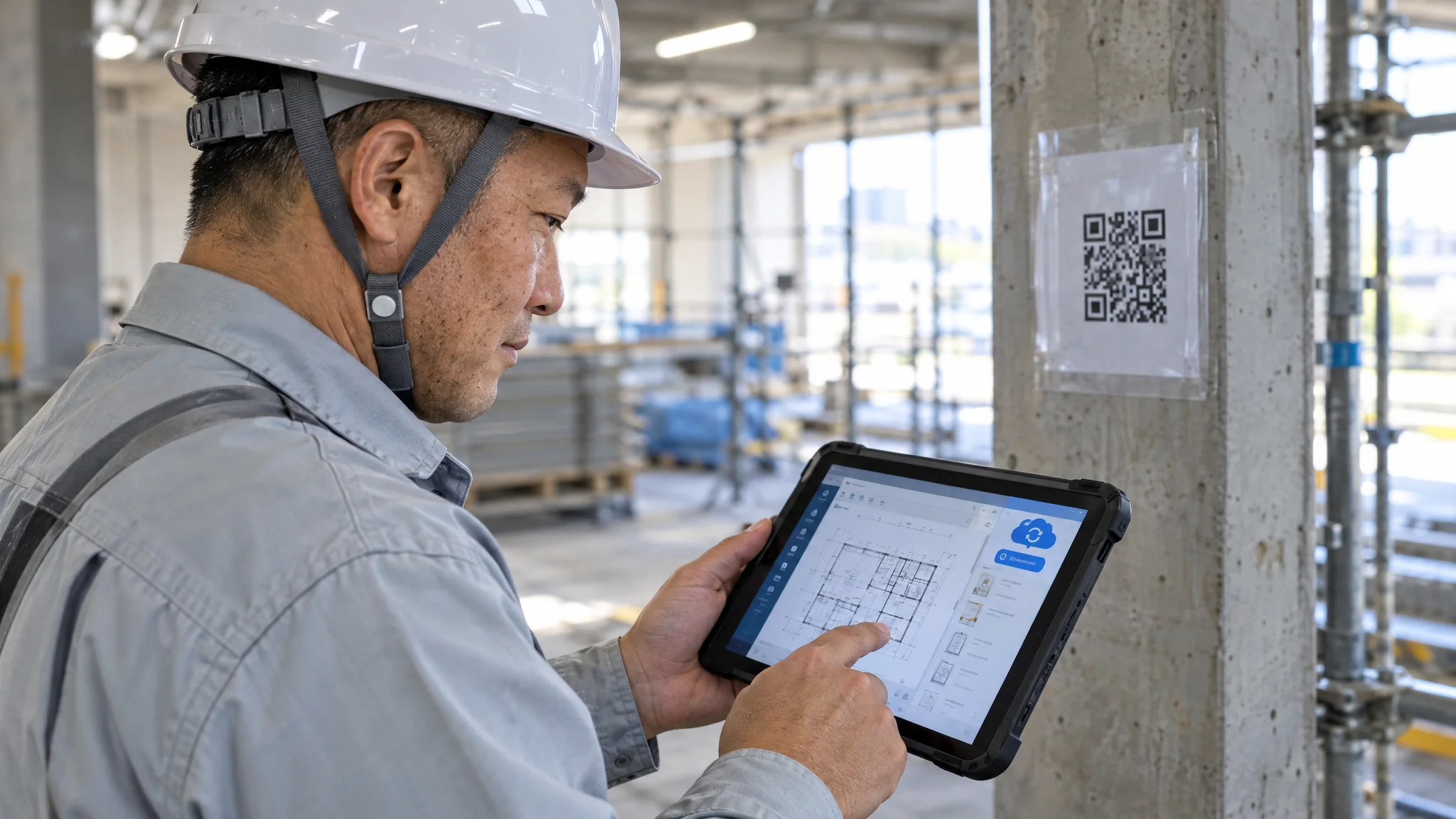
In the sites we support, there are cases where automating version control has reduced site supervisors' administrative work time by an average of 60 minutes per day. By placing QR codes throughout the site that, when scanned with a smartphone, always open the latest drawing with differences highlighted, information asymmetry can be eliminated. This logic is very similar to synchronizing inventory information and product pages in real-time to prevent lost sales opportunities in our In-house EC Construction and Growth Support.
3. The Impact of Field DX on Reducing Rework
Reducing rework leads not only to direct cost cuts but also directly to improved reliability through adherence to construction schedules. By combining automatic extraction via CV with cloud synchronization, it is possible to suppress the rework rate by more than 70% compared to conventional methods. Especially at large-scale sites where multiple contractors are involved, looking at a common "latest picture" is the only way to prevent communication errors.
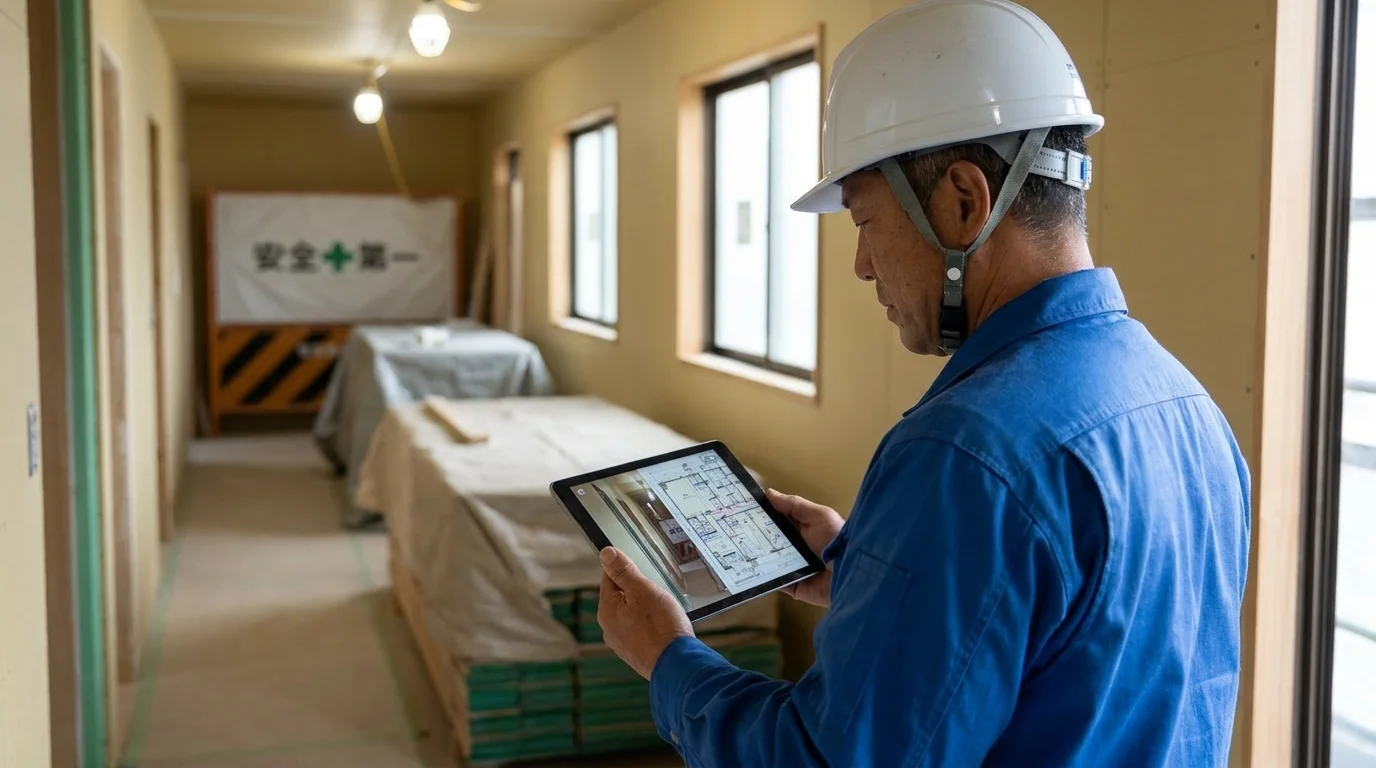
In our actual support, we recommend settings where a notification is sent to the smartphones of all relevant craftsmen the moment a drawing update notification arrives. This creates an environment where excuses like "I didn't hear about it" or "I did it based on the old drawing" no longer apply. This thorough "synchronization of information" is precisely what will become standard operational excellence at sites in 2026.
4. Steps Toward Implementation and Key Operational Points
The key to success lies not in the introduction of the tool itself, but in how the operational flow at the site is changed. First, start by establishing rules that prohibit analog drawing distribution and make the digital version the official record. Next, verify the accuracy of the CV-based difference extraction and tune it to a level the field can trust. A common case at sites is that tools are too complex and end up not being used, but by limiting operations to "just opening it," it is possible to involve workers who are unfamiliar with IT.
FAQ
- Q Can CV compare drawings that have handwritten corrections?
- A. Yes, it is possible. AI models as of 2026 can extract scanned handwritten redlines through image recognition and identify them as differences from the digital data. However, since it depends on resolution and the clarity of the handwriting, we recommend prior verification.
- Q What happens to synchronization if the signal at the site is poor?
- A. We utilize offline caching features. Once synchronized in a location with a signal, the latest difference drawings can be viewed even in basements or mountainous areas. We build a system that issues an alert if there are unread updates when communication is restored.
- Q How long does it take to see a return on investment relative to the implementation cost?
- A. While it depends on the scale of the site, preventing just one instance of critical rework is often enough to recover several years' worth of system usage fees. In many support projects, the ROI (Return on Investment) turns positive within one year of implementation.
Strategies to eliminate operational rework
Our DX experts support the construction of optimal CV solutions and synchronization infrastructure tailored to your company's specific operational workflows.
Talk to us for a free strategy consultationSummary
Rework caused by outdated drawings is no longer an "unavoidable mistake"; it is a "management failure" that can be solved with technology. By combining automated difference detection via computer vision with real-time cloud synchronization, you can dramatically reduce on-site stress and costs. Acknowledging the limits of visual inspection and establishing digital double-check mechanisms is the core of next-generation site management.
Published: October 30, 2026 / By: Osamu Yasuda

Osamu Yasuda
Senior Managing Director & COO
Meets Consulting Inc.
Supported 100+ EC operations & logistics projects; specialist in operations and cost optimization
Related Articles


References
- [1] Latest Trends in Computer Vision-Based Image Analysis Technology 2026
- [2] Research Report on Digital Twins and Drawing Management Automation in the Construction Industry
Disclaimer
本記事は情報提供を目的としており、専門的なアドバイスを代替するものではありません。導入による具体的な成果は、各現場の運用状況やデータの精度に依存するため、特定の利益や成果を保証するものではありません。