

[Must-see for beginners] What is cross-border EC? Basic knowledge and Glocalization strategies for small and medium-sized businesses to win in global niches
For small and medium-sized enterprises that want to expand their sales channels overseas in the face of a shrinking domestic market, cross-border electronic commerce (EC) is now an inevitable growth strategy. However, simply listing products on a platform for overseas markets will not lead to success. What is important is the perspective of "Glocalization," which means maintaining your company's unique values while deeply adapting to local culture and needs. In this article, we will explain from a professional perspective everything from the basics of cross-border e-commerce that beginners should know, to global niche strategies that find opportunities to win with limited resources.

Table of Contents (Click to Expand)
1. Definition of cross-border EC and trends in market size
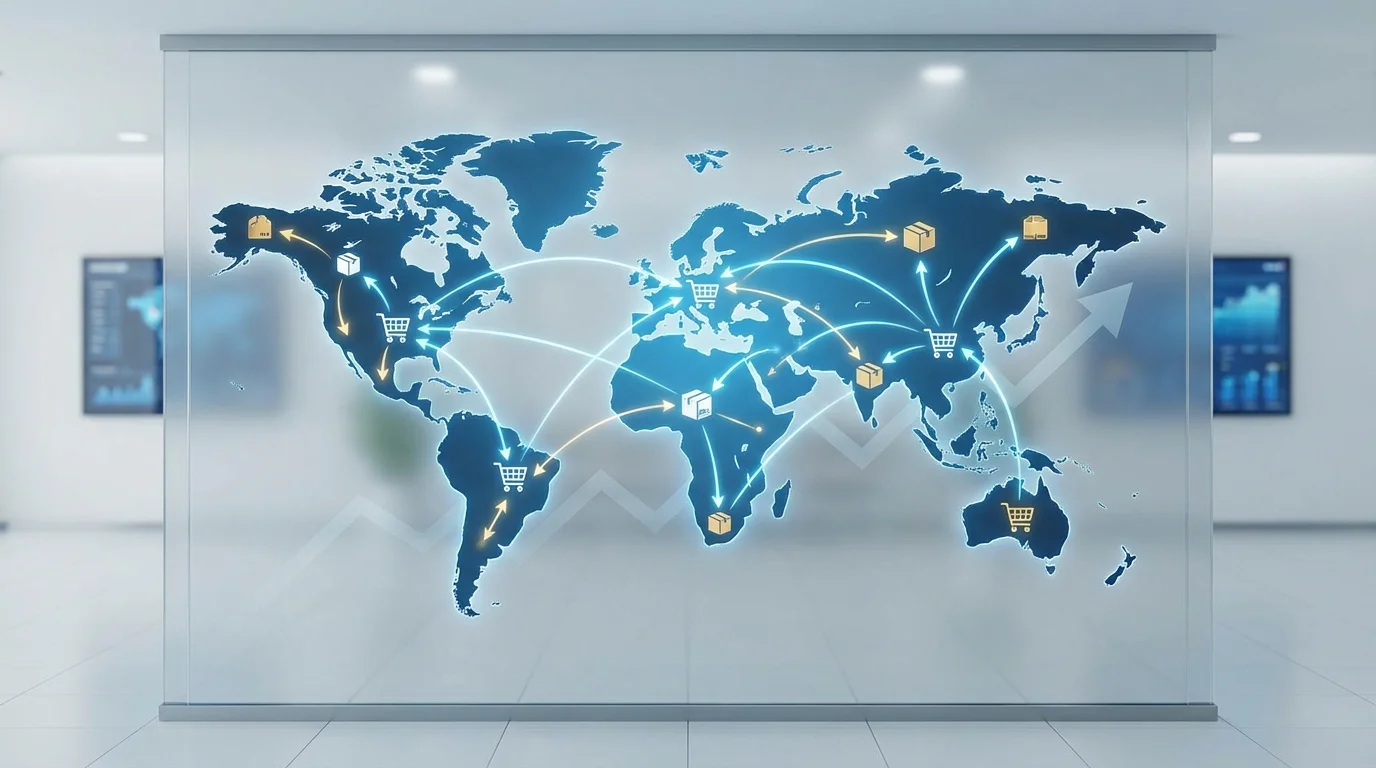
Cross-border e-commerce refers to mail-order sales that occur across national borders. Refers to a form in which consumers purchase products from e-commerce sites in countries other than their own. According to a report by the Ministry of Economy, Trade and Industry, the global cross-border e-commerce market continues to expand at a CAGR (compound annual growth rate) of approximately 20% or more, with demand particularly evident in the Asian and North American markets.
Behind this growth are the spread of smartphones, the advancement of logistics infrastructure, and the ease of multilingual support and multi-currency payments. Direct to Consumer (D2C) opportunities are expanding for small and medium-sized businesses, which allow them to directly reach customers around the world through digital platforms without the need for large-scale store networks.
2. What is the “global niche” that small and medium-sized enterprises should aim for?
Rather than competing head-on with large companies with strong capital, small and medium-sized businesses can win by targeting "global niches" that specialize in specific categories and needs. For example, traditional Japanese crafts, gadgets tailored to specific hobbies, and skin care products containing niche beauty ingredients have the potential to gain enthusiastic support from specific demographics.

By deeply understanding the "Pain Points" and "Desires" of your target market and presenting unique solutions to them, you can build a high-margin business model that does not get caught up in price competition.
3. Glocalization Strategy: Difference from Localization
The key to successful cross-border e-commerce lies in Glocalization. This is a coined word that combines "Global" and "Local."
- Localization (Localization): is not simply translation or currency conversion。just matching the language。
- Glocalization (glocalization): brand identity (Global)をwhile maintaining, local purchasing habits, culture, regulations, customer support expectations (Local)deeply adapting to。
For example, in the US market, ``speedy delivery'' is given top priority, while in some parts of Europe, ``environmentally friendly packaging'' is directly linked to brand evaluation. Incorporating these regional differences into your strategy will improve your CVR (conversion rate).
4. Basics of SEO and customer attraction in cross-border EC
In order for overseas customers to find your website, content SEO based on search intent is essential. In addition to ``Keyword Research'', which analyzes what keywords are searched by users in the target country, the quality of the information is required, taking into account Google's EEAT (Experience, Expertise, Authority, and Reliability).

Site structure optimization (Technical SEO) is also important. By setting the `hreflang` tag appropriately and correctly telling search engines "which page should be displayed to users in which language/region," you can maximize your exposure in search results.
Frequently Asked Questions
- Q. Cross-border ECをWhat is the minimum required to get started??
- A. 決済手段 (credit card、PayPal等)、international shipping methods (EMS、DHL等)、along with multilingual product descriptions and customer support systems make up the minimum configuration。
- Q. language barrierHow should this be overcome??
- A. in the initial stage,AI翻訳をwhile utilizing, for major sales pages and policies, native checks by localsinsertingをis recommended。unnatural language is a cause ofをdamaging trust。
- Q. Which country is best to start with??
- A. Starting from large-market countries like the the United StatesUS and China, or from Taiwan and Southeast Asia where Japanese products have high affinity and logistics costsをcan be kept low, is the general approach for a small start。
Take Your EC Business to the Next Stage
From launching cross-border e-commerce to building a global niche strategy, our expert consultants will provide support.
Consult on Strategy for FreeSummary
Cross-border e-commerce is a powerful weapon for small and medium-sized businesses to leap forward on the global stage. The key to success is to develop a "Glocalization strategy" that goes beyond simple language support and to identify "global niche" markets where your company's strengths can be most leveraged. Start with market research and acquire basic knowledge, and move forward step by step to advance into the global market.
Published: February 24, 2026

Read Also


References
- [1] Ministry of Economy, Trade and Industry 'FY2022 E-Commerce Market Survey'
- [2] JETRO (JETRO (Japan External Trade Organization))'Cross-border EC Utilization Guidebook'