

【What Is Amazon International Shipping? D2C Strategy and Market Entry Manual for SMEs to Win in Cross-Border EC】
For SMEs looking to "expand sales channels overseas as the domestic market shrinks," Amazon international shipping (Amazon Global Selling) is the lowest-barrier entry model. However, simply listing products won't work—high CAC (customer acquisition cost) will squeeze out profits. This article thoroughly explains the cross-border EC system, D2C strategies for maximizing LTV, and a specific market entry manual from expert perspectives.

Table of Contents (Click to Expand)
1. Amazon International Shipping Basics: FBA vs. Self-Fulfillment
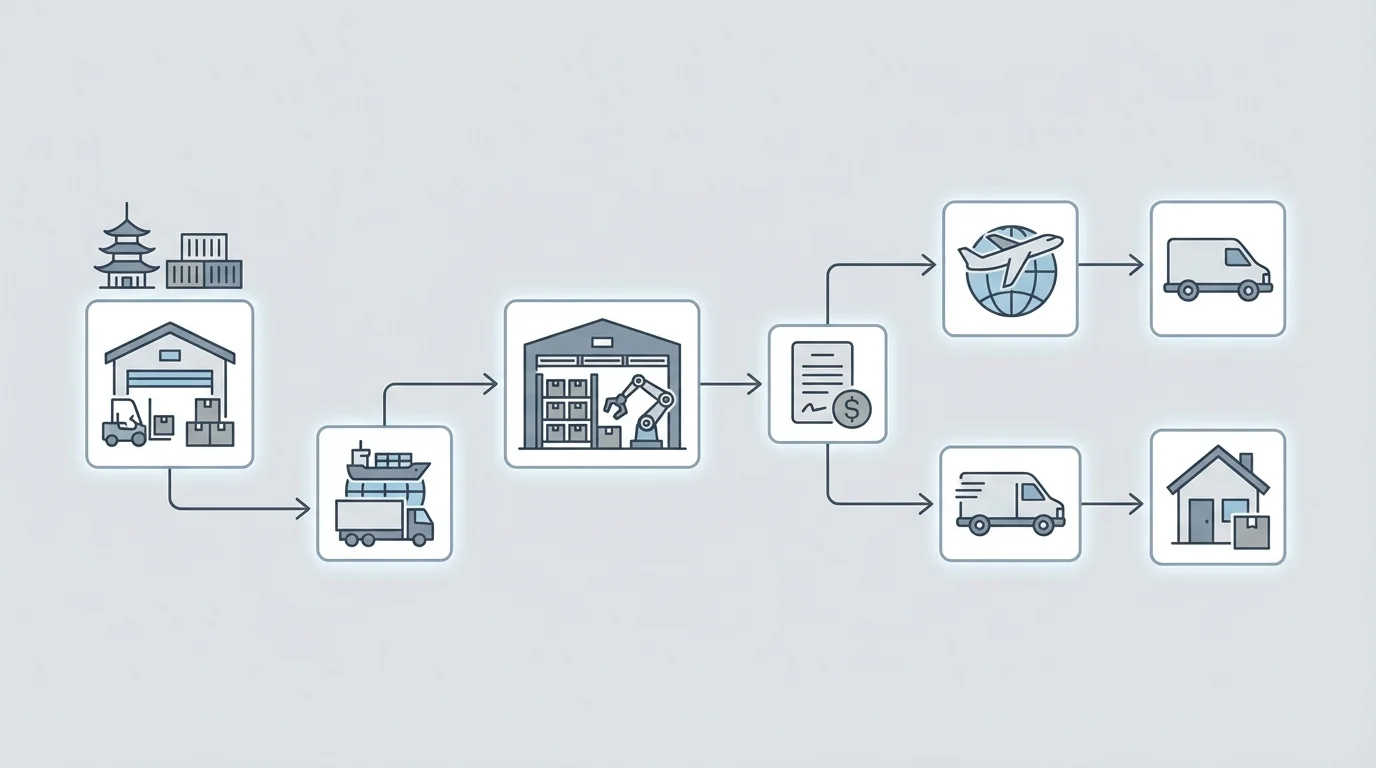
There are two main routes for delivering products overseas through Amazon. One is the "FBA International Shipping Program" which ships from Amazon's Japanese warehouses to overseas destinations, and the other is "self-fulfillment (MFN)" where the seller uses international postal services.
For SMEs aiming to scale, utilizing FBA (Fulfillment by Amazon) is essential. Since Amazon handles some customs procedures and customer service, back-office operations can be significantly streamlined. Meanwhile, self-fulfillment serves as a MECE alternative for test marketing with small order volumes.
2. "Glocal" D2C Strategy for SMEs to Win in Cross-Border EC
In cross-border EC, simply displaying good Japanese products isn't enough. A "glocal strategy" that balances "localization" to meet local needs with maintaining a Japanese brand "identity" is required.
- Brand Story Translation: Not mere literal translation, but converting into benefits that resonate within the local cultural sphere.
- Price Strategy Redefinition: Presenting the justification for premium pricing against competitors after accounting for international shipping and customs.
- UGC Utilization: Building social proof through local influencers.
3. Optimizing Logistics Costs with the "FBA International Shipping Program"
The greatest advantage of Amazon international shipping is reaching Amazon users in over 100 countries at no additional cost. Sellers simply deliver to domestic FBA warehouses, and Amazon handles shipping while complying with import/export regulations.
However, there are restrictions on eligible product categories, so verification at the ASIN level is necessary beforehand. Especially for hazardous materials, size restrictions, and local regulations (food, cosmetics, etc.), legal checks are essential.

4. Market Analysis Data: Cross-Border EC Growth Potential
The chart below compares growth forecasts for the domestic EC market and cross-border EC market. For SMEs, investing in areas where the market is expanding is a prerequisite for securing long-term ROI (Return on Investment).
Frequently Asked Questions
- Q. Who bears the customs duties when shipping internationally?
- A. With the FBA international shipping program, the buyer generally becomes the Importer of Record and pays the customs duties. However, there are cases where selling under DDP (Delivered Duty Paid) terms is selected, so be sure to confirm in advance.
- Q. I'm worried about customer service in English.
- A. If you are using FBA, Amazon handles the primary customer service for shipping and returns. For product-specific inquiries, using translation tools or specialized operations management services is recommended.
Take Your EC Business to the Next Stage
From strategic design to operations of Amazon international shipping, our specialized consultants provide support.
Get Free Strategy ConsultationSummary
Amazon international shipping is a powerful weapon for SMEs to challenge the global market. By combining logistics automation based on FBA with D2C strategies that capture local market characteristics, you can achieve continuous brand growth rather than one-off sales. Start by redefining your company's strengths and take the first step with proper market selection.
Published: 2026-02-25 / Author: Yuta Ito

Related Articles



You May Also Like
References
- [1] Amazon Global Selling Support Documentation
- [2] JETRO: Cross-Border EC Marketing Guidebook