

[2026 Latest] Automating FAX Orders with AI-OCR: A Prescription for Reducing Data Entry Workload by 90%
"Even when we ask clients to place orders via EC, they end up sending them by FAX." This is one of the most common complaints we hear in the field. Forcing digitalization carries the risk of losing business, yet continuing manual transcription leads to increased costs and errors. In this article, we explain specific strategies for "FAX x AI-OCR x API Integration" from a practitioner's perspective—completing digitalization on the receiving end without changing the client's operations at all.

1. Why "Forcing EC Adoption" Fails
In actual consulting scenarios, we often see B2B EC adoption rates stagnating at around 30%. The primary reason boils down to the fact that "there is no benefit for the ordering party (the client)." For a client, the speed of handwriting on a familiar FAX form and sending it is overwhelmingly "faster" than the effort of booting up a PC, logging in, searching for products, and adding them to a cart.
Forcing system usage leads to a decrease in ordering frequency or losing clients to competitors. In our In-house EC Construction & Growth Support, we prioritize designing "non-invasive digitalization" that places no burden on the other party. The client continues to send FAXes, while you receive them as data. The latest AI-OCR is what bridges this gap.
2. How AI-OCR Reduces Data Entry Workload by 90%
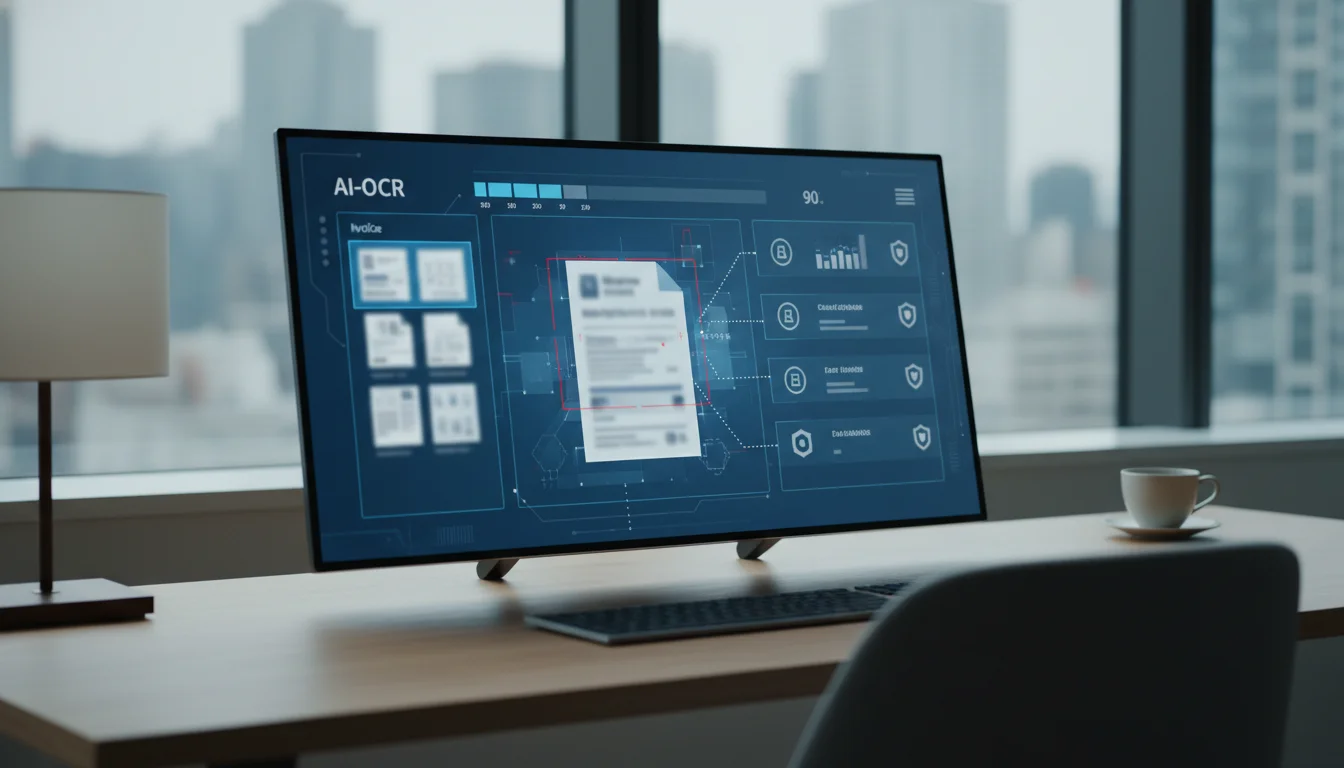
Traditional OCR could only read fixed formats (standardized forms) and could not handle FAXes with different layouts for each client. However, AI-OCR as of 2026 uses deep learning to infer from context "where the product name is and where the quantity is."
Based on actual measurements in the field, tasks that took 5 minutes per entry manually have been reduced to under 30 seconds by combining AI-OCR with the API integration described later. This is not just about speed; it means the elimination of "hidden costs" such as transcription errors.

3. Achieving "Seamless" DX through LINE Integration
LINE integration is gaining attention as an alternative to FAX. Small-scale shops and on-site staff, in particular, are more accustomed to using smartphones than PCs. By simply "taking a photo of the order form with a smartphone and sending it via LINE" instead of a FAX, the AI-OCR on the backend analyzes it and automatically creates order data.
In actual support cases, we build a workflow where images received via Cloud FAX are automatically sent to AI-OCR while maintaining the existing FAX number. This allows clients to face an extremely low hurdle—simply "sending a FAX as usual" or "sending a photo via LINE"—while the supplier obtains complete digital data.
4. Key to Implementation: Completing Automation via API Integration
Even if you implement AI-OCR, if you are outputting the read data as a CSV and manually importing it into your core system, your DX is only half successful. The true value lies in directly connecting the OCR and the core system via API within the framework of In-house EC Construction & Growth Support.
A common issue in the field is "fluctuations" in product names. The AI automatically links (maps) "Product A" written by the client with the system's official name "Product A (Pack of 10)" and automatically completes the process up to inventory allocation. Only by going this far can you achieve the dramatic result of a 90% reduction in data entry workload.

FAQ
- Q. Can you handle cases where FAX formats vary by client?
- A. Yes, it is possible. Modern AI-OCR understands the meaning of characters rather than relying on coordinate specifications, allowing it to digitize non-standard forms with high accuracy.
- Q. How should we handle checks if a misreading occurs?
- A. You can use the feature where the AI highlights areas with low confidence. By having humans only check and correct "suspicious areas," you can eliminate the need for checking every single item.
- Q. Does implementation require modifications to our core system?
- A. If the system has a public API, the process is seamless. Even if it doesn't, we can integrate without modifying your existing system by combining it with RPA (automation tools).
Taking Your EC Business to the Next Level
Why not digitize analog FAX orders with zero burden on your business partners?
Our consultants, who know the front lines inside out, will propose the optimal automation flow.
Summary
The solution for "EC platforms that partners won't use" lies not in forcing them onto a system, but in using AI to reconstruct the receiving-side process. By leveraging existing touchpoints like FAX and LINE while implementing AI-OCR and API integration, it is entirely possible to reduce data entry man-hours by 90% and eliminate errors. Maximizing your own productivity without changing the partner's operations—this is the realistic answer for B2B DX in 2026.
Published: October 14, 2026 / By: Osamu Yasuda

Osamu Yasuda
Senior Managing Director & COO
Meets Consulting Inc.
Supported 100+ EC operations & logistics projects; specialist in operations and cost optimization
Related Articles


References
- [1] Japan B2B Net Shop Association, "B2B EC Market Survey 2024"
- [2] Ministry of Economy, Trade and Industry, "Guidelines for Promoting Digital Transformation"