
[2026 Latest] Strike While the Iron is Hot: Maximizing 'Speed to Lead' Strategies with AI OCR and LLMs
Have you ever stood before a mountain of business cards collected at an exhibition or offline event and thought, "By the time we finish data entry, the leads will have already gone cold"? In 2026 B2B marketing, maximizing 'Speed to Lead'—the time from lead acquisition to the first approach—is no longer just a goal, but an essential survival strategy. In this article, we explain the latest data structuring workflows that combine AI OCR and Large Language Models (LLMs) to instantly transform business cards into "sales power."
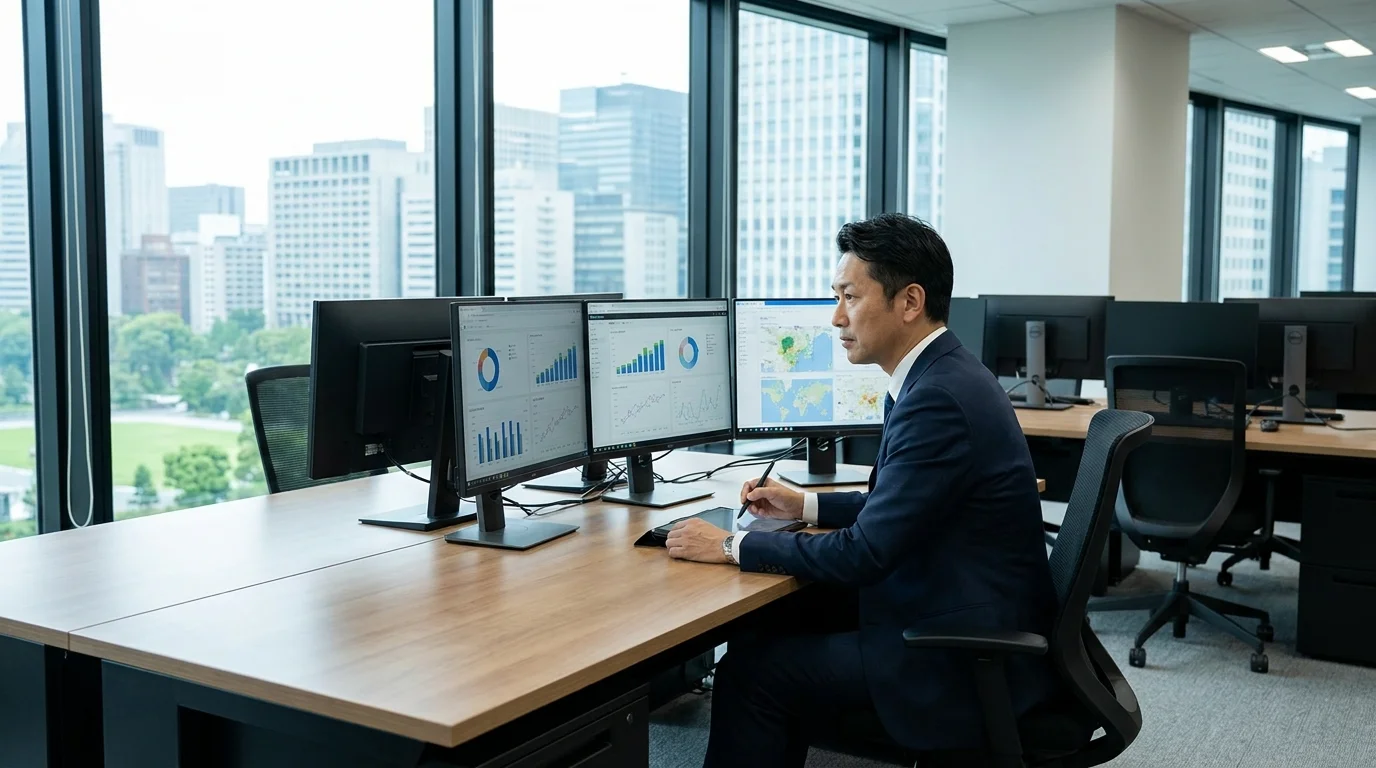
Table of Contents (Click to expand/collapse)
- 1. Preventing Business Card "Stagnation": The Technical Paradigm Shift of AI OCR × LLM
- 2. The Importance of Speed to Lead: Correlation Between Approach Speed and Conversion Rates
- 3. Implementation: Automation Workflows Directly Connecting Exhibition Venues to CRM
- 4. The "Human-Centric" AI Approach Required in 2026
1. Preventing Business Card "Stagnation": The Technical Paradigm Shift of AI OCR × LLM
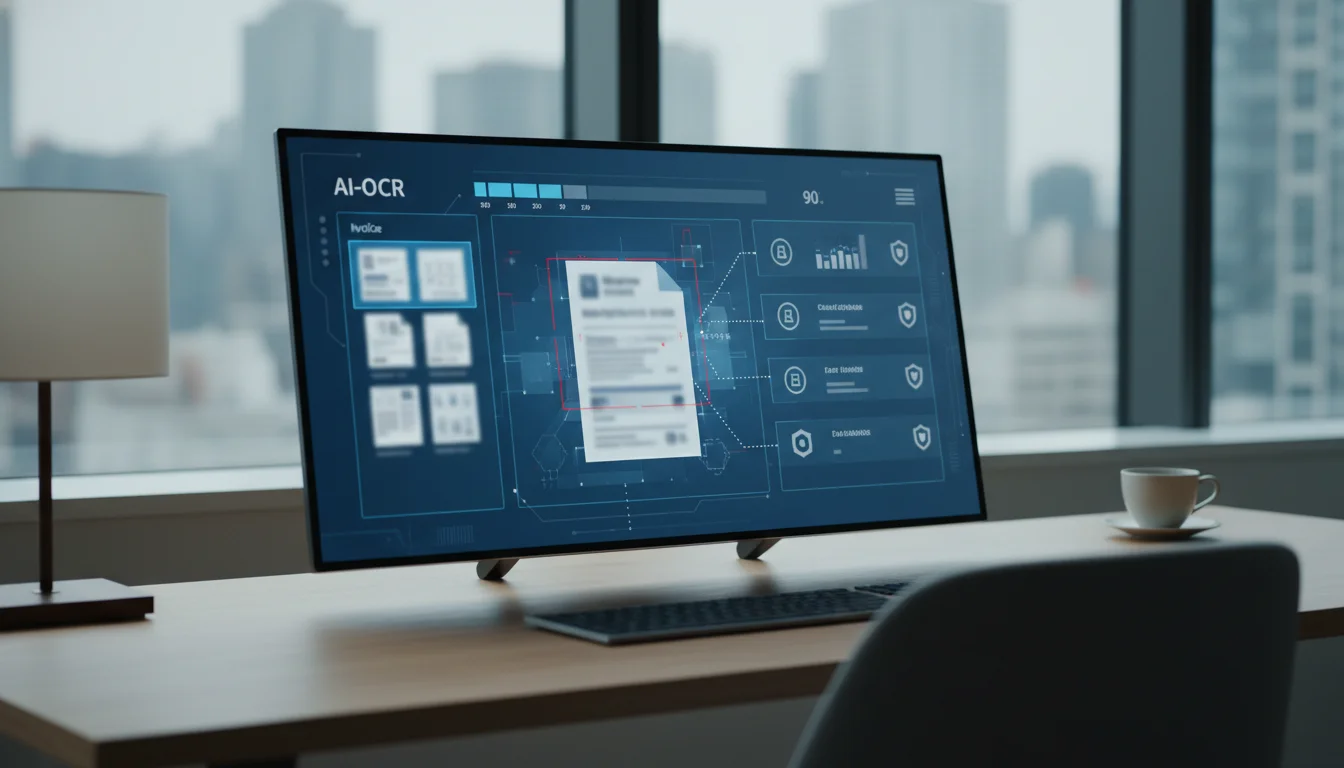
Traditional business card digitization services touted "accuracy" through manual entry, but this came with a fatal time lag of several days to a week. However, current AI OCR technology has reached a stage where it goes beyond simple character recognition and understands "context" by integrating with LLMs (Large Language Models).
For example, unstructured information such as handwritten notes on the back of a card—like "budget available next term" or "dissatisfied with current tools"—can be instantly interpreted by AI and automatically assigned to the appropriate CRM fields. This elevates the administrative task of data entry into an intelligent process of customer understanding.
2. The Importance of Speed to Lead: Correlation Between Approach Speed and Conversion Rates
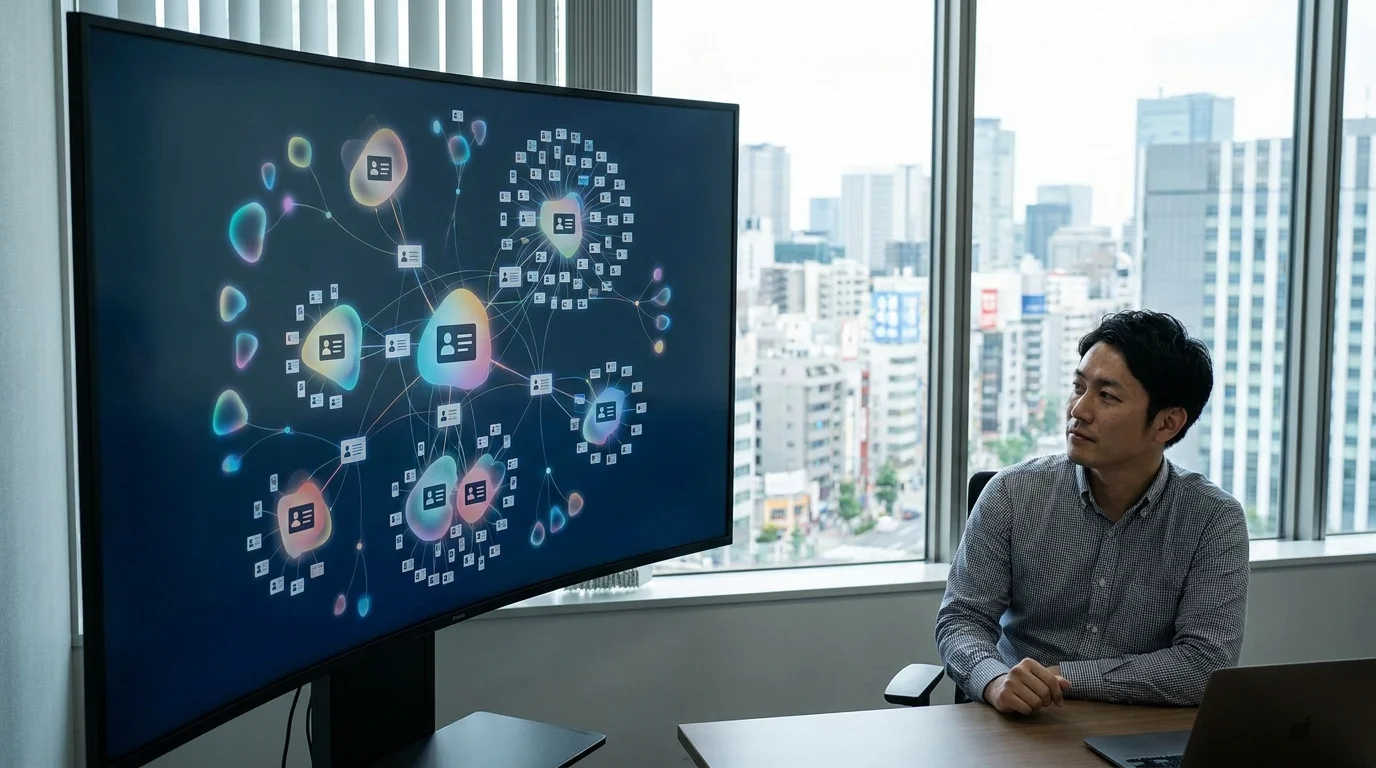
The "response within 5 minutes" metric, long cited in the marketing world, is also extremely effective for post-exhibition follow-ups. According to statistical data, the shorter the time from inquiry or contact to the first follow-up, the more dramatically the lead-to-opportunity conversion rate improves.
As shown in the figure above, whether you can send a personalized email by the evening of the exhibition or the following morning is the deciding factor in differentiating yourself from competitors. By leveraging AI, it becomes possible to compress this lead time to nearly zero.
3. Implementation: Automation Workflows Directly Connecting Exhibition Venues to CRM
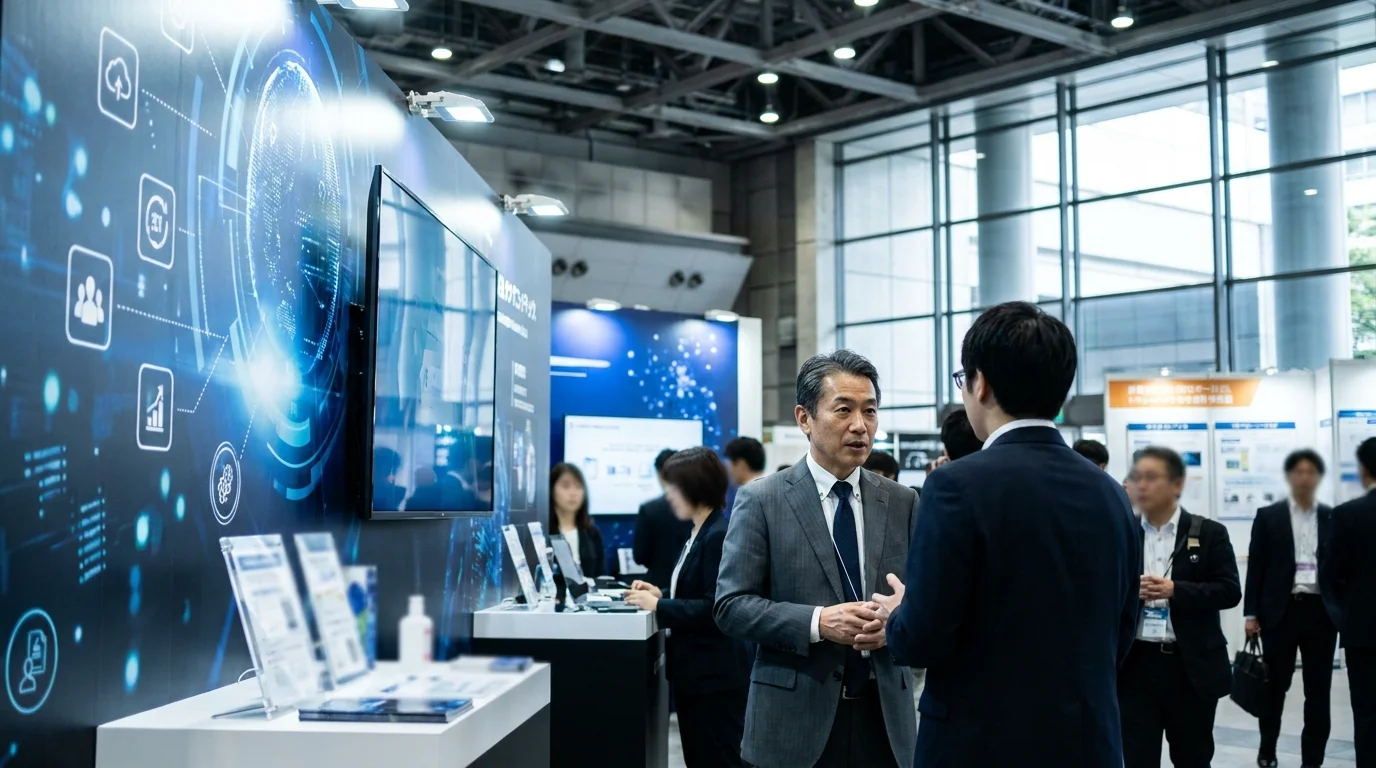
The specific workflow is as follows. First, staff at a Japanese exhibition venue scan business cards using smartphones. This data is instantly sent to the cloud, where AI OCR identifies the "Company Name," "Name," and "Job Title." Simultaneously, the LLM supplements the company's business description from the web and performs scoring.
If specific criteria are met (e.g., decision-maker in a specific industry), the MA (Marketing Automation) tool is triggered, and a notification is sent to inside sales. This entire process takes only a few minutes. This allows you to provide an experience where, while the visitor is still walking around other booths after leaving yours, a thank-you email and a proposal for a follow-up appointment arrive on their smartphone.
4. The "Human-Centric" AI Approach Required in 2026
Speed isn't everything. The true value of AI automation lies in creating time for humans to focus on "customer dialogue." By delegating routine data entry to AI, sales representatives can dedicate their time to creating deep proposals based on the notes on the back of business cards and the content of their conversations.
The integration of AI OCR and LLMs is not just an efficiency tool, but a strategic investment to improve Customer Experience (CX). In 2026 exhibition strategies, whether or not this "digital-first" business card management workflow is implemented will manifest as a difference in contract opportunities worth hundreds of millions of yen.
FAQ
- Q. Can AI OCR accurately read complex Japanese business cards or those with vertical text?
- A. Yes, as of 2026, the latest AI OCR models can recognize vertical layouts unique to Japanese and complex logo placements with high precision. Furthermore, because the LLM checks the consistency of company names and addresses, the risk of misrecognition is significantly reduced.
- Q. Is it difficult to integrate with existing CRMs (such as Salesforce or HubSpot)?
- A. Many AI digitization tools come standard with API integration. By utilizing no-code tools, it is possible to build a workflow from scanning to CRM registration in just a few days, even without development engineers.
- Q. Are there security risks associated with having AI read business card information?
- A. Enterprise-grade AI services offer opt-out settings to ensure input data is not used for training, and data processing on domestic servers can be selected. By designing operations compliant with P Mark and ISMS standards, you can implement these solutions securely.
AI Strategies to Accelerate Your Lead Generation
Struggling to leverage business cards from trade shows? We support the construction of automation through the latest AI OCR integration.
Talk to us for a free strategy consultationSummary
The value of business cards acquired at trade shows diminishes over time. A "Speed to Lead" maximization strategy, combining AI OCR and LLM, is the key to shortening lead times from days to minutes and dramatically improving conversion rates. In the 2026 business landscape, this technology-driven "immediate approach" will become the standard and a decisive factor in maximizing the ROI of offline events.
Published: May 28, 2026 / By: Osamu Yasuda

Related Articles

References
- [1] Forbes: The Importance of Speed to Lead in B2B Marketing (2025)
- [2] Gartner: Emerging Technologies and Trends 2026 - AI OCR and LLM Integration