

[2026 Latest] Compliance with the Amended Electronic Books Preservation Act: A Strategic Roadmap for Achieving STP (Straight-Through Processing) via AI-OCR
Following the end of the grace period for the Electronic Books Preservation Act in January 2024, Japanese accounting departments are now at a turning point, moving from mere "digitization" to "full automation." Of particular note is the achievement of STP (Straight-Through Processing) through the integration of AI-OCR (Artificial Intelligence-based Optical Character Recognition) and accounting systems. In this article, we provide a detailed explanation of a strategic roadmap for completing the process from invoice receipt to journal entry without human intervention, while complying with legal requirements.

Table of Contents (Click to expand/collapse)
- 1. The Essence of "Accounting DX" Beyond Compliance with the Electronic Books Preservation Act
- 2. Mechanisms of Automated Journaling via AI-OCR and Strategies for Improving Accuracy
- 3. A Three-Step Implementation Roadmap for Achieving STP
- 4. Optimization of Human Capital: Business Process Re-engineering (BPR)
1. The Essence of "Accounting DX" Beyond Compliance with the Electronic Books Preservation Act
For many companies, compliance with the amended Electronic Books Preservation Act tends to be a defensive posture focused on "fulfilling storage obligations." However, the true objective lies in eliminating analog paper culture and maximizing the speed of data flow.
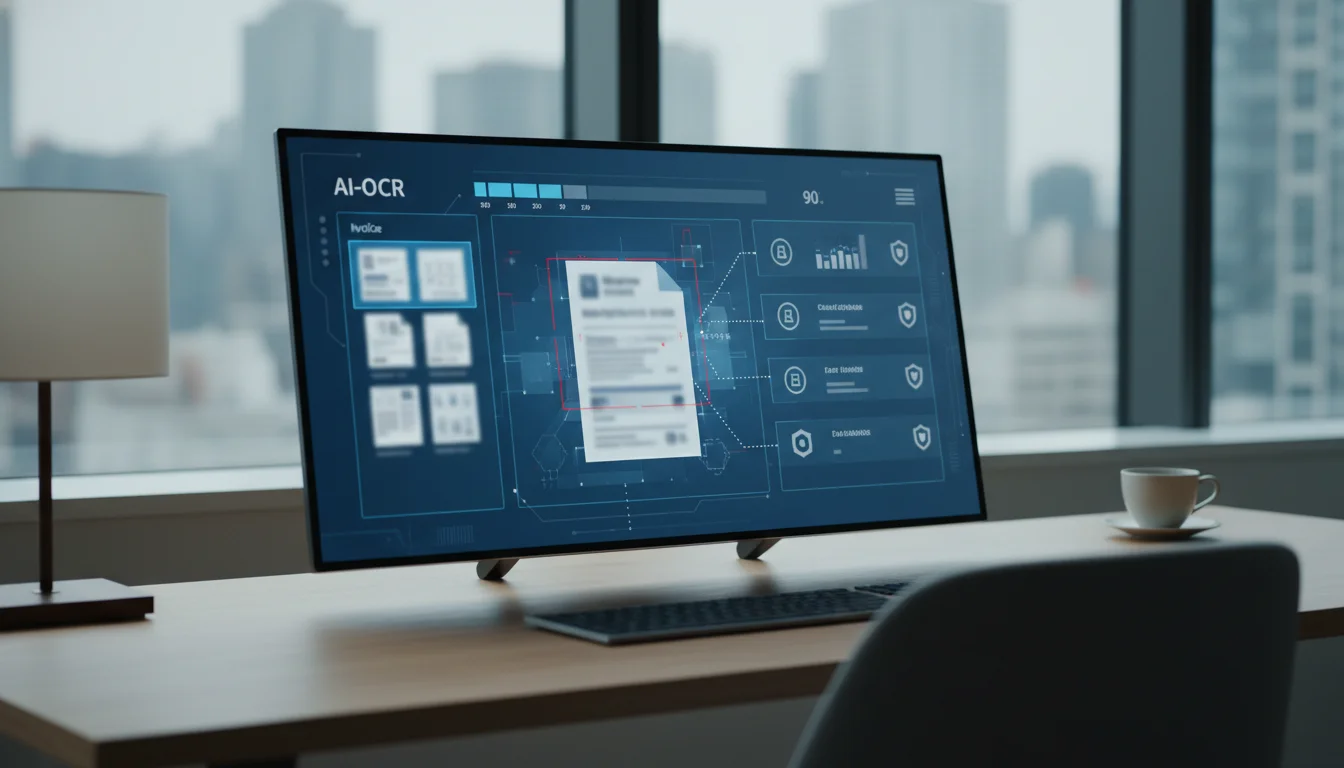
In traditional accounting operations, there was a "double effort" involved in visually checking the contents of received invoices and manually entering them into accounting software. By introducing AI-OCR, it becomes possible to automatically extract dates, amounts, vendors, and registration numbers (for the Invoice System) from non-standard forms and structure them as data.
2. Mechanisms of Automated Journaling via AI-OCR and Strategies for Improving Accuracy
The greatest advantage of AI-OCR is its ability to handle "non-standard forms" through learning capabilities. While traditional OCR required coordinate specification (fixed formats), AI determines "what is written where" based on context.
Furthermore, AI learning from past journaling patterns dramatically improves the accuracy of account title inference. For example, the process of automatically assigning the sub-account "Utilities" when the string "XX Electric Power" is recognized falls into this category.
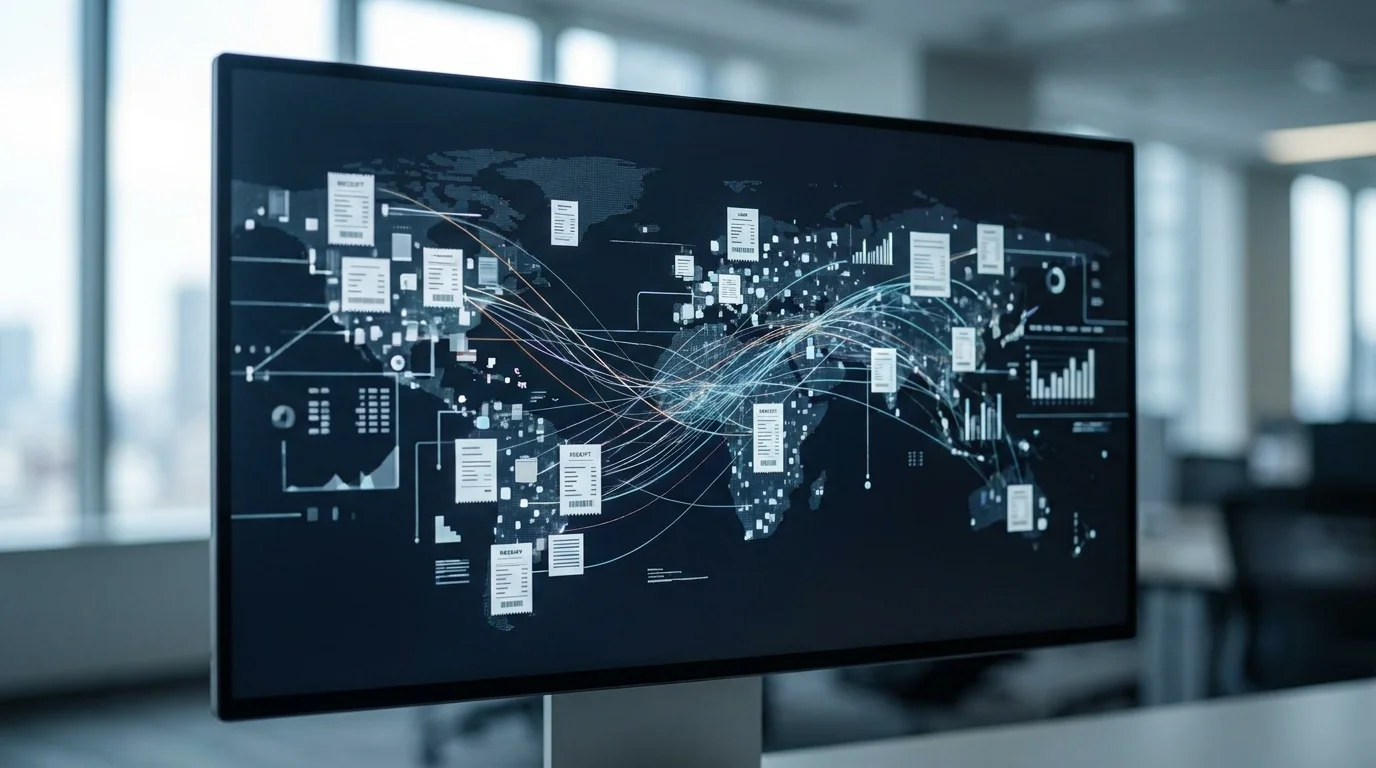
However, one should not over-rely on 100% accuracy. To achieve STP, it is essential to build an "exception management" flow where humans only verify items with a Confidence Score below a certain threshold.
3. A Three-Step Implementation Roadmap for Achieving STP
Even if AI-OCR is introduced, its effectiveness will be limited if surrounding processes remain analog. We recommend proceeding with the following three steps.
- Step 1: Data Digitization and Legal Compliance
Selection of a platform that meets the storage requirements for scanner storage and electronic transaction data. - Step 2: Automated Extraction and Integration via AI-OCR
Perform API integration with accounting systems or ERPs to automate the linking with master data (vendors and accounts). - Step 3: Establishment of STP (Straight-Through Processing)
Digitize approval workflows and automatically integrate everything up to the final payment (FB data creation).

4. Optimization of Human Capital: Business Process Re-engineering (BPR)
The ultimate goal of automation is not just cost reduction. It is to free accounting staff from simple "data entry" and shift them toward high-value-added tasks such as "financial analysis" and "management decision support."
To achieve this, Business Process Re-engineering (BPR) is indispensable. We must ask fundamental questions such as "Why is this approval seal necessary?" or "Can this verification task be replaced by a system?" and create new rules based on the premise of the latest AI technology.
FAQ
- Q. What is the reading accuracy of AI-OCR?
- A. For printed text, it boasts an accuracy of 95–99% or higher, but this decreases for handwritten or blurred text. The key is to choose a tool with a UI that allows humans to immediately correct areas where the AI determines it has "low confidence."
- Q. Can AI-OCR also satisfy the "search requirements" of the Electronic Bookkeeping Act?
- A. Yes. Since the "transaction date," "amount," and "vendor" data extracted by AI-OCR can be used directly as a search index, it eliminates the need for manual entry of attribute information.
- Q. What are the typical implementation costs and ROI (Return on Investment)?
- A. An increasing number of SaaS options are available starting from a few tens of thousands of yen per month. For companies processing more than 200 invoices monthly, it is common to achieve a return on investment within one year through labor cost savings alone.
Accelerate Management through Back-Office Automation
We provide end-to-end support from AI-OCR implementation to Electronic Bookkeeping Act compliance and BPR.
Talk to us for a free strategy consultationSummary
Looking toward 2026, the future of accounting lies in "automated data circulation" with AI-OCR as the hub. Rather than treating compliance with the revised Electronic Bookkeeping Act as a mere legal obligation, next-generation back offices require a strategic perspective that links compliance to overwhelming operational efficiency through STP (Straight-Through Processing) and the reallocation of human capital. Start by visualizing your company's document workflows.
Published: June 10, 2026 / By: Osamu Yasuda

Related Articles


References
- [1] National Tax Agency, "Q&A on the Electronic Bookkeeping Act (Latest 2024 Edition)"
- [2] Japan CFO Association, "Survey Report on the Status of DX Promotion in Accounting Departments"