

[2026 Latest] The New Trend in Procurement DX: Optimizing Rain Operation Rates via Craftsman Supply-Demand Forecasting AI
The biggest factors significantly hindering productivity at construction sites have always been "weather" and "uncertainty in craftsman scheduling." In particular, the phone-based adjustments on the day before or the day of a rain forecast have been a workload so heavy it could be described as "hell" for site managers. However, at the forefront of construction DX in 2026, the integration of craftsman supply-demand forecasting AI and matching apps is accelerating the movement to break this negative cycle. At the sites we support, "dynamic resource optimization" that goes beyond mere digitalization has become the decisive factor determining a company's profit margins.
1. Eliminating the Sunk Cost of "Rain Adjustments" with AI
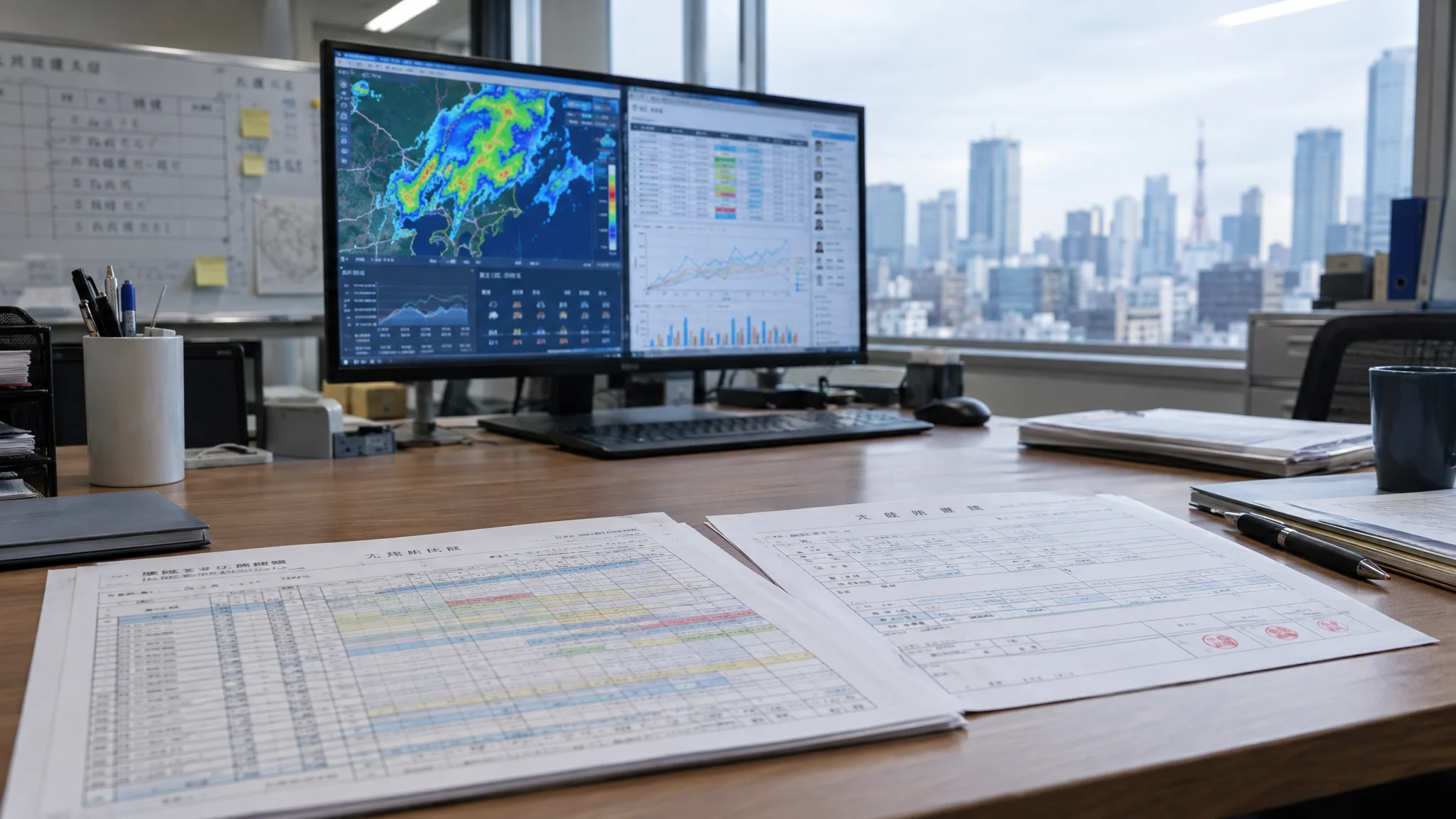
A common sight at the projects we support is the site manager calling dozens of craftsmen one by one to adjust reschedule dates the moment a decision is made to cancel due to rain. The time spent on these "phone adjustments" can amount to several hours per instance, robbing them of time that should be focused on safety and quality management. This is a clear sunk cost.
The latest supply-demand forecasting AI cross-analyzes weather data with past performance records to calculate the probability of cancellation due to rain 48 hours in advance. Based on this forecast, the matching app recommends "automatic shifts to indoor work during rain" or "reassigning personnel to nearby indoor sites." This allows for a reduction in the manager's phone time by over 80%, making it possible to minimize site downtime.
2. Resolving Bottlenecks via Craftsman Matching Apps
In construction DX, the concentration of actual demand for specific skilled trades always becomes a bottleneck. Traditional phone-based procurement relies on "relationships" with existing partner companies, making it impossible to respond to sudden vacancies or spikes in demand. This is where craftsman matching apps prove their worth.
At the sites we support, we establish a system that allows immediate access to a pool of craftsmen whose skill sets and evaluation scores are visualized through the app. This prevents schedule delays caused by shortages in specific trades. Furthermore, by applying the platform operation expertise cultivated through Own EC Site Construction & Growth Support, the key to smooth site operations lies in resolving information transmission friction within the construction industry's unique "multi-layered subcontracting structure" through the single interface of an app.
3. Mechanisms for Visualizing Supply-Demand Balance and Resource Leveling
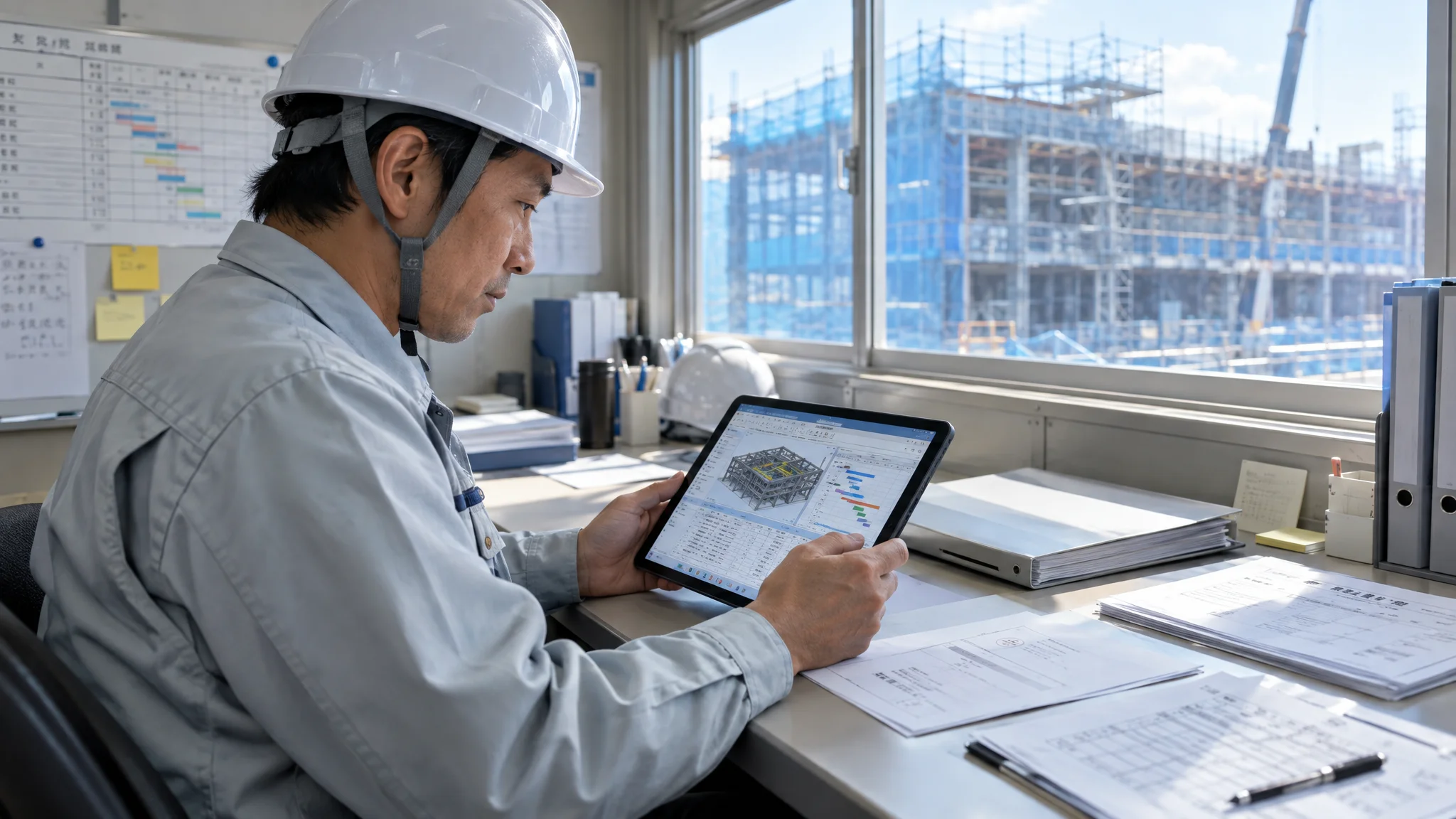
To maximize site operation rates, "leveling" resources is essential. A trap many companies fall into is carrying an excess of craftsmen during busy periods and letting them become idle assets during slow periods. Visualizing the supply-demand balance with AI flattens these waves.
Specifically, the AI aggregates construction schedule data for all sites in each area and predicts "when, which trades, and how many" will be needed. Based on this prediction, the matching app encourages early ordering with incentives like "early bird discounts," or conversely, suggests sharing resources with other companies' sites during periods of oversupply. This type of dynamic resource management is the standard for construction procurement in 2026.
4. Dynamic Governance in Construction Procurement Required for 2026
A common occurrence on-site is that even after digital tools are introduced, adjustments continue to be made based on the "site manager's intuition." To prevent this, governance is needed to establish data-driven decision-making as part of the organizational culture. Procurement DX is not just a replacement of tools; it is the redesign of the business process itself.
For example, dramatic improvements can be expected by applying the concept of "data-driven inventory optimization," as seen in Own EC Site Construction & Growth Support, to the "inventory" of people at construction sites. Systematizing adjustments during highly uncertain rainy weather and redirecting freed-up resources toward quality improvement and safety measures—this shift is the key to victory in next-generation construction management.

FAQ
- Q. Will this damage relationships with existing partner companies?
- A. No, it won't. In fact, by sharing AI forecasts, partner companies can also reduce the risk of standby time during rain, strengthening a win-win relationship. The standard practice on-site is to use the app as a tool to "supplement what is missing."
- Q. Can craftsmen who are not tech-savvy use it?
- A. Current matching apps adopt UIs similar to LINE, allowing for intuitive operation. At the sites we support, after just a few briefing sessions during the initial introduction, the apps have become so well-integrated that craftsmen can operate them directly without going through the site manager.
- Q. What are the specific cost-saving effects of implementation?
- A. In addition to reducing site supervisors' coordination workload by an average of 20–30 hours per month, it is possible to reduce losses from schedule delays caused by scheduling errors (ranging from hundreds of thousands of yen per site) to nearly zero.
Take Your On-Site Procurement to the Next Level
Why not free yourself from the hassle of phone coordination during rainy weather and achieve smooth, data-driven operations?
Talk to us for a free strategy consultationSummary
The "hellish phone coordination during rainy weather" at construction sites is becoming a thing of the past, thanks to the integration of AI-driven supply-demand forecasting and matching apps. Systems that visualize the balance of resource supply and demand and dynamically resolve bottlenecks fundamentally boost corporate productivity. In 2026, managing uncertainty with data and creating an environment where site supervisors can focus on their inherently creative tasks will be the true mark of success in the construction industry's DX.
Published: 2026/09/16 / By: Osamu Yasuda

Osamu Yasuda
Senior Managing Director & COO
Meets Consulting Inc.
Supported 100+ EC operations & logistics projects; specialist in operations and cost optimization
Related Articles

References
- [1] Ministry of Land, Infrastructure, Transport and Tourism, "Current Status and Challenges of DX Promotion in Construction Work, 2026 Edition"
- [2] Japan Federation of Construction Contractors, "ICT Utilization Guidelines for Realizing Smart Construction Sites"