

[2026 Latest] Prevent Customs Issues with AI-powered Automated HS Code Assignment
In the expansion of cross-border e-commerce, the biggest barriers are customs duties and clearance issues. In particular, errors in selecting HS codes—which determine product classification—can lead to the seizure of goods and unexpected additional charges, damaging brand trust. In operational support, we frequently see cases where manual code assignment has reached its limit, causing logistics bottlenecks. This article explains the latest methods to fully automate back-office operations through AI-driven determination, accelerating the speed of global expansion.
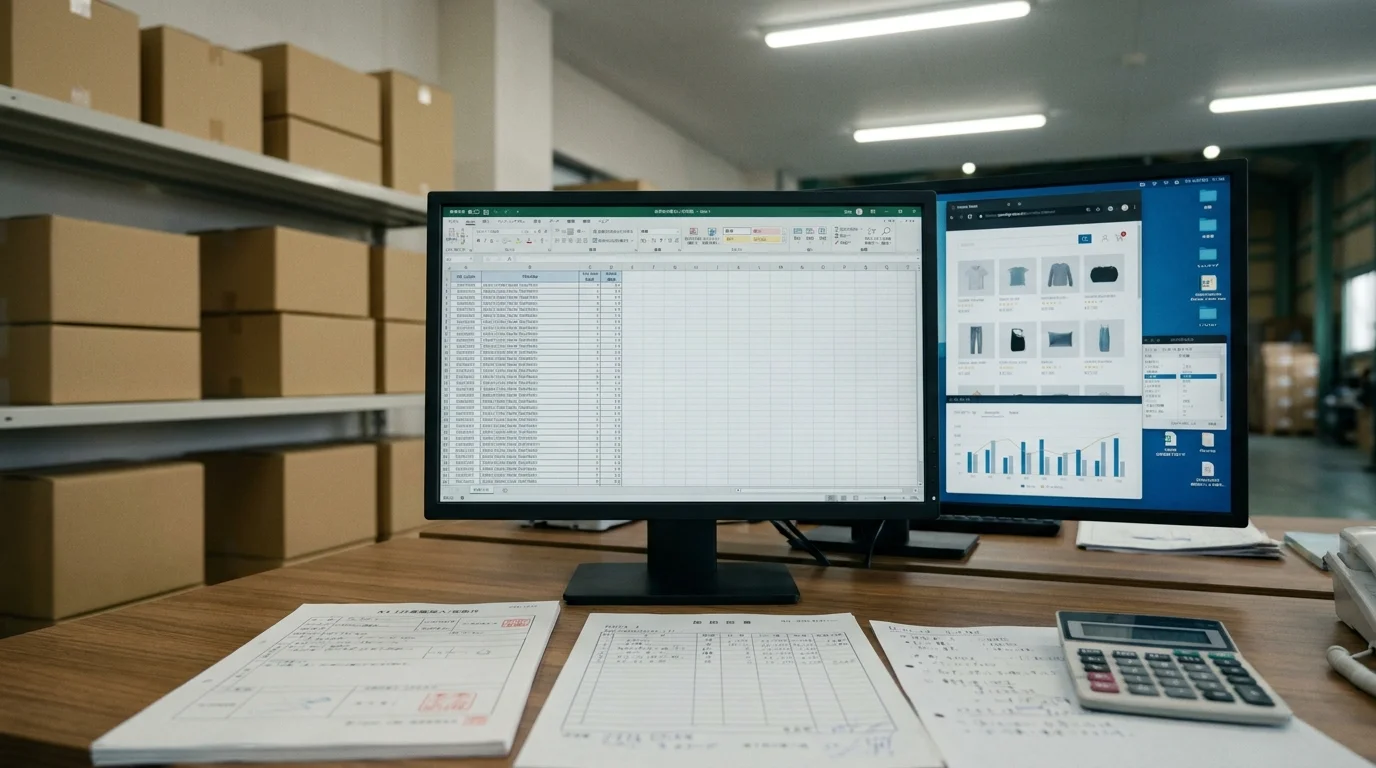
1. The Human Limitations of HS Code Assignment: A Critical Point in Cross-border EC
In our actual support experience, mid-sized and larger e-commerce businesses with thousands of product items often struggle with HS code management. In addition to the globally standardized 6-digit code, HS codes include subdivision numbers that vary by country and are subject to frequent revisions. It is no longer feasible to rely solely on the specialized knowledge of specific individuals to manage these codes. Any classification error can lead to customs clearance delays (demurrage) and substantial daily storage fees.
A common scenario on the ground is when the reuse of codes from similar past products results in discrepancies with the latest tariff rates, leading to delivery refusals at the destination. Such issues are identified as a major factor driving up logistics costs, even within the process of D2C EC Site Development & Growth Support.
2. The Logic of Full Back-Office Automation via AI-Based Automated Judgment
As of 2026, the latest AI models are capable of extracting item characteristics not only from text descriptions but also from image data. For instance, with apparel, multimodal AI analyzes factors such as "material," "weave," and "intended use," cross-referencing them against extensive customs databases. This reduces the time required for classification from several minutes to mere "fractions of a second."

In our support operations, rather than using AI as a mere dictionary, we build systems that integrate with each country's customs declaration requirements via API to automatically generate the optimal invoice the moment a shipping instruction is issued. This completely eliminates the need for back-office staff to look things up in dictionaries, allowing them to focus their resources solely on exception handling.
3. Data-driven operations to minimize customs hold risks
The true value of AI implementation lies in continuous learning. In the unlikely event that local customs raise an issue, we use that feedback to retrain the AI, further improving accuracy for the next time. In our actual support projects, by running this "error feedback loop," it is possible to increase the customs clearance success rate to over 99% within six months of implementation.

Customs issues in international shipping are a critical problem that significantly impairs the customer experience (CX). Logistics optimization within D2C EC site development and growth support, powered by AI-driven automated determination, is an essential asset for brands competing on a global stage.
FAQ
- Q. What are the penalties if the HS code is incorrect?
- A. In addition to back taxes on the customs duty shortfall, an under-declaration penalty may be imposed if the case is deemed malicious. Furthermore, there is a risk of cargo seizure and, in the worst-case scenario, the suspension of your local import account.
- Q. Does implementing AI automated judgment require modifications to existing core systems?
- A. Since many AI numbering tools support API integration, you can begin operations by connecting them to your existing Order Management System (OMS) or Warehouse Management System (WMS) without the need for large-scale modifications.
- Q. Can identification numbers be accurately assigned even for specialized products, such as unique Japanese local specialties?
- A. Yes. By providing the AI with detailed data regarding raw materials and manufacturing processes, it is possible to derive the optimal codes based on the latest EPAs (Economic Partnership Agreements), even for items such as traditional crafts and specialized processed foods.
Taking your e-commerce business to the next level
Ready to accelerate your cross-border EC growth by resolving complex customs duty calculations and customs clearance issues?
Talk to us for a free strategy consultationSummary
Assigning HS codes in cross-border EC is an area where human error can easily lead to "negative leverage" that directly impacts costs. By implementing AI-powered automated determination, you can not only drastically improve back-office efficiency but also mitigate customs hold risks and stabilize delivery lead times for customers. In 2026, as global competition intensifies, logistics DX is no longer just about efficiency—it is a source of competitive advantage.
Published: October 14, 2026 / By: Osamu Yasuda

Osamu Yasuda
Senior Managing Director & COO
Meets Consulting Inc.
Supported 100+ EC operations & logistics projects; specialist in operations and cost optimization
Related Articles



References
- [1] WCO (World Customs Organization) - HS Nomenclature 2022 Edition
- [2] Japan External Trade Organization (JETRO) - Practical Guide to Customs Duties and Taxes in Cross-Border EC