

[2026 Latest] Integration Strategy for ASR Engines and LLMs to Maximize Drive-Thru Throughput
In drive-thru operations, improving throughput during peak times is a critical issue directly linked to sales. Conventional voice ordering systems struggled with decreased recognition rates in noisy environments and lacked the flexibility to handle complex orders. This article explores strategies to minimize order latency and dramatically improve the accuracy of intent interpretation through the integration of high-performance ASR (Automatic Speech Recognition) engines and LLMs (Large Language Models), a leading trend as of 2026.
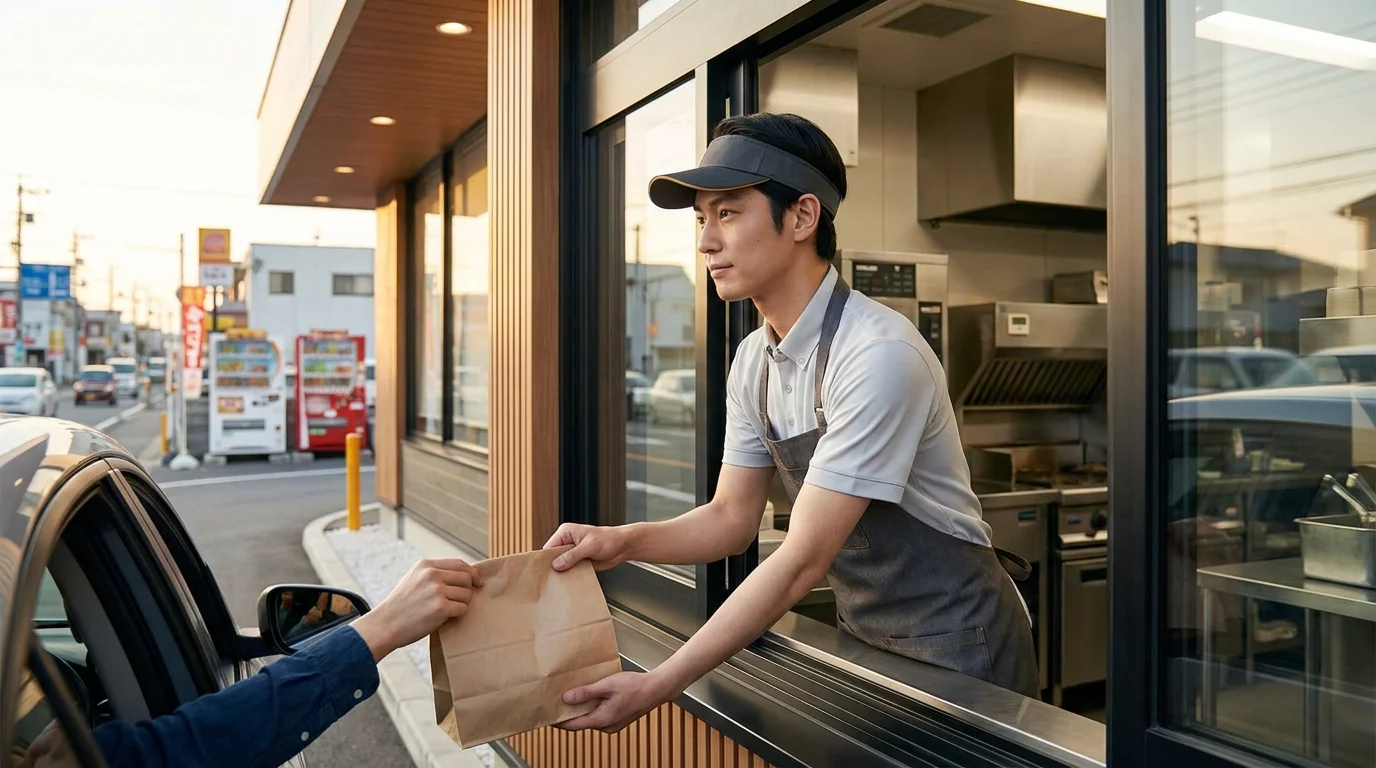
Table of Contents (Click to expand/collapse)
- 1. Noise Robustness of ASR Engines and the Importance of Edge Computing
- 2. Contextual Understanding and Rapid Order Intent Extraction via LLMs
- 3. KPIs Driven by Order Automation: Correlation Between Throughput and Customer Satisfaction
- 4. Technical Challenges in Implementation and Solutions for 2026
1. Noise Robustness of ASR Engines and the Importance of Edge Computing
Drive-thru environments present extremely harsh conditions for speech recognition, including engine idling, wind noise, and rain. In the latest strategies for 2026, preprocessing on the "edge side" before sending data to the cloud is key. Modern ASR engines are equipped with deep learning models that filter out specific vehicle noises in real-time, dramatically improving voice clarity.
Furthermore, by implementing edge AI that processes audio close to the device, communication latency can be reduced by milliseconds. This enables a near "zero-latency" user experience where the order content is reflected on the screen the moment the customer finishes speaking. The following data shows the trend of reduced order processing times following the introduction of AI registers.
2. Contextual Understanding and Rapid Order Intent Extraction via LLMs
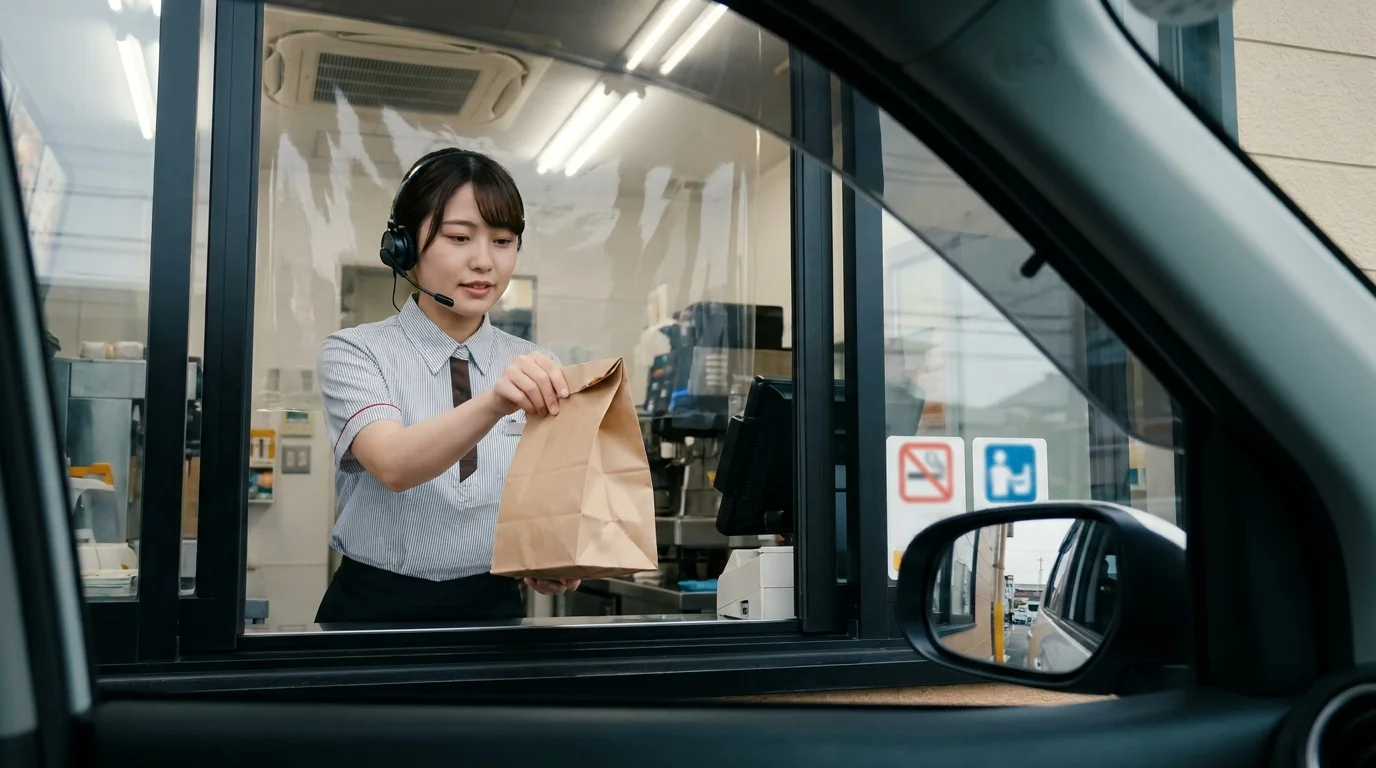
Simple keyword recognition (ASR) alone cannot handle complex modifications like "Actually, change the fries in the combo to a salad" or ambiguous orders. This is where semantic analysis using LLMs (Large Language Models) becomes crucial. LLMs understand context and accurately extract the customer's intent.
For example, for an utterance like "One cheeseburger, oh, without onions. And a large Coke," the LLM immediately decomposes the components and converts them into structured data that the POS system can understand. This process significantly reduces the risk of staff having to ask for clarification or making input errors, while also streamlining kitchen operations.
3. KPIs Driven by Order Automation: Correlation Between Throughput and Customer Satisfaction
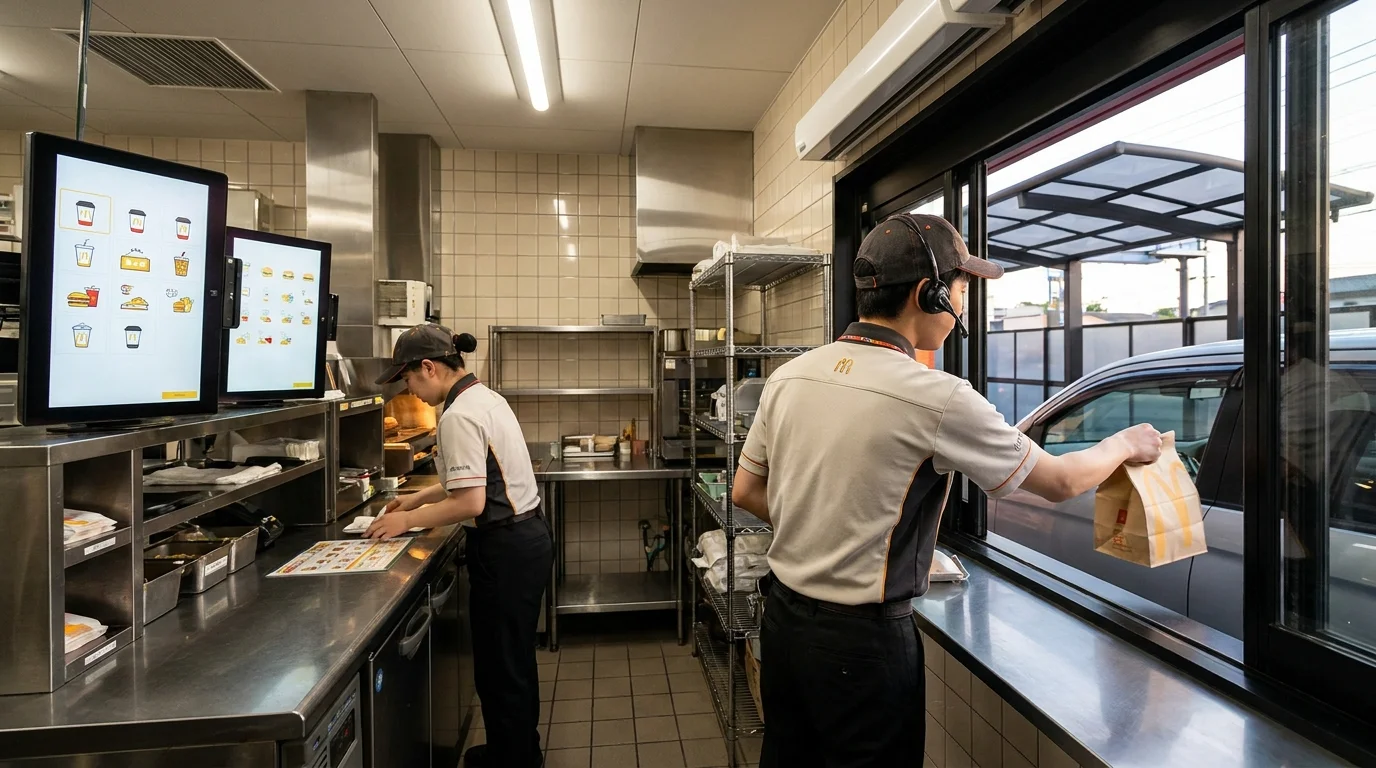
The true value of automation via voice AI lies not just in cost reduction, but in the improvement of the customer experience (CX). By shortening order wait times, the bailout rate decreases and the total number of customers during peak hours increases. Additionally, because AI provides service with a consistent tone and can execute upsells (e.g., "Would you like anything else with that?") at the perfect timing, an increase in average transaction value can also be expected.
In Japanese store operations, where labor shortages are becoming increasingly severe, the benefits of AI serving as the "first point of contact" are immeasurable. Human staff can focus on more complex interactions and kitchen quality control, maximizing the productivity of the entire store.
4. Technical Challenges in Implementation and Solutions for 2026
The success of an integration strategy requires the "orchestration" of ASR and LLMs. Rather than waiting for speech to be fully transcribed before sending it to the LLM, a "cascading" architecture that performs parallel processing in a streaming format is recommended. This allows the AI to prepare the next question or confirmation item before the customer even finishes speaking.
Furthermore, domain-specific fine-tuning to cover dialects and specific phrasing (such as "Makku" vs. "Makudo") is important. As of 2026, methods utilizing RAG (Retrieval-Augmented Generation) technology to allow the AI to instantly learn store-specific inventory status and menu changes have become standardized.
FAQ
- Q. Can it really recognize speech even on very noisy days?
- A. Yes. Modern ASR engines achieve over 95% recognition accuracy through a combination of advanced filtering that cuts noise at specific frequencies and LLMs that supplement missing audio based on context.
- Q. Is integration with existing POS systems possible?
- A. Many AI register solutions are designed with API integration in mind. As of 2026, order data can be transmitted in real-time to existing POS systems and Kitchen Display Systems (KDS) via standard protocols.
- Q. How do you handle ambiguous expressions unique to Japanese?
- A. By fine-tuning LLMs specifically for Japanese, we can interpret ambiguous expressions like "the usual" and mixtures of polite and casual language with high precision.
Taking your store's DX to the next level
Why not maximize throughput by optimizing operations using voice AI and LLMs?
Talk to us for a free strategy consultationSummary
Maximizing drive-thru throughput requires the integration of high-precision voice capture via ASR and deep contextual understanding via LLMs. This technological innovation simultaneously achieves reduced latency, improved order accuracy, and reduced staff workload. In the competitive landscape of 2026, voice AI registers have evolved from "nice-to-have tools" to "essential infrastructure for sustainable operations."
Published: June 4, 2026 / By: Osamu Yasuda

Related Articles


References
- [1] IEEE Transactions on Audio, Speech, and Language Processing: Robust ASR in High-Noise Environments (2025)
- [2] Journal of Retailing and Consumer Services: The Impact of AI Automation on Drive-Thru Performance (2026)