
[2026 Latest] "De-emotionalizing" Complaints with LLM: Organizational DX to Relieve Coordinator Stress from Being Caught in the Middle
Demanding customer requests versus internal resource and rule constraints. Caught in this "squeeze," the most talented and responsible coordinators are often the first to suffer mental health issues. This is a serious challenge occurring in customer support and sales assistance departments across many companies. Organizational management that relies on individual endurance has reached its limit. In this article, we will explain specific "Organizational DX" measures to structurally remove the psychological burden on staff by using LLMs (Large Language Models) to convert complaints into objective data, based on insights from the consulting field.

1. The Reality of the "Emotional Squeeze" That Crushes Top Talent
What we often see at consulting sites is the exhaustion of coordinators who absorb customer anger directly and "translate" it for internal departments. They are blamed by customers for "slow responses" and dismissed by internal teams for "trying to push through unreasonable requests." This structure of attempting to absorb friction between two parties with one's own emotions is the primary cause of deteriorating mental health.
A common scenario on the front lines is that cognitive resources are consumed by the "tone of anger" or "persistent questioning" behind a complaint, rather than the content itself, making logical problem-solving impossible. According to statistical data, workplaces that have introduced AI support tend to see a significant improvement in the "subjective stress scores" reported by staff.
2. "De-emotionalizing" Complaints and Structural Analysis via LLM
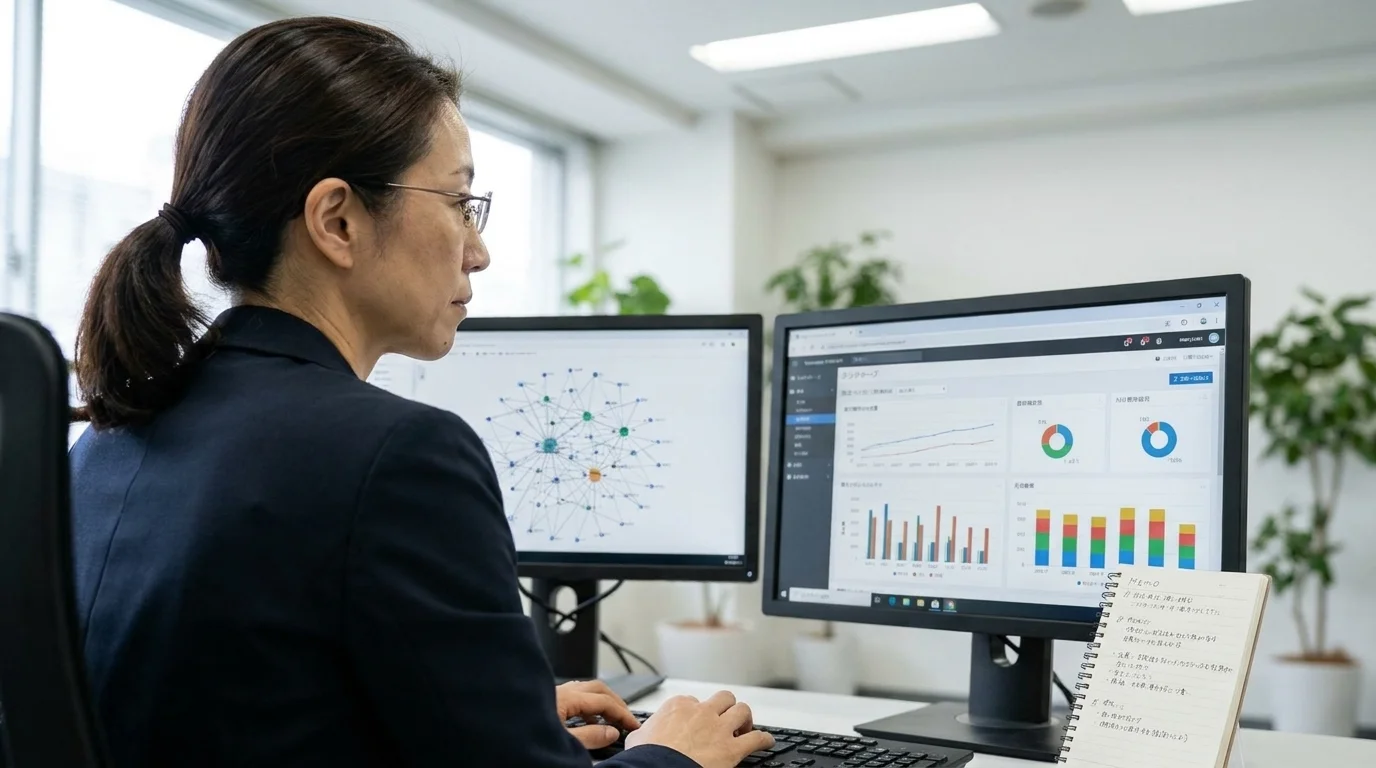
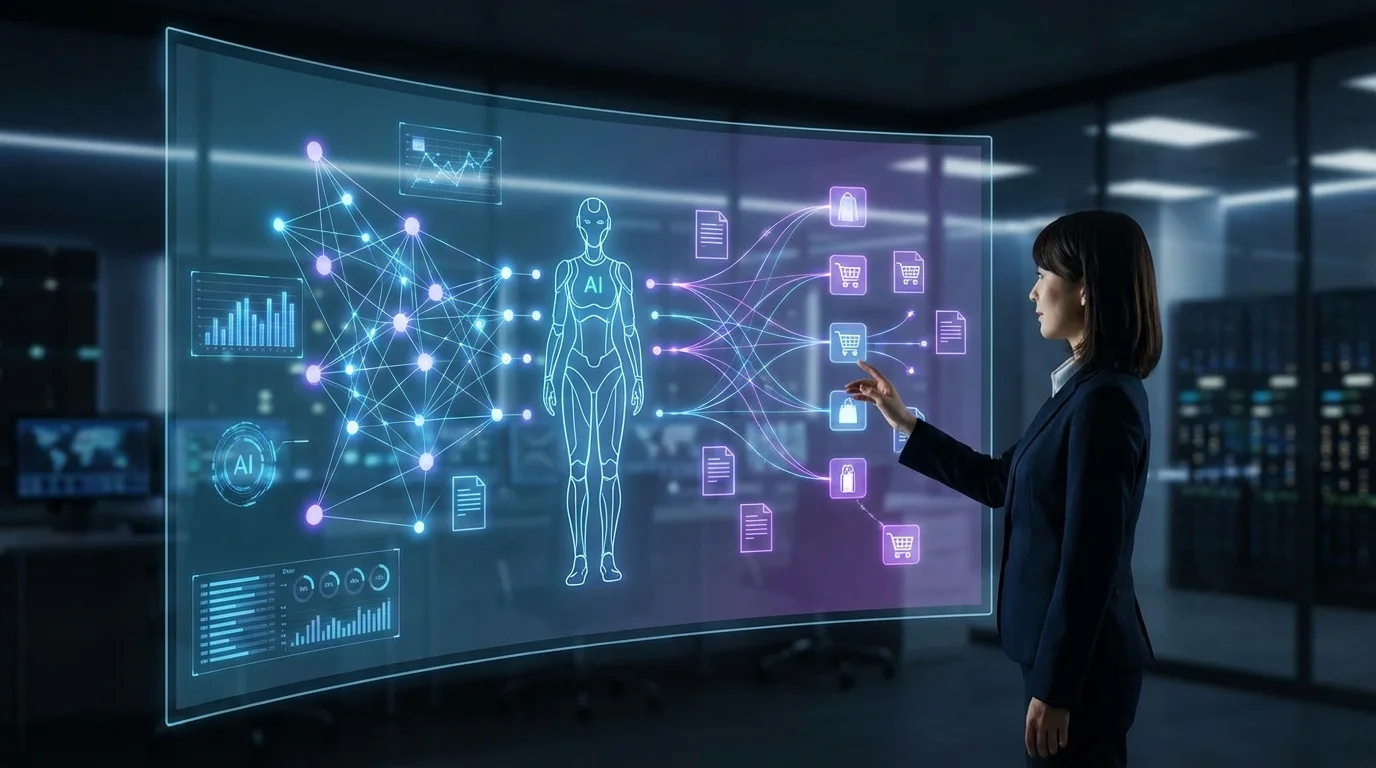
The greatest benefit of utilizing LLMs (Generative AI) lies in the ability to immediately separate "emotional attacks" from "facts to be resolved" within incoming text. By using Natural Language Processing (NLP) to categorize customer feedback in a MECE (Mutually Exclusive, Collectively Exhaustive) manner, staff can face "data-driven issues" rather than "themselves being yelled at."
In our actual consulting projects, we build systems where AI automatically breaks down complaints into the following four elements:
- Facts: What happened (e.g., shipping delay, product damage)
- Requests: What the customer wants (e.g., refund, exchange, apology)
- Emotions: Level of anger (used for priority determination)
- Causes: Which internal process was deficient
By structuring information this way, coordinators spend less time worrying about "how to apologize" and can focus on constructive tasks like "how to solve the problem." This is a highly effective approach for streamlining operations without compromising the quality of customer service in D2C EC Site Construction & Growth Support.
3. Building a Mental Defense Line Through Organizational DX
AI is not just an analytical tool; it functions as a "shield" for staff. For example, an LLM can cross-reference past similar cases with internal regulations to generate a draft response such as "The optimal solution for this case is Option A" in seconds. Staff are freed from the pain of drafting messages from scratch and can proceed with internal coordination based on the logical grounds presented by the AI.
In our support experience, we have proven that simply having this "draft generation" dramatically lowers psychological hurdles. Because the "official company stance" is immediately presented via AI, it eliminates the sense of isolation coordinators feel when shouldering responsibility alone. This serves as a powerful DX strategy for protecting employee mental health across the entire organization.
4. Practice: 3 Steps to Implementing AI Support
Organizational DX to protect mental health cannot be achieved overnight. However, by following these steps, it is possible to steadily reduce the burden on the front lines.
- VOC (Voice of Customer) Accumulation and Pre-processing: Digitalize scattered email, chat, and phone logs and aggregate them in a format readable by AI.
- Prompt Optimization: We train the AI on your company's unique rules and "common friction points" to ensure it generates draft responses tailored to the specific needs of the field.
- Establishing a feedback loop: By accumulating a history of human corrections to AI-generated draft responses, we simultaneously improve accuracy and promote knowledge sharing.
In our actual engagements, alongside these technical implementations, we also foster a culture where on-site coordinators feel empowered to "use AI to simplify their work." Through our In-house EC Site Construction & Growth Support, we provide comprehensive support that covers not only system implementation but also operational design to enhance the psychological safety of the organization.

FAQ
- Q. Won't delegating complaint handling to AI give a cold impression?
- A. Rather than delegating everything to AI, the AI handles 'analysis' and 'drafting,' while humans perform the final fine-tuning of the expression. This ensures logical consistency while maintaining a warm, personal touch.
- Q. Is a vast amount of data required for implementation?
- A. Modern LLMs deliver high accuracy even with small datasets. It is practical to start small with email logs from the last three months and gradually expand the scope from there.
- Q. How do you measure improvements in mental health?
- A. In addition to employee satisfaction surveys and pulse surveys, we visualize Average Handle Time (AHT) and self-reported psychological stress scores associated with case completion as KPIs.
Organizational DX to protect your employees' mental health
Improving operational efficiency and reducing psychological burden through AI are essential for future employee retention.
Talk to us for a free strategy consultationSummary
To save talented coordinators from the stress of being caught in the middle, it is essential to integrate AI as a "structural buffer" into the organization rather than relying on individual mental fortitude. The de-emotionalization and structural analysis of complaints via LLMs serve not only to improve operational efficiency but also as a defensive measure to protect employees' vital mental well-being. Creating an environment where technology is utilized correctly, allowing people to focus on more human-centric, creative tasks, is what truly defines organizational DX.
Published: November 11, 2026 / By: Osamu Yasuda

Osamu Yasuda
Senior Managing Director & COO
Meets Consulting Inc.
Supported 100+ EC operations & logistics projects; specialist in operations and cost optimization
Related Articles
References
- [1] Ministry of Health, Labour and Welfare: Promotion of Mental Health Care in the Workplace
- [2] Latest Trends in Business Applications of Sentiment Analysis Using Natural Language Processing (NLP) (2025)