

ROI of Kentaikyo Digitization: Strategies to Minimize Administrative Man-hours and TCO
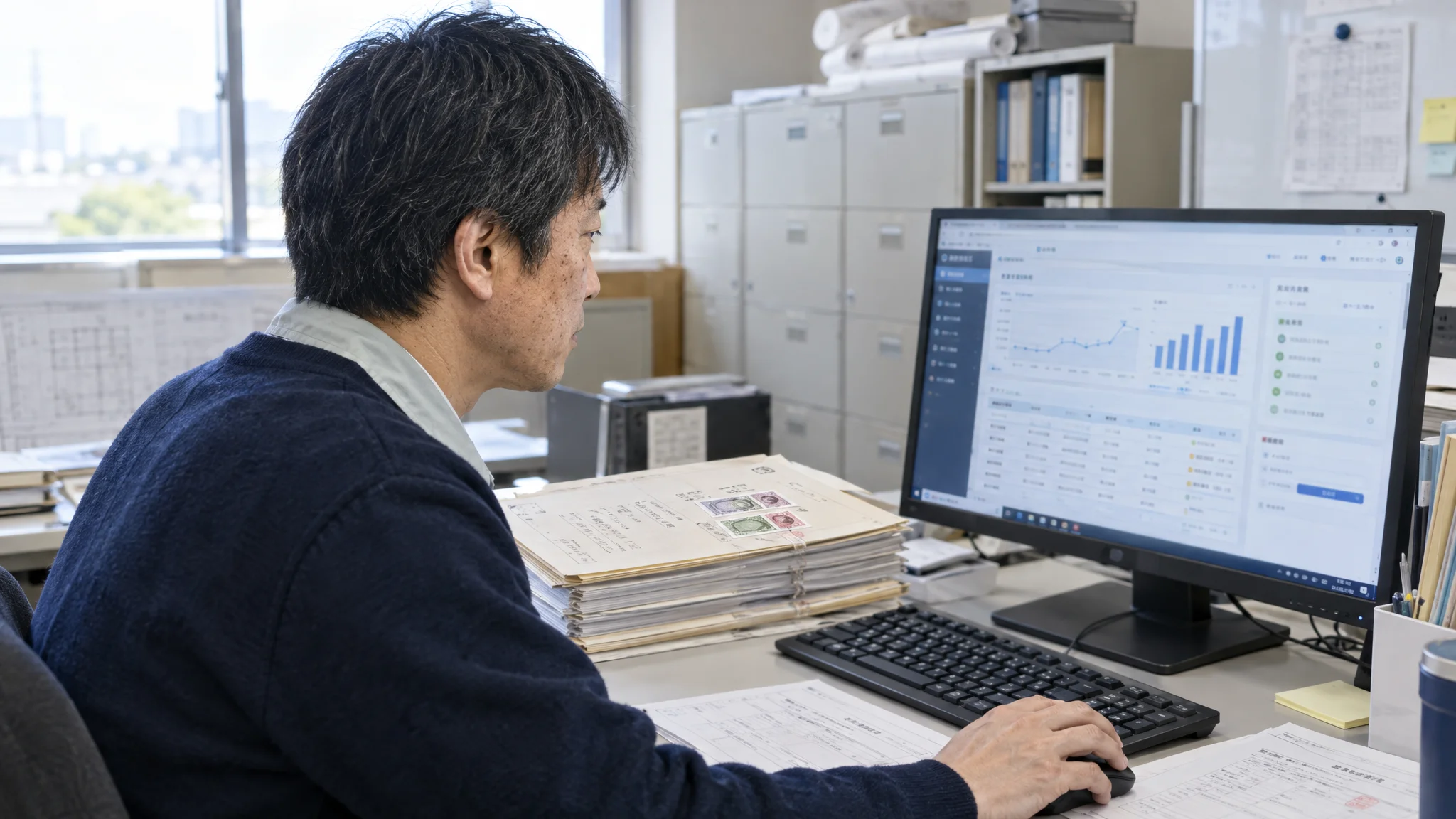
In the construction industry's back office, the task of pasting Kentaikyo (Construction Industry Retirement Allowance Mutual Aid) stamps has long reigned as one of the "most inefficient routine tasks." The manual process of affixing each stamp to a base sheet is not just a waste of time; it generates a massive Total Cost of Ownership (TCO), including inventory management risks and the costs associated with purchasing procedures. As of 2026, the transition to fully electronic applications using AI and the cloud is not merely a tool implementation, but a critical management strategy to free administrative staff from low-value-added tasks. This article breaks down the Return on Investment (ROI) gained through digitization with specific figures.

Table of Contents (Click to expand/collapse)
1. The Reality of "Hidden Costs" Lurking in Stamp Pasting Tasks
When we audit Kentaikyo administrative man-hours at actual support sites, the results often shock management. While many tend to think only of the "time spent pasting stamps" as the cost, in reality, ancillary tasks such as stamp inventory management, purchasing procedures at financial institutions, loss risks, and communication between prime contractors and subcontractors account for the majority of the man-hours.
Based on our experience at support sites, for a company with around 50 employees, hundreds of hours per year are lost to managing these physical "stamps." It is not uncommon for this to reach several million yen per year when converted into labor costs. Reducing these man-hours is not just about saving time; it means creating the resources for administrative staff to shift toward more creative work.
2. Dramatic ROI Improvements Brought by Fully Electronic Applications
The greatest benefit of electronic applications is the total elimination of the concept of physical stamps. By utilizing dedicated electronic work performance reports (CSV, etc.), everything from aggregating performance to paying premiums is completed seamlessly. In our actual support cases, we have seen instances where end-of-month processing that previously took three full days was completed in just 30 minutes.
Furthermore, the time created by this efficiency can be reinvested into other growth areas. For example, if a construction company expands into the EC business as part of a diversified management strategy, administrative staff will have the bandwidth to learn the expertise cultivated through In-house EC Construction and Growth Support. Improving back-office productivity serves as the foundation for supporting a company's new challenges.
3. Implementation Roadmap for Successful Back-Office DX
To successfully transition to electronic applications, it is necessary not only to implement a system but also to redesign the collaboration flow with on-site workers and subcontractors. A common pitfall is that operations become a mere formality due to a lack of consideration for those resistant to digitalization. In our actual support, we begin by conducting test operations at small-scale sites and sharing success stories.
Ultimately, the ideal approach is to use Kentaikyo digitization as an entry point to integrate other back-office tasks such as attendance management and cost management. Even in the In-house EC Construction and Growth Support we provide, centralized data management determines the final profit margin. Similarly, for construction administration, shifting from "manual pasting" to "automated integration" of information holds the key to minimizing TCO.

FAQ
- Q. Does transitioning to electronic applications require significant system costs?
- A. The electronic application method provided by Kentaikyo itself does not incur dedicated system usage fees. While there may be some costs for integration with existing attendance management software or customizing CSV outputs, the investment can be recovered within a few months considering the reduction in administrative man-hours.
- Q. What should I do if subcontractors do not support digitization?
- A. At support sites, we often utilize "proxy settings" where the prime contractor purchases electronic stamps in advance and allocates them to subcontractors based on performance. This allows for overall efficiency improvements without imposing an excessive burden on the subcontractors.
- Q. Is there any concern that administrative staff will lose their jobs?
- A. What disappears are "simple tasks," not "jobs." In our actual support, the time saved is shifted to high-value-added tasks that contribute more directly to profits, such as cost analysis, DX promotion, and the operational management of in-house EC.
From Reducing Administrative Man-hours to a Proactive Back Office
Why not optimize your entire business operations, starting with Kentaikyo digitization?
Talk to us for a free strategy consultationSummary
Moving away from the manual pasting of Kentaikyo stamps is the first step toward back-office DX in the construction industry. By visualizing the TCO associated with physical stamp management and shifting toward electronic filing, administrative staff can be freed from the non-core task of "pasting stamps" and evolve into high-value-added roles that contribute to corporate growth. In 2026, let's leverage technology to build a framework that delivers maximum results with minimum effort.
Published: October 23, 2026 / By: Osamu Yasuda

Osamu Yasuda
Senior Managing Director & COO
Meets Consulting Inc.
Supported 100+ EC operations & logistics projects; specialist in operations and cost optimization
Related Articles



References
- [1] Construction Industry Retirement Allowance Mutual Aid Headquarters, "Overview of the Kentaikyo Electronic Application System"
- [2] Ministry of Health, Labour and Welfare "Guide for Promoting Back-Office DX to Improve Productivity at Construction Sites"