

External Traffic SEO and A10 Algorithm: Authority Building and Sales Maximization Strategy for Amazon
Now that Amazon's search algorithm has evolved from "A9" to "A10," the biggest turning point sellers face is the fact that internal optimization alone has its limits. In the latest A10 algorithm, the impact of traffic inflow from external sites on search rankings (SERPs) has been significantly strengthened. In this article, we provide a detailed explanation of the strategic scheme of how building "Authority" originating from SNS and external advertising — going beyond Amazon's internal logic — directly leads to sales maximization.

Table of Contents (Click to Expand)
1. A10 Algorithm: Key Differences from A9
A10 weighs external traffic sources, seller authority metrics, and organic sales more heavily. Unlike A9, which prioritized PPC-driven sales, A10 rewards genuine demand signals.
In particular, in the Southeast Asian and North American markets, demand for niche Japanese brands is growing alongside the expansion of the middle-income class. This represents a shift from traditional "mass exports by large corporations" to "D2C (Direct to Consumer) where individuals and small businesses sell directly to consumers," opening up unprecedented opportunities.
2. Building Authority: Core Metrics That Matter
Authority metrics include: seller feedback rating, account health, order defect rate, and organic sales velocity. Consistently strong performance builds algorithmic trust.
- Click-Through Rate (CTR) from Off-Amazon: The click-through rate from external sites to the Amazon product page.
- Conversion Rate (CVR): External visitors have high purchase intent, which is a factor that drives up CVR.
- Sales Velocity: The speed of sales in a short period. Explosive traffic from external campaigns accelerates this.
3. External Traffic Impact on Relevance Score
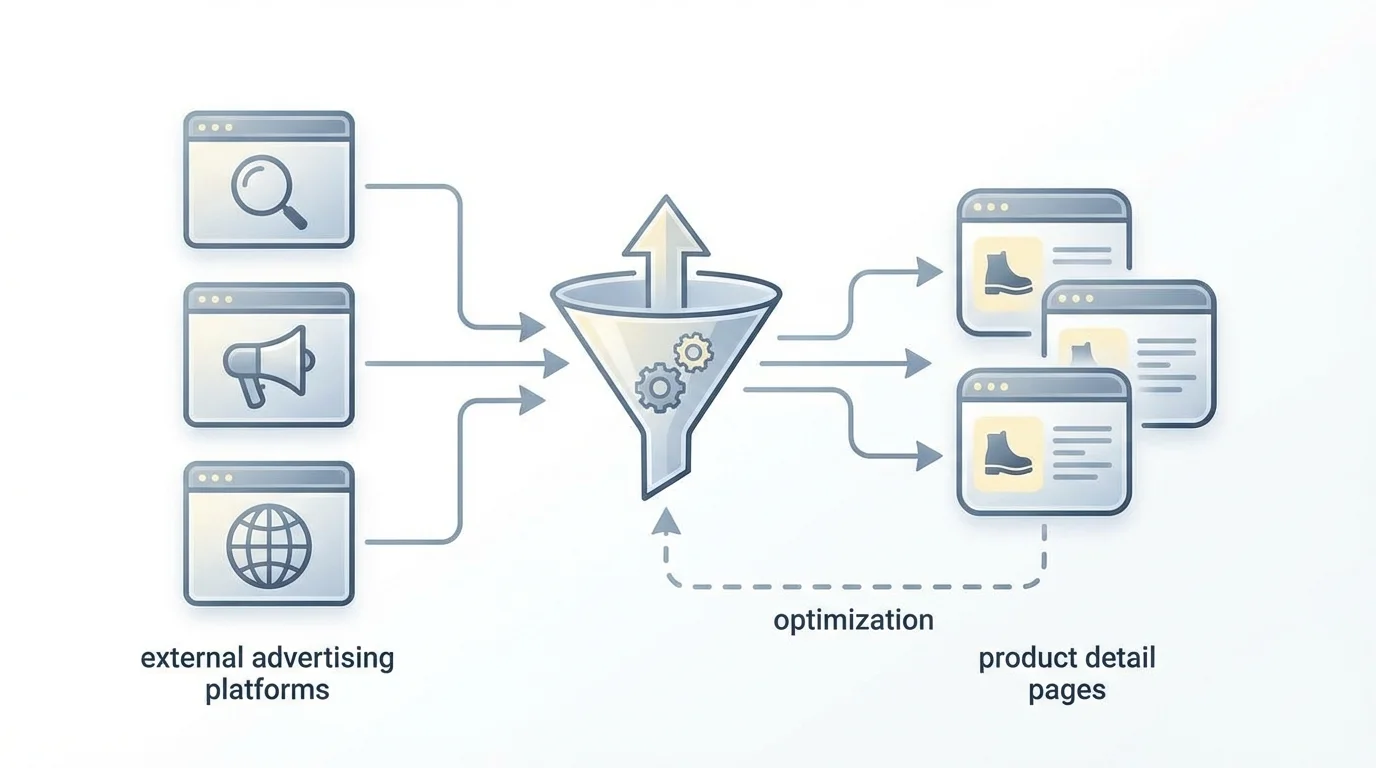
External traffic from social media, blogs, and email marketing signals to Amazon that demand exists outside the platform. This boosts relevance scores and organic ranking.
Inappropriate review acquisition carries the risk of search ranking decline and account suspension (store removal). Always check the latest guidelines and practice white-hat operations.
4. Practical External Traffic Maximization Strategies
Strategies include: social media campaigns with Amazon Attribution links, influencer partnerships, Google Ads to Amazon listings, email marketing to existing customers, and content marketing.

Frequently Asked Questions
- Q. What is the biggest difference between A9 and A10?
- A. A10 gives significantly more weight to external traffic sources and organic sales, while A9 was more heavily influenced by PPC-driven sales velocity.
- Q. Can increasing external traffic hurt CVR?
- A. Potentially, if traffic is untargeted. Focus on high-intent audiences through targeted campaigns and use Amazon Attribution to track which sources convert best.
Take Your EC Business to the Next Stage
Our consultants provide customized strategies tailored to your specific business challenges.
Get Free Strategy ConsultationSummary
Amazon's A10 algorithm places greater emphasis on external traffic and seller authority compared to its predecessor A9. Understanding these shifts enables sellers to build sustainable competitive advantages.
Published: 2026-03-13 / Author: Yuta Ito

You May Also Like



References
- [1] Amazon A10 Algorithm: Ranking Factor Analysis
- [2] External Traffic Strategy for Amazon Sellers