

[2026 Latest] The Full Picture of AI-OCR Journal Entry Automation via API Integration with Cloud Accounting
At the end of every month, accounting departments are overwhelmed by mountains of receipts and invoices. Manually entering these one by one, determining account titles, and creating journal entries is no longer a task that humans should be doing. As of 2026, API integration between AI-OCR (Artificial Intelligence-driven Optical Character Recognition) and cloud accounting has become the standard solution for achieving "Accounting DX" with zero manual entry.
AI-OCR represents a significant evolution over traditional character recognition technology, enabling dramatic reductions in man-hours within practical workflows. In this article, we will provide a detailed explanation from basic definitions to the latest applications, based on insights gained from our consulting projects.

Table of Contents (Click to expand/collapse)
1. Definition of AI-OCR: The Decisive Difference from Traditional OCR and the Power of API Integration
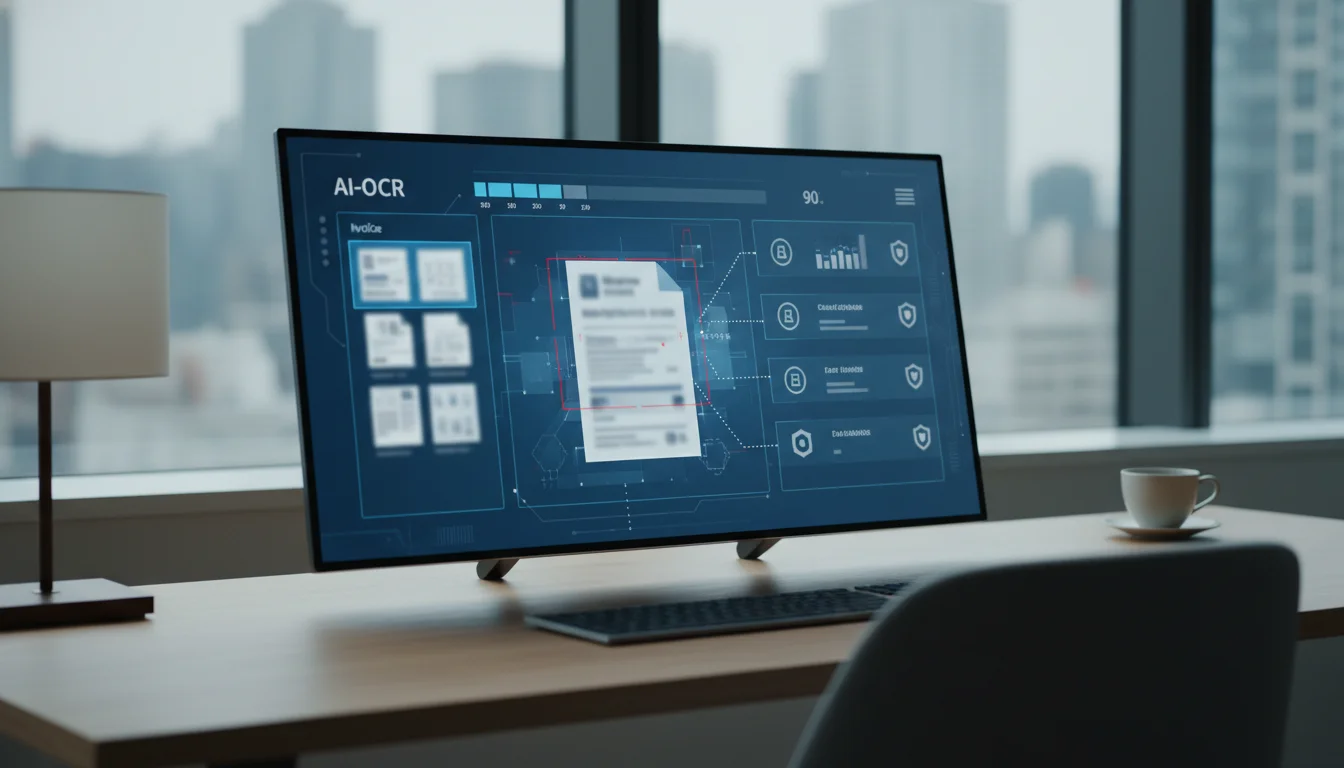
AI-OCR is a technology that combines traditional Optical Character Recognition (OCR) with AI technologies such as deep learning. While traditional OCR was limited to reading "characters in fixed positions," AI-OCR self-learns different layouts for each invoice or receipt and determines "where the date is and where the amount is" based on context.
A common pain point we encounter in our consulting projects is: "We implemented OCR, but the effort of exporting CSVs and importing them into accounting software hasn't changed." True efficiency is achieved when data read by AI-OCR is funneled directly into accounting software via API. This creates an environment where humans can focus solely on "final verification" rather than "data entry."
In practice, reconciling sales data from in-house EC sites with payment processing fees is also a major challenge. In our In-house EC Construction & Growth Support projects, we recommend full automation of payment reconciliation by linking front-end sales with back-end accounting via API and matching invoice information using AI-OCR.
2. Improving Journal Entry Accuracy through Automatic Account Title Inference
The true value of AI-OCR goes beyond mere digitization of text. In the latest solutions as of 2026, AI that has learned from vast amounts of past journal entry patterns performs automatic account title inference, such as determining that "for this vendor and this amount, it is an entertainment expense rather than a welfare expense."

In consulting projects, "individualized judgment" often becomes a bottleneck. By having AI learn the tacit rules stored in the heads of veteran accounting staff—such as "items on this invoice are expenses for that department"—organizations can benefit from standardizing the quality of operations across the board.
3. System Configuration and Implementation Steps for Successful Accounting DX
The key to a successful implementation is starting small. The standard approach is to begin automation with "invoices from specific vendors" and expand the scope while verifying the AI's learning accuracy. Additionally, by restructuring workflows in conjunction with compliance with the Electronic Record Retention Law, you can maximize operational efficiency while meeting legal requirements.

Furthermore, in the context of In-house EC Construction & Growth Support, API integration between inventory management systems and accounting software is essential. By automating everything up to inventory valuation in conjunction with AI-OCR data, it becomes possible to visualize the "numbers" necessary for management decisions in real time.
FAQ
- Q. What is the biggest difference between traditional OCR and AI-OCR?
- A. The biggest difference is the ability to handle "unstructured forms." Traditional OCR required "settings (templates)" to specify character positions in advance, but since AI-OCR determines items on its own, it can read invoices with varying formats with high accuracy.
- Q. Does developing API integrations involve enormous costs?
- A. As of 2026, standard integration connectors have been established between major cloud accounting software (such as Money Forward and freee) and AI-OCR. In most cases, implementation is possible without scratch development, and the barrier to entry has dropped dramatically.
- Q. Can handwritten receipts be read accurately?
- A. Yes. AI-OCR boasts a very high recognition rate even for idiosyncratic handwriting. By establishing a workflow where humans only check items with low "confidence levels" as determined by the AI, you can improve efficiency while preventing errors.
Take your accounting operations to the next level with AI-OCR
We provide advice on specific AI-OCR selection and API integration setup to eliminate end-of-month overtime.
Talk to us for a free strategy consultationSummary
In 2026, AI-OCR is no longer just a character recognition device; it serves as the "brain of accounting," integrating with accounting software via API to automate even journal entry decisions. To break free from low-value manual entry and transition to "proactive accounting"—such as financial analysis and cash flow forecasting—leveraging AI-OCR has become an essential choice.
Published: October 9, 2026 / By: Osamu Yasuda

Osamu Yasuda
Senior Managing Director & COO
Meets Consulting Inc.
Supported 100+ EC operations & logistics projects; specialist in operations and cost optimization
Related Articles


References
- [1] The Japanese Institute of Certified Public Accountants, "Efficiency and Sophistication of Auditing Using IT," 2025
- [2] Ministry of Economy, Trade and Industry, "Study Group for Acceleration of Digital Transformation" Report, 2024