

[2026 Latest] Calculate Sunk Costs of Inaction with AI! Opportunity Loss Proposals to Motivate Owners
Abandoned vacant houses. Even when owners are encouraged to sell or repurpose their properties, negotiations frequently stall. They are often hindered by emotional attachments—such as "it holds memories" or "I might use it someday"—and the sunk cost fallacy of clinging to past maintenance expenses. However, in the 2026 real estate market, traditional analog persuasion has reached its limit. This article explains the secrets of consulting sales that motivate reluctant owners by using AI-powered simulators to quantify the "opportunity loss of continued neglect," drawing on practical insights from the front lines of support.

1. Turning "Someday" into "Now": The Truth About Neglect Revealed by AI.
In our consulting work, we frequently observe that many owners underestimate the "cost of holding" assets. This includes not only direct expenses such as property taxes and fire insurance premiums, but also the decline in asset value as buildings age, and the accumulating opportunity cost—the potential returns that could have been realized through immediate sale or reinvestment.
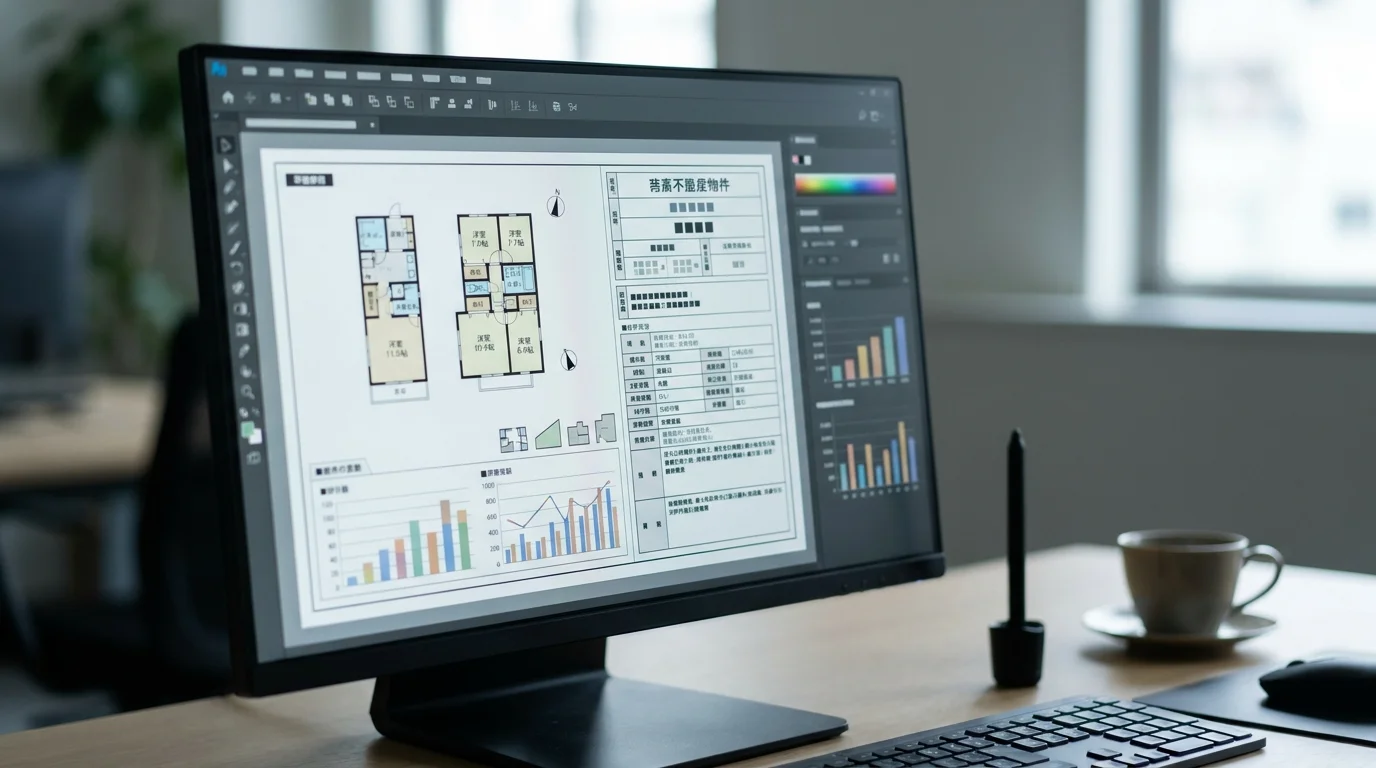
A common scenario in the field is when owners fixate on an asking price above market value, driven by a desire to "recoup" past renovation costs or property taxes. This is a classic sunk cost trap. By leveraging an AI simulator, you can contrast cumulative costs over the next decade with asset value projections based on market trends, making it possible to demonstrate the "reason to act now" with objective, hard data.
2. Visualizing maintenance costs and tax risks: Techniques for building conviction through data.
In our actual support, we input data specific to the property into the AI, rather than just using simple averages. We present various scenarios including local transaction records, fluctuation rates of official land prices, and tax reform risks—such as the removal of property tax exemptions for "Specified Vacant Houses"—as part of the measures against "negative real estate" (fudosan) that have intensified since 2024.

By empathizing with the owner's emotions while presenting information as an "objective third-party analysis" from AI—rather than as the sales representative's "personal opinion"—it is possible to mitigate the owner's psychological reactance (resistance). This type of data-driven proposal methodology is not limited to the real estate sector. For instance, in our Direct-to-Consumer (D2C) EC Site Construction and Growth Support, we use AI to visualize inventory holding costs and opportunity losses in advertising operations, facilitating rapid decision-making and accelerating business growth.
3. Shortening Lead Times: Contract Sales Leveraging AI Simulators
The biggest challenge in contract sales is the prolonged decision-making process. By integrating an AI simulator into the front end of your sales process, you can transform the procrastination of "I'll think about it" into the conviction that "not acting now is a missed opportunity," dramatically shortening lead times.

"Memories" are priceless, but the "costs" to maintain them can be clearly calculated. Rather than forcing owners into a binary choice of "sell or rent," the shortest path to winning their trust is to present a comparison of ROIs for multiple utilization scenarios generated by AI (rental management after renovation, selling as vacant land, or an as-is sale). By speaking the common language of numbers, sales evolves from "solicitation" into "consulting."
FAQ
- Q. Does the owner ever question the basis of the figures?
- A. To enhance credibility, clearly state that REINS transaction records and local government open data are used as the source data for AI training. The key is to emphasize that it serves as a "mirror of the market" that eliminates subjectivity.
- Q. I'm concerned about the cost of implementing an AI simulator.
- A. As of 2026, an increasing number of tools can be implemented at a low cost through API integration. Considering the reduction in lead time to closing and the improvement in the number of projects handled per person, the ROI will be well worth the investment.
- Q. How should you approach owners who have a strong emotional attachment?
- A. We propose this not as "destroying memories," but as the "optimal means to prevent the building from deteriorating (and thus maintaining its value)." The figures serve strictly as a guide to ensure the owner makes a decision they will not regret.
Maximize contract rates with AI-powered sales DX
Talk to us for a free strategy consultationSummary
The key to motivating vacant property owners is not to dismiss emotional arguments, but to overcome the "psychological barrier" of sunk costs using objective AI-driven data. By providing an integrated visualization of maintenance costs, declining asset value, and tax risks, owners can finally grasp the "risk of neglect" as a personal issue. In 2026, AI simulators will no longer be an option but an essential tool for listing acquisition sales.
Published: November 4, 2026 / By: Osamu Yasuda

Osamu Yasuda
Senior Managing Director & COO
Meets Consulting Inc.
Supported 100+ EC operations & logistics projects; specialist in operations and cost optimization
Related Articles


References
- [1] Ministry of Land, Infrastructure, Transport and Tourism: Designation Standards for "Specific Vacant Houses" under the Special Measures Act on Vacant Houses
- [2] Sunk Cost Effects and Decision-Making Processes in Behavioral Economics