

[2026 Latest] AI Resilience for Hedging Weather Risks: Multi-Simultaneous Communication Protocols During BCP Activation
Recent climate changes, such as the frequent occurrence of linear rainbands and the approach of massive typhoons, are having a profound impact on supply chains in the construction and logistics industries. Traditional manual communication networks via phone or email require hours to confirm status and adjust schedules with hundreds of subcontractors, during which time chaos on-site escalates. In this article, we explain how AI-driven "multi-simultaneous communication protocols"—as a cutting-edge 2026 BCP (Business Continuity Plan) strategy—minimize the risk of project delays and strengthen corporate resilience from the perspective of advanced dynamic algorithms.
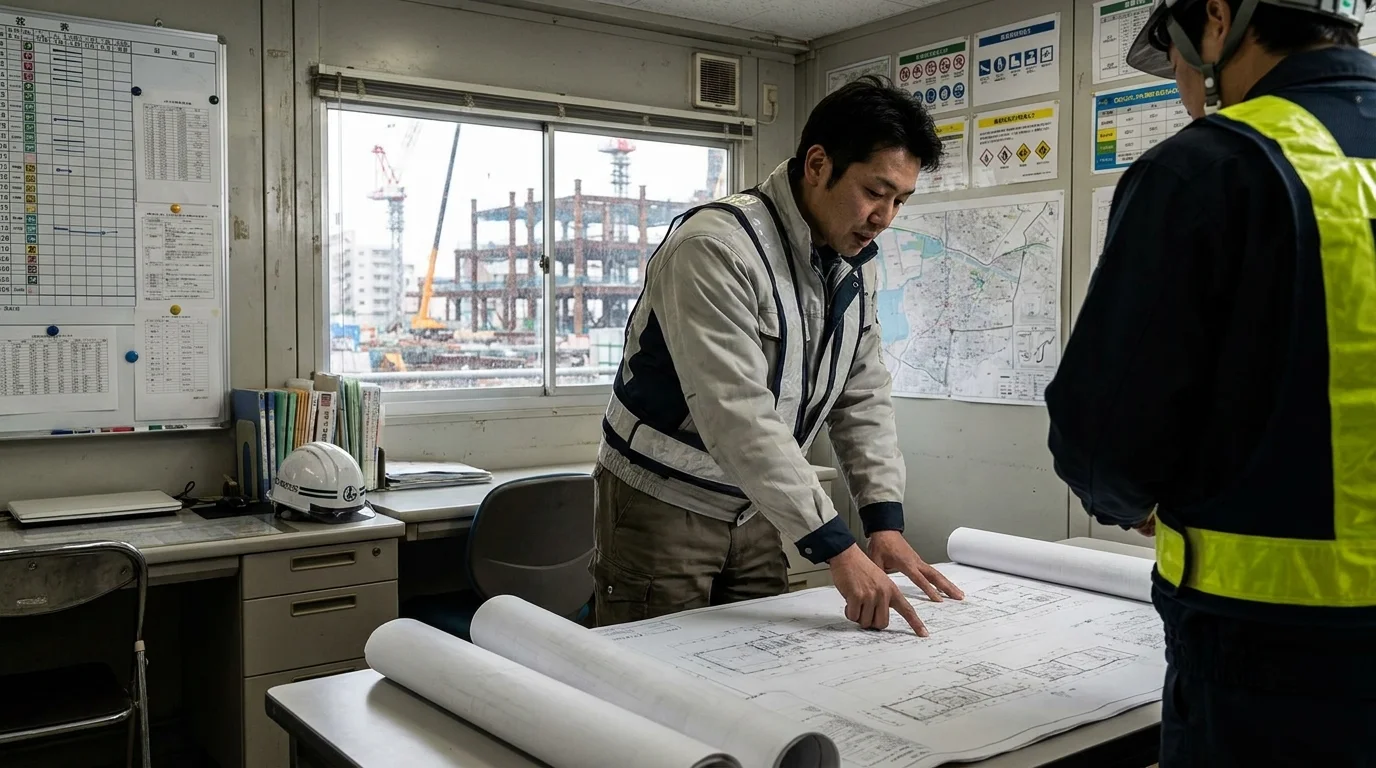
1. Limitations of Traditional Communication and Achieving "Multi-Simultaneity" via AI
During a disaster, the biggest bottleneck managers face is "communication linearity." The process of making calls one by one or waiting for replies to mass emails creates a fatal time lag before information is gathered. AI resilience systems integrate with Japan Meteorological Agency APIs and high-resolution weather prediction models to initiate simultaneous yet individual dialogues with hundreds of subcontractors via LINE, email, and IVR (Interactive Voice Response) as soon as a warning is issued.
Through this "multi-simultaneous communication," availability data from all contractors is aggregated as structured data within minutes. According to 2026 statistics, AI-driven automated adjustment reduces lead times by approximately 95% compared to manual adjustment, enabling the front-loading of decision-making.
2. Automatic Recalculation of Critical Paths: Dynamic Algorithms to Minimize Project Delays
Beyond just gathering information, the AI reconstructs the entire project's Work Breakdown Structure (WBS) in real-time based on collected "unavailable" and "material delay" flags. When a specific critical activity stalls, the AI instantly simulates the ripple effects on subsequent processes and automatically calculates alternative paths that result in minimum cost and minimum duration.
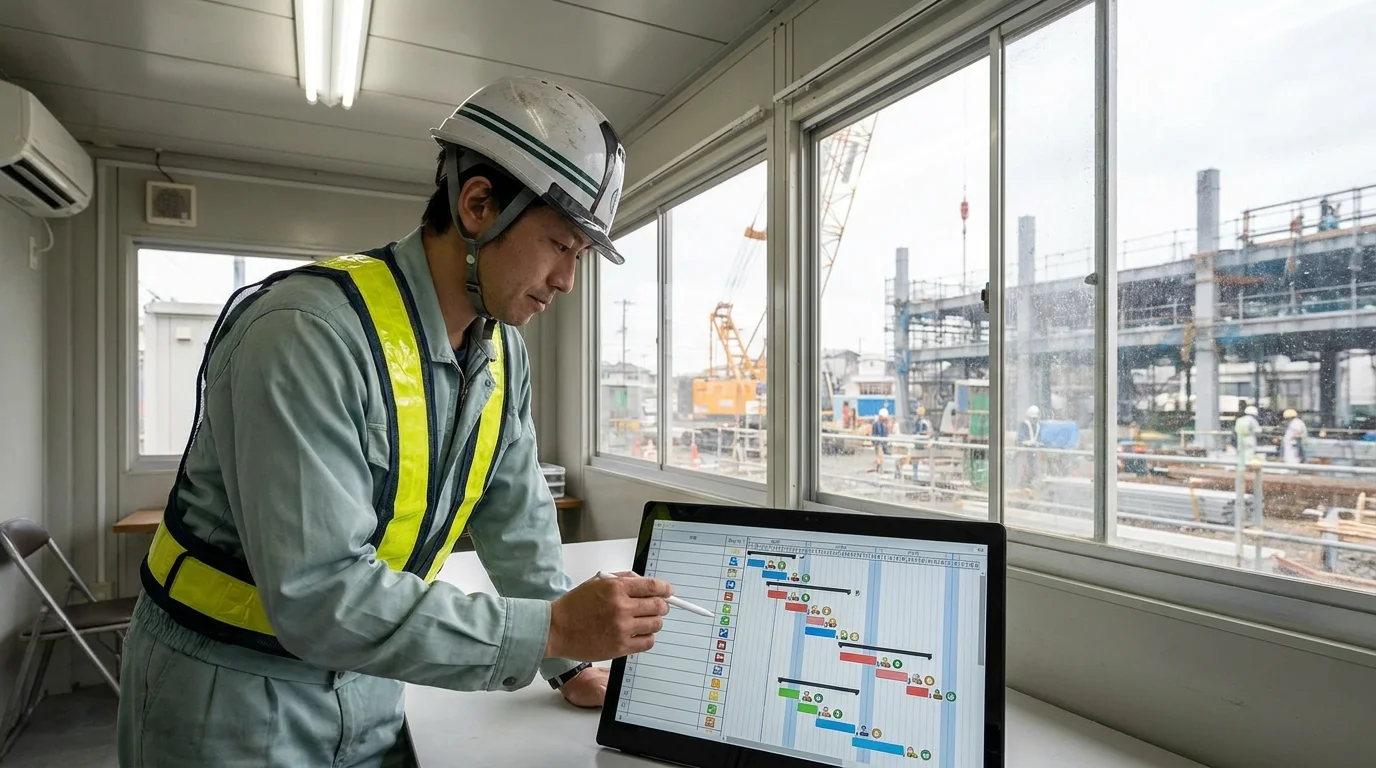
For example, if a rebar worker's arrival is predicted to be delayed by two days, the AI presents optimal shifted schedules to concrete pouring and formwork removal contractors, simultaneously inquiring about their availability. Automating this "domino-effect adjustment" minimizes downtime in large-scale projects and enables agile construction management.
3. Subcontractor Engagement: Bidirectional Adjustment Protocols via AI Bots
The true value of AI automation lies in the accessibility of its user interface. Rather than forcing logins to complex SaaS platforms, "dialogue via Natural Language Processing (NLP)" through everyday SNS tools increases on-site engagement. AI bots interpret unstructured responses from contractors, such as "I'm supporting another site that day, but I can make it early the next morning," and cross-reference them with overall constraints.
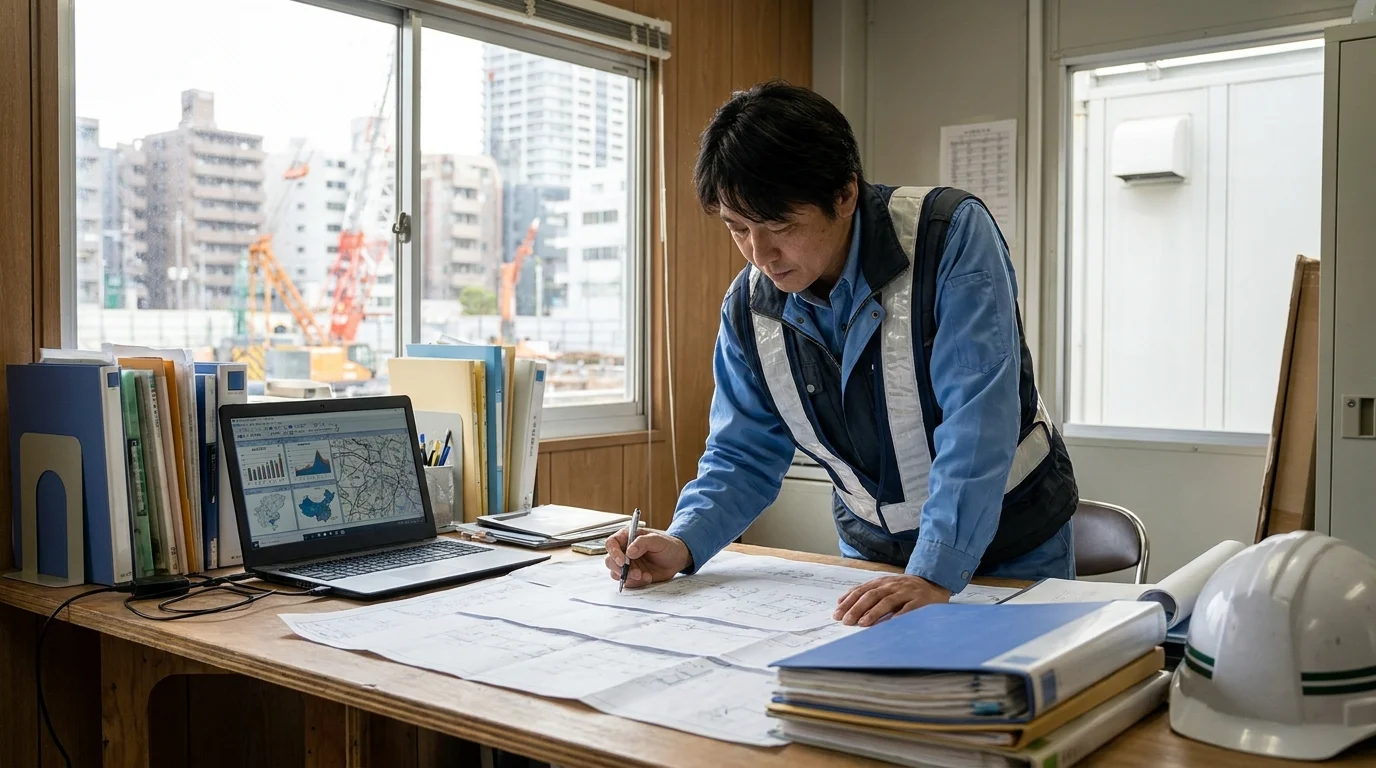
Through such advanced semantic analysis, it is possible to autonomously complete approximately 80% of consensus building without manager intervention. This is not merely a reduction in man-hours, but a strategic digital transformation designed to concentrate human resources during emergencies on higher-level risk management, such as safety patrols and site recovery command.
FAQ
- Q. Is it possible to implement this even if subcontractors are not tech-savvy?
- A. Yes, it is. No installation of dedicated apps is required. Since users can interact with the AI through infrastructure they use daily, such as LINE or automated voice calls (IVR), rapid implementation is possible regardless of IT literacy.
- Q. Is there a risk that the AI will finalize schedules on its own?
- A. The AI's role is strictly to present "optimal adjustment proposals." We employ a "Human-in-the-loop" design where final confirmation and approval are performed by a manager on a dashboard, respecting the final judgment of those on-site.
- Q. Can it be triggered by something other than weather data?
- A. Yes. It is possible to set up communication protocols based on various triggers, such as earthquake alerts, transportation infrastructure suspension info, or even manual activation via an internal emergency button.
Take Your On-site Resilience to the Next Level
In the logistics and construction DX of 2026, the speed of response to weather risks directly impacts corporate reliability. We are offering free implementation simulations for our mass communication and schedule adjustment AI for subcontractors.
Talk to us for a free strategy consultationSummary
To minimize construction delays caused by sudden severe weather, automatic recalculation of the "critical path" using AI bots and "parallel coordination" with subcontractors are essential. In the 2026 business environment, AI implementation that eliminates information asymmetry and enables real-time consensus building will become a "survival strategy" for companies, going beyond mere efficiency. Strengthening resilience directly translates into a company's competitive advantage.
Published: June 19, 2026 / By: Osamu Yasuda

Related Articles


References
- [1] Japan Meteorological Agency: Guidelines for the Utilization of Disaster Prevention Weather Information (2025 Revised Edition)
- [2] Ministry of Land, Infrastructure, Transport and Tourism: Guidelines for Infrastructure DX and Productivity Improvement at Construction Sites
- [3] Supply Chain Resilience: The Role of Artificial Intelligence in Weather Risk Management (2025 Journal of Logistics)
Disclaimer:
本記事は情報提供を目的としており、専門的なアドバイス(法的、財務的、技術的等)を代替するものではありません。AIの導入効果は各社の運用環境やデータ精度により異なります。特定の成果を保証するものではありません。