

[2026 Update] Next-Generation Store OMO Strategy: Achieving Hands-Free Shopping through AI Recommendations and "In-Store Payment & Home Delivery"
In the apparel and furniture industries, "showrooming"—where physical stores serve only as places to try on or inspect products while purchases migrate to cheaper third-party sites—has become a critical issue. However, on the front lines of business support, we are reframing this phenomenon positively as a "manifestation of the customer's strong desire to experience the physical product." Through the latest OMO (Online Merges with Offline) strategies, combining AI-powered personalized recommendations with "in-store payment and home delivery" is evolving stores into "experience hubs." This approach liberates stores from inventory risks and customers from the burden of carrying heavy purchases. This article outlines the specific implementation process for redefining the store's role and dramatically enhancing profitability.
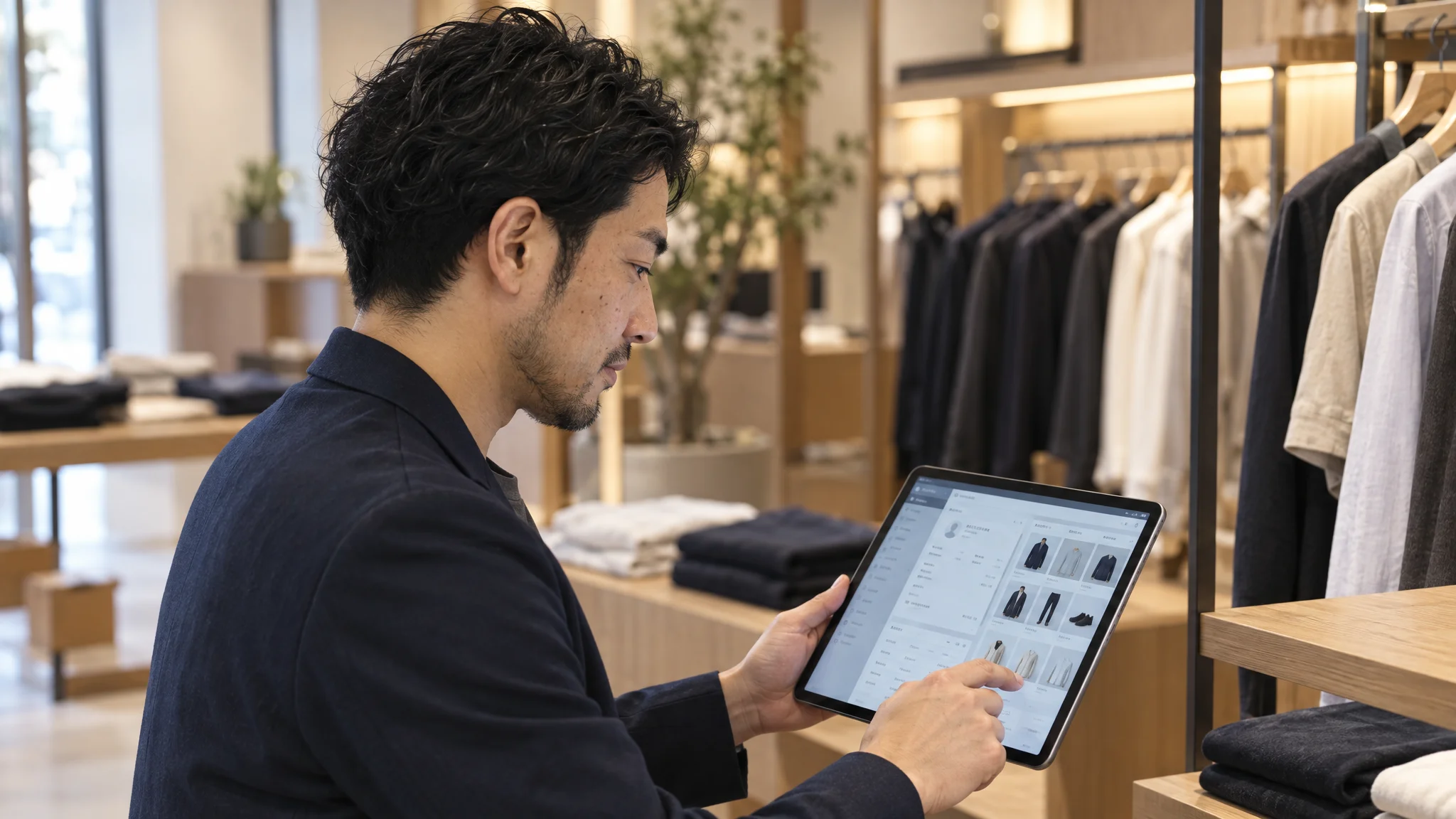
Table of Contents (Click to open/close)
1. A framework for converting showrooming into "hands-free purchasing"
A common challenge we encounter in our consulting work is the issue of customers trying on items in-store but then leaving, saying they will purchase them online later. The key to preventing this is incorporating "in-store payment and home delivery" into the standard workflow. By having customers scan a QR code on the spot and complete their purchase through the company's EC payment platform, the store is transformed from a mere "distribution point" into a "place for decision-making."
In our consulting practice, we have observed that this "hands-free experience" not only improves customer satisfaction (NPS) but also contributes to an increase in average transaction value through impulse purchases. Particularly within the framework of D2C EC site development and growth support, integrating member IDs between physical stores and EC is an essential requirement. This allows fitting room histories from the store to be seamlessly synced to the EC "Favorites" list, enabling reminder notifications to be sent at a later date.
2. Advanced Customer Service and Data Integration via AI Recommendation Engines
To prevent physical stores from becoming mere showrooms, AI-driven "hyper-personalized customer service" is essential. On-site, suggestions often rely on the intuition of veteran staff, but this leads to increased dependency on specific individuals and creates a bottleneck for scaling. In the latest OMO strategies, RFID detects items brought into fitting rooms, allowing AI to present optimal styling suggestions that combine "EC browsing history" with "past purchases" in real-time on smart mirrors or staff tablets.
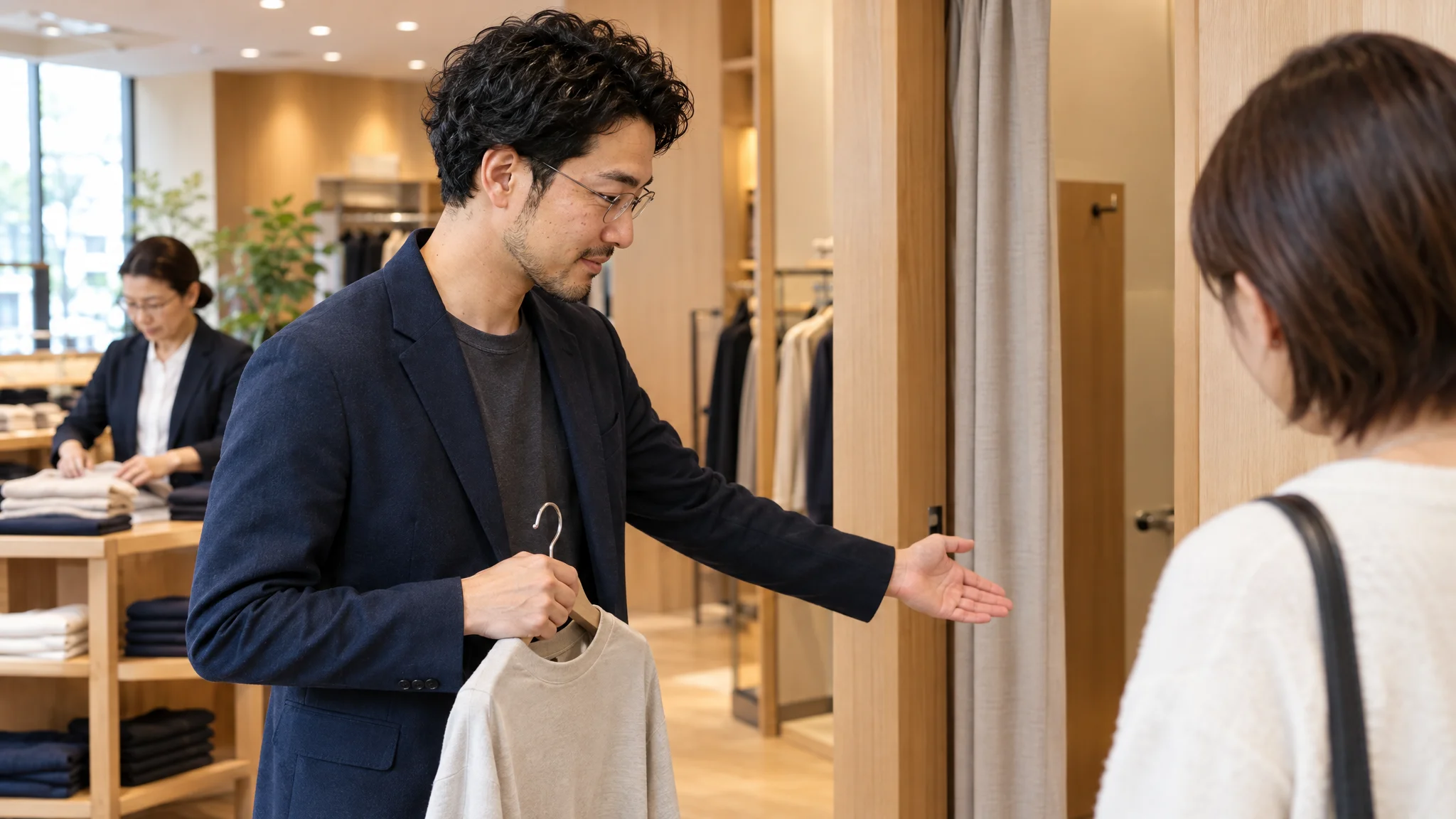
In our actual support projects, we often hear that these AI recommendations have empowered store staff to make "plus-one" suggestions with confidence. Furthermore, the online behavioral data accumulated through our Own EC Site Development & Growth Support serves as a valuable asset for predicting "opportunity losses due to size stockouts" in-store and improving the accuracy of MD (merchandising) planning.
3. Dramatic Improvement of Store P&L Through Inventory-less Operations
The primary benefit of a store model centered on "in-store payment and home delivery" is the ability to minimize in-store inventory. While traditional store operations saw backyards (storage space) occupying 30–40% of the floor area, OMO-style stores enable "inventory-less operations" by only keeping display samples. This allows for opening stores in compact spaces even in high-rent urban areas, leading to a significant reduction in fixed costs.
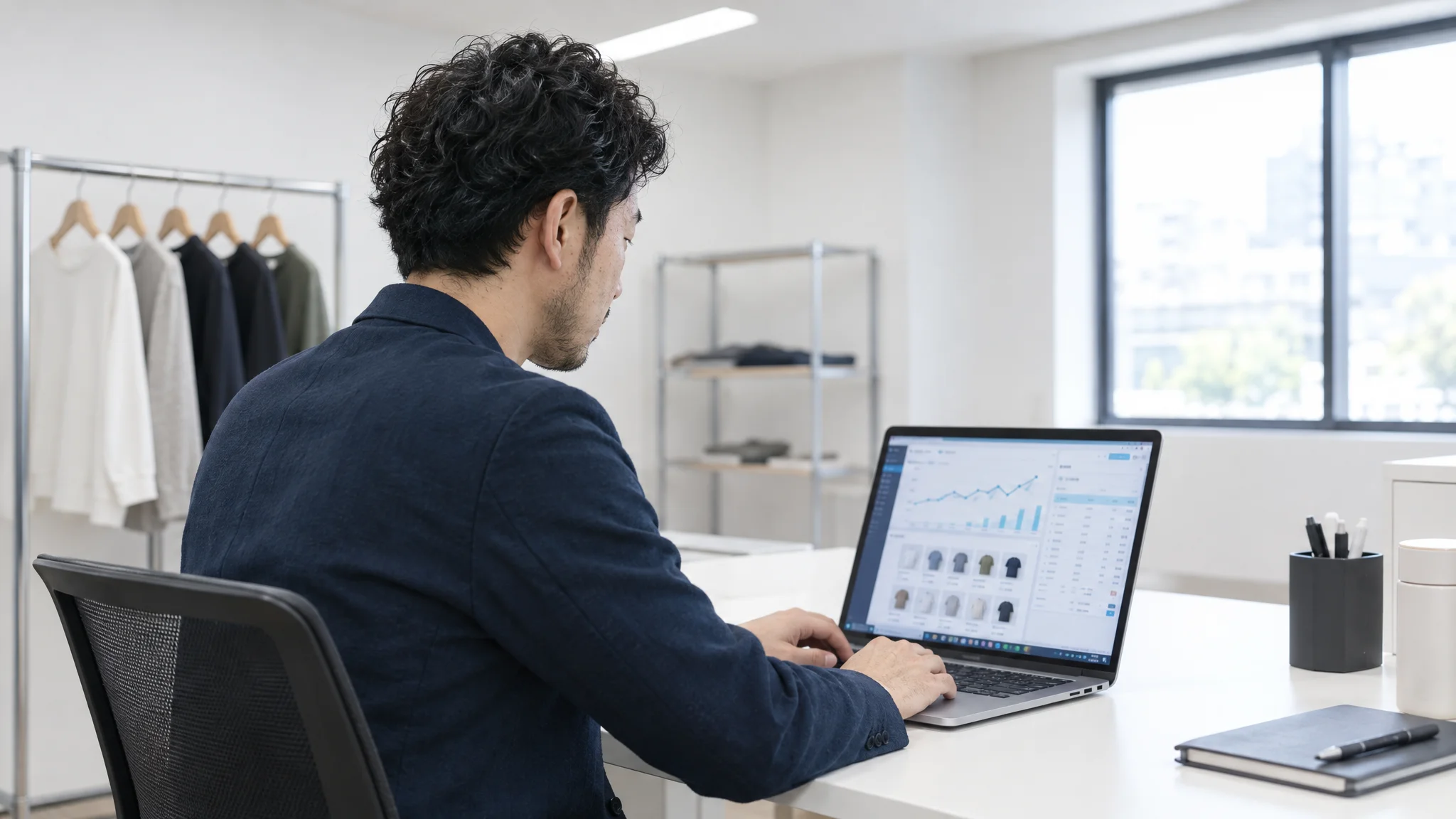
A common misconception on the ground is the concern that "out-of-stock situations lead to lower sales." In reality, however, by allocating "shared EC inventory across all stores," lost sales opportunities due to stockouts at specific locations are eliminated. In our consulting experience, it is not uncommon for this inventory centralization to improve company-wide inventory turnover by more than 20%.
FAQ
- Q. Are there any strategies to encourage in-store payment and home delivery (hands-free shopping)?
- A. Promoting "free shipping campaigns" or the "benefit of returning home empty-handed" is effective. We also recommend on-site measures such as issuing coupons that can be used immediately upon registration to simultaneously increase conversion and membership rates.
- Q. Is integration with existing POS systems difficult?
- A. 最近ではクラウド型POSやECプラットフォームのAPI連携が進化しており、比較的スムーズに統合可能です。重要なのはシステム連携そのものよりも、店舗スタッフの評価制度(EC売上の店舗帰属など)を整える運用設計です。
- Q. Do AI recommendations require vast amounts of data?
- A. Perfect data is not required from the start. In our consulting practice, we recommend a "small start" approach—beginning with collaborative filtering such as "Customers who viewed this item also viewed" and then gradually improving accuracy by incorporating individual purchase history and attribute data.
Taking your EC business to the next stage
From show-rooming countermeasures to AI implementation and inventory centralization, our hands-on consultants will support you every step of the way.
Talk to us for a free strategy consultation4. Summary: Designing the Store Experience Required in 2026
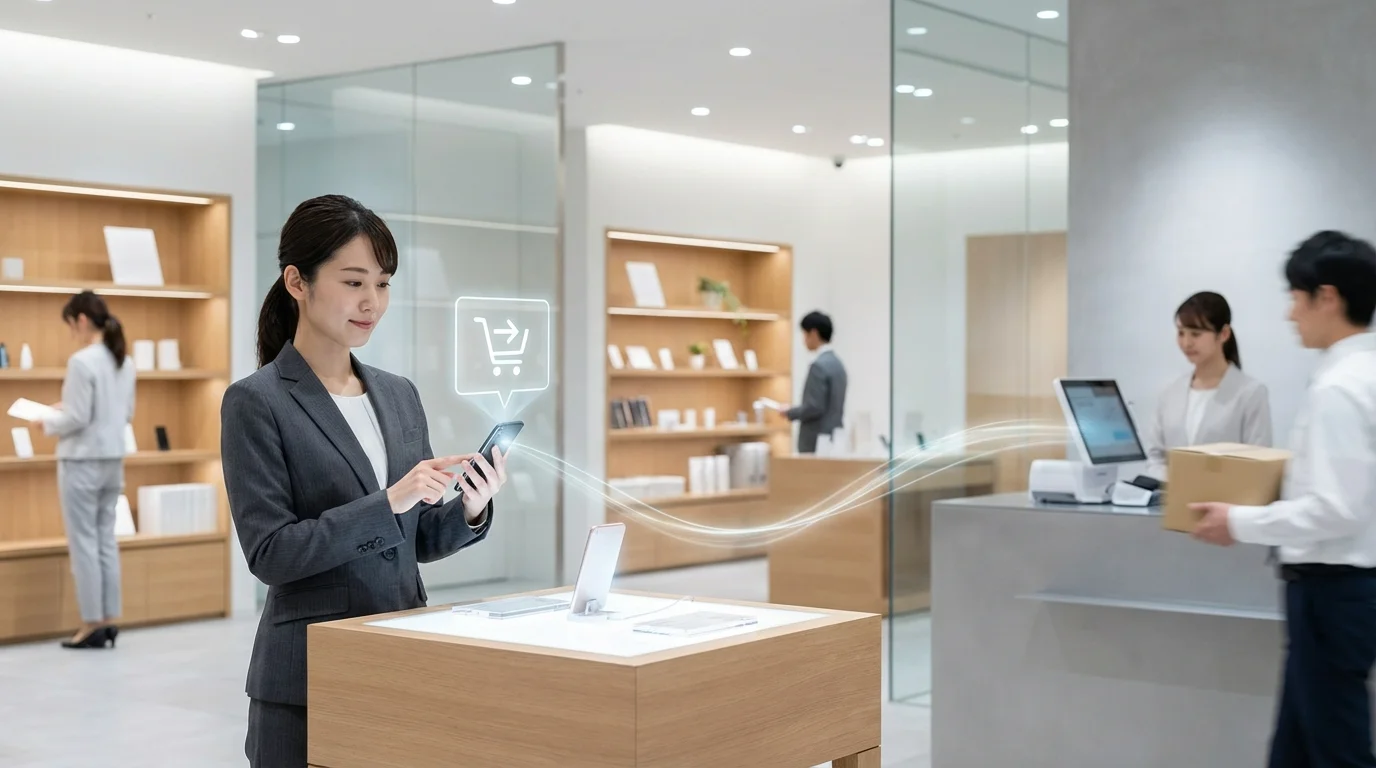
In the store strategies of 2026, show-rooming is no longer a threat but a powerful weapon. By combining AI-driven data integration with "in-store payment and home delivery," physical stores will evolve into "experiential media with the highest conversion rates." This model, which provides ultimate convenience to customers while minimizing inventory risk, will become the next-generation distribution standard.
Published: October 21, 2026 / By: Osamu Yasuda

Osamu Yasuda
Senior Managing Director & COO
Meets Consulting Inc.
Supported 100+ EC operations & logistics projects; specialist in operations and cost optimization
Related Articles


References
- [1] Ministry of Economy, Trade and Industry (METI), "Market Survey on Electronic Commerce," 2025 Edition
- [2] Meets Consulting Inc. Physical Store OMO Support Project Performance Materials (2024-2026)