

[2026 Latest] Preventing Turnover with AI Prediction: Latest HRDX to Detect Quiet Quitting
With the establishment of remote work and the spread of hybrid work, the "invisibility" of organizations has become a serious issue. In particular, "Quiet Quitting"—where employees perform their duties indifferently on the surface while losing their sense of belonging internally—progresses silently beyond the reach of management. In our consulting practice, we see endless cases where it is already too late by the time a resignation letter is submitted. In this article, we will explain the latest HRDX strategies from the front lines of consulting, combining AI-driven predictive modeling with engagement platforms to detect early signs of isolation and rebuild strong organizations.

1. The Impact of AI Predictive Models: Visualizing "Invisible Isolation" with Data
In actual support cases, many companies aim to reduce turnover rates but dismiss the causes as qualitative reasons such as "individual aptitude" or "family circumstances." However, when data analysis is performed using AI, it becomes clear that there are distinct "leading indicators of turnover."
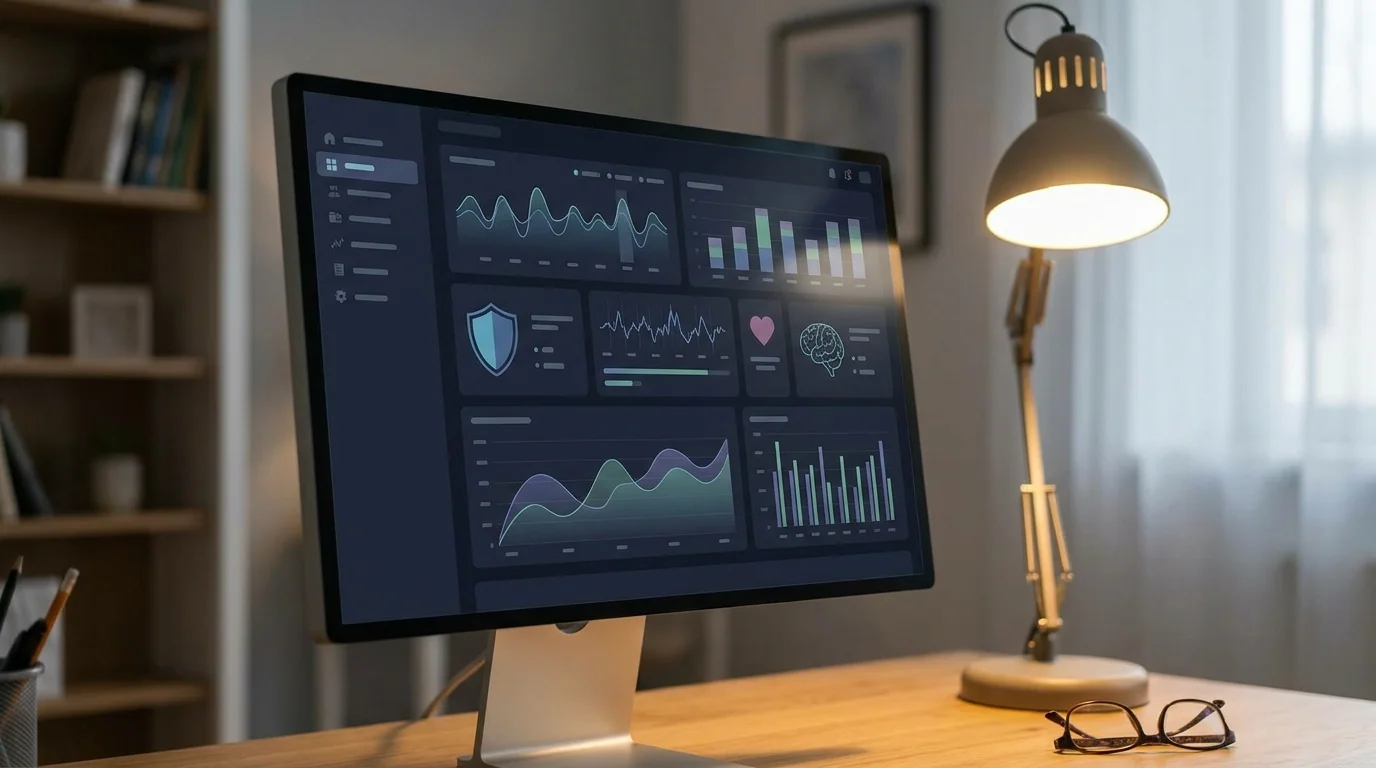
Specifically, subtle changes in attendance data (such as irregular login times), a sharp decrease in communication tool activity, and even delays in response speed for engagement surveys are detected as signals of isolation. By feeding these into an AI predictive model, it has become possible to identify employees with a high risk of leaving several months in advance with high accuracy.
In our consulting practice, we have repeatedly seen turnover rates improve dramatically simply by having managers optimize the timing of "1-on-1s" based on this predictive data. The key is to position AI as a tool for "support" rather than "surveillance."
2. Designing "Dynamic Intervention" via Engagement Platforms
Even if AI detects signs, it is meaningless without subsequent action. This is where the use of an engagement platform becomes crucial. It is required to go beyond a mere survey tool and automate or semi-automate "dynamic interventions" tailored to the condition of each individual employee.

For example, for an employee whose isolation is a concern in a specific project, the platform can send notifications encouraging praise (peer bonuses) or recommend content related to career development at the appropriate time. This is very similar to implementing CRM measures to increase LTV (Customer Lifetime Value) and prevent customer churn in In-house EC Construction and Growth Support.
Taking a data-driven personalized approach to maximize the Experience Value (EX) of employees, who are "internal customers." This has become the HRDX standard in 2026.
3. The Transformation Process Toward a "Strong Organization" Driven by HRDX
The ultimate goal of HRDX is not just to prevent turnover. It is to create a "strong organization" where each employee acts autonomously and the productivity of the entire organization improves. A common pattern in the field is to be satisfied with just the introduction of tools, leaving the transformation of organizational culture behind.
In successful companies, management and the front lines deepen their dialogue using data provided by AI as a "common language." Data only shows "signs"; ultimately, it is human management that resolves the "worries" and "conflicts" behind them.

In our consulting practice, we emphasize how to balance efficiency through technology with high-value-added communication by humans. In particular, by applying the user behavior analysis expertise cultivated in In-house EC Construction and Growth Support to organizational management, we support not only retention rates but also the spontaneous creation of innovation by employees.
FAQ
- Q. Is there any pushback from employees regarding predicting turnover with AI?
- A. Transparency in operation is extremely important. We build a relationship of trust by informing the entire company that it is not for "surveillance" but for "support" to create a more comfortable working environment for everyone, and by actually providing positive follow-up based on data (such as adjusting workloads appropriately).
- Q. What kind of data should be collected to enable high-precision prediction?
- A. In addition to basic data such as attendance records, overtime hours, and paid leave utilization rates, effective indicators include response content on engagement platforms, frequency of posts on communication tools like Slack, and the number of reactions.
- Q. How long does it take from implementation to seeing results?
- A. It depends on the status of data accumulation, but prediction accuracy typically stabilizes after a learning period of about six months to a year. However, if you only need initial visualization, it is possible to identify organizational bottlenecks within about three months of implementation.
HRDX Strategies to Strengthen Your Organization Through Data
We support engagement building to prevent "quiet quitting" and maximize employee motivation.
Talk to us for a free strategy consultationSummary
In 2026 management, utilizing AI-driven turnover prediction and engagement platforms is no longer an "option" but an "essential" strategy. Capturing the invisible isolation of employees through data and having humans intervene at the right time—this fusion of "high-tech and high-touch" is the only way to build a sustainable, strong organization in Japan, where the working population is declining. Start by listening to what your company's data is telling you.
Published: September 24, 2026 / By: Osamu Yasuda

Osamu Yasuda
Senior Managing Director & COO
Meets Consulting Inc.
Supported 100+ EC operations & logistics projects; specialist in operations and cost optimization
Related Articles


References
- [1] Gartner, "Top Strategic Technology Trends for 2026: The Future of HR Tech"
- [2] Ministry of Economy, Trade and Industry, "DX Report 2.1 (Transformation Toward the Creation of Digital Industries)"