

[2026 Latest] Reducing Return Rates via AI Sizing: Optimizing UX with High-Precision Size Charts
In the apparel e-commerce industry, one of the factors putting the most pressure on profit margins is "returns due to size mismatch." Traditional analog measurement using measuring tapes is prone to human error, leading to a "measurement hell" where inaccurate size information is provided to users. However, in the 2026 support landscape, AI automatic measurement solutions—which generate high-precision size charts instantly just by taking a photo with a smartphone—have become the trump card for reducing return rates and improving UX. In this article, we explain the impact of AI sizing from a practitioner's perspective.
1. The Limits of Analog Measurement and "Standardization of Measurement" via AI
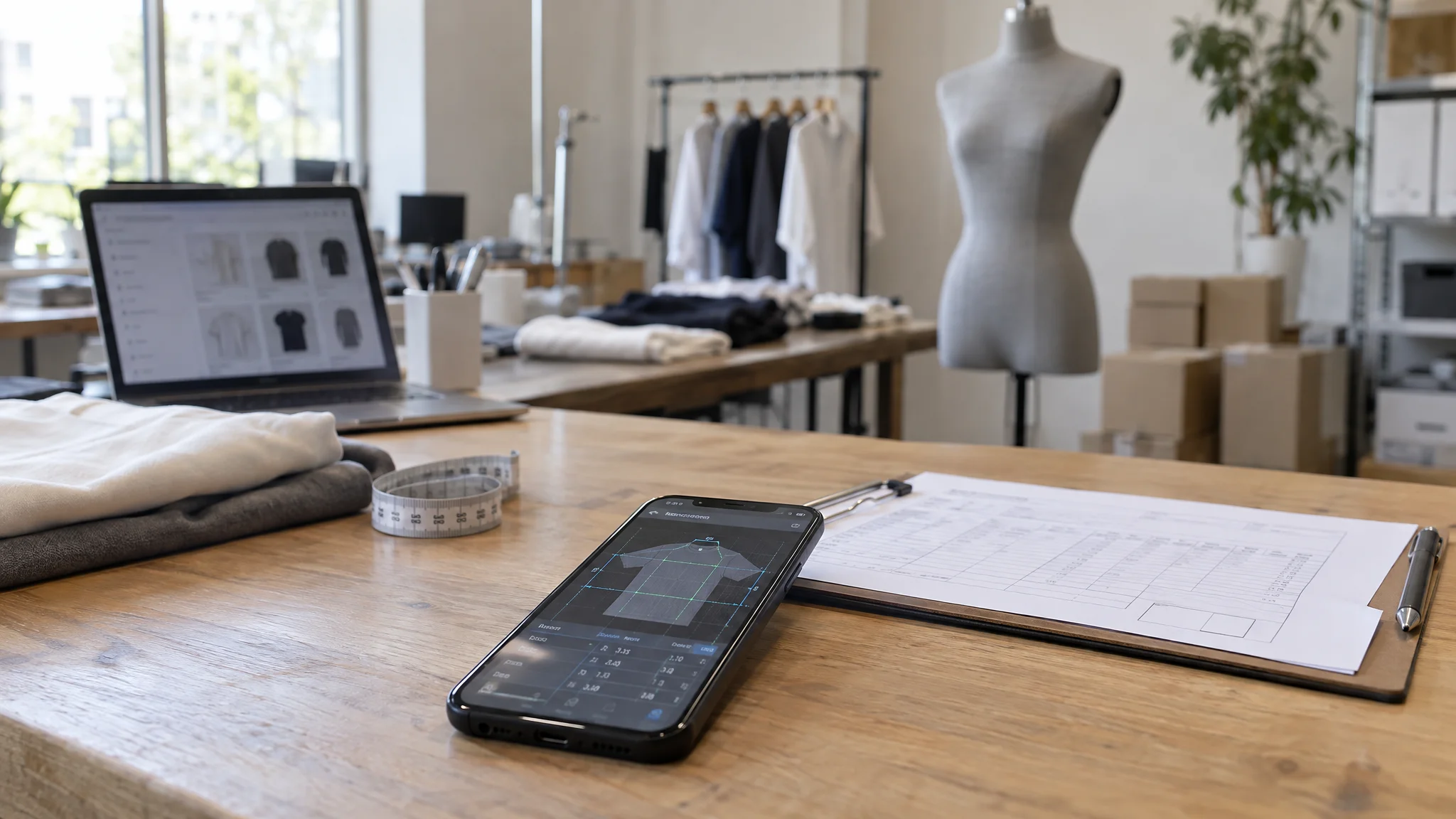
A common challenge we see in actual support projects is that even experienced staff can produce errors of several centimeters depending on how they apply the measuring tape. This "individualized measurement" creates a discrepancy between the size chart on the e-commerce site and the actual product, leading directly to customer distrust. AI automatic measurement uses image analysis technology to automatically detect garment outlines and parts, calculating values based on a consistent standard regardless of who takes the photo. This significantly reduces the workload on-site and frees staff from the "measurement hell" where mistakes are not tolerated.

2. Data Integration Mechanisms Achieving a 30% Reduction in Return Rates
Simply posting high-precision size data generated by AI on a site is not enough. In our support projects, we build systems where the AI cross-references a user's past purchase data or their own body data to recommend the "optimal size L for this product." This eliminates hesitation in size selection and prevents the post-purchase "it's different from the size I expected" scenario. Statistically, it is not uncommon for return rates to improve by more than 30% following the implementation of appropriate AI sizing.
Particularly in D2C E-commerce Construction and Growth Support projects, we focus on linking this AI data with CRM to turn each customer's "My Size" into an asset. Once customers experience accurate sizing, the cost of switching to a competitor increases, contributing to an improvement in LTV (Lifetime Value).
3. Digitalization Strategies for the "Fitting Experience" in D2C E-commerce
In the UX optimization of 2026, size charts are no longer just a "static list of numbers." There is a demand for experiences where one's own room becomes a fitting room through a smartphone camera. By combining product data obtained through AI automatic measurement with user body scan data, the accuracy of virtual fittings has improved dramatically. A common problem on-site is that advanced technology won't gain traction if it's difficult to use, but the latest solutions have achieved a flow simplified to the extreme: "just take a photo."

In our D2C E-commerce Construction and Growth Support, we position these technologies not just as tools, but as strategic components that bridge the management challenges of "minimizing return costs" and "maximizing repeat rates." We have reached a phase where resources should be allocated to essential data-driven UX design rather than being overwhelmed by analog tasks.
FAQ
- Q. Is special equipment required to implement AI automatic measurement?
- A. No, it can be performed with a standard smartphone camera. By using dedicated apps or browser-based analysis tools, you can start high-precision measurement without any special capital investment.
- Q. Can stretchy materials be measured accurately?
- A. Yes, the latest AI models have learned fabric textures and can make corrections considering the tension in a flat-laid state. However, for garments with extremely complex structures, the best practice on-site is to combine this with some manual correction.
- Q. How much time is saved in creating size charts?
- A. Based on our support track record, measurement and data entry time per product has been reduced by approximately 70% to 80% compared to traditional methods. Since data conversion is completed at the same time as the photo is taken, it leads to a significant reduction in lead time.
Taking Your E-commerce Business to the Next Level
From improving return rates through AI utilization to e-commerce strategies that maximize LTV, our consultants provide hands-on support.
Talk to us for a free strategy consultationSummary
Moving away from manual measurement processes and implementing AI-driven automated measurement is more than just a matter of efficiency. It is a process that transforms the "negative user experience" of returns caused by inaccurate information into a personalized "trusted shopping experience." To thrive in the 2026 e-commerce market, it is essential to reframe measurement data as an asset for deepening customer relationships. Now is the time to accelerate UX optimization, starting with highly accurate size charts.
Published: October 16, 2026 / By: Osamu Yasuda

Osamu Yasuda
Senior Managing Director & COO
Meets Consulting Inc.
Supported 100+ EC operations & logistics projects; specialist in operations and cost optimization
Related Articles



References
- [1] Ministry of Economy, Trade and Industry "Market Survey on E-Commerce" Apparel E-commerce Trends
- [2] Accuracy Verification of Object Detection and Dimension Measurement using AI Image Analysis Technology (2025)