

[2026 Latest] AI Virtual Try-on Solutions to Reduce Reverse Logistics Costs: Controlling "Size Sensitivity" to Maximize E-commerce Operating Profit Margins
In the apparel e-commerce industry, the single greatest factor eroding operating profit margins is "returns." Specifically, returns due to size mismatches drive up "reverse logistics costs"—the expenses associated with re-inspection, re-packing, and round-trip shipping. According to the latest trends for 2026, virtual fitting solutions that move beyond simple image compositing to highly integrate 3D body data with AI are becoming the definitive solution to this challenge.

Table of Contents (Click to expand/collapse)
1. The Impact of Reverse Logistics Costs on E-commerce Management
Return rates in apparel e-commerce are generally said to reach 15% to 30%. When a return occurs, businesses must bear not only the loss of sales opportunities but also the actual logistics costs. Survey data reveals that the processing cost per return can balloon to approximately two to three times the cost of a new shipment.
In this cost structure, the most controllable variable is "returns due to size mismatch." Leveraging AI to bridge the gap between pre-purchase expectations and the actual product is no longer just added value; it is a survival strategy for securing operating profit.
2. Control Mechanism of "Size Sensitivity" via AI Virtual Try-On
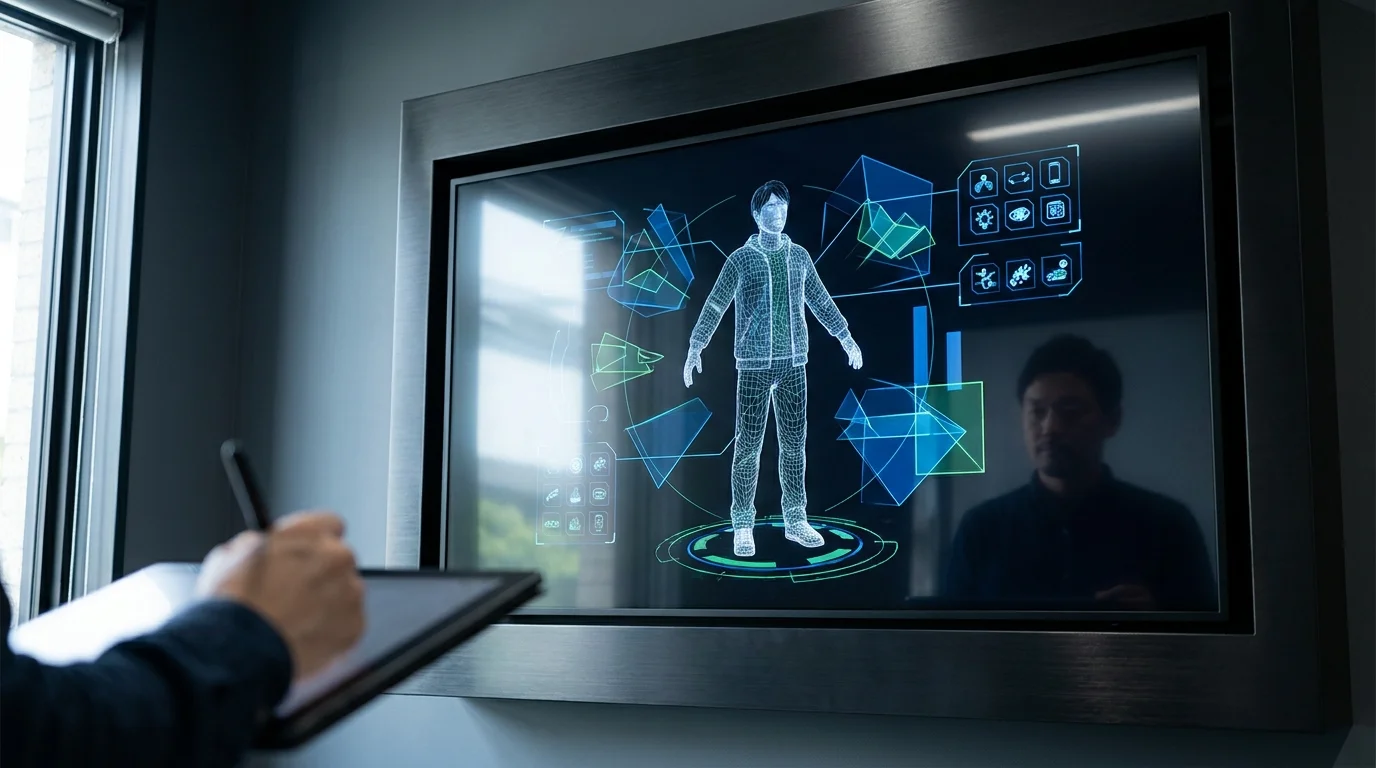
The latest AI virtual try-on technology does more than just determine whether an item looks good on a customer. By utilizing data from past purchases and 3D avatars generated with smartphone cameras, it quantifies "Size Sensitivity."
For example, the AI provides specific feedback such as, "The shoulder width of this brand's size M is 2cm tighter than the fit you usually prefer." This allows customers to add items to their cart with "confidence" rather than just "vague intuition."
3. Data Integration Strategy to Achieve a 30% Reduction in Return Rates
The true value of AI virtual fitting solutions lies not only in the frontend UX but also in their integration with backend inventory management systems (WMS) and customer relationship management (CRM). By accumulating customer body measurement data as an asset, it becomes possible to provide even more accurate recommendations for future purchases, contributing to an increase in LTV (Lifetime Value).
In fact, a major domestic apparel e-commerce company that implemented this system reported that within six months of implementation, the size-related return rate improved by 32.4%, leading to a 1.8-point increase in the operating profit margin.

4. Implementation Roadmap for Improving Profit Margins
When implementing AI virtual fitting, it is essential to first conduct a MECE (Mutually Exclusive and Collectively Exhaustive) analysis of your company's return reasons. If size mismatch accounts for more than 40% of returns, the return on investment (ROI) for an AI solution becomes exceptionally high.
As a first step, we recommend starting small within a specific category (e.g., bottoms or outerwear). By narrowing the scope of the data the AI learns, you can provide a high-precision fitting experience in a short timeframe, leading to reliable improvements in profitability.
FAQ
- Q. Is it necessary to convert all products into 3D data to implement AI virtual try-on?
- A. No. The latest AI can simulate a virtual fit using existing 2D product photos and size charts (spec data). You can get started without the massive cost of converting all products into 3D models.
- Q. What other benefits are there besides improving return rates?
- A. The fitting experience itself becomes a form of entertainment, which can be expected to extend dwell time and improve conversion rates (CVR). Additionally, customer body data can be leveraged to optimize size ranges in merchandising (MD) for the following season.
- Q. What is the payback period for the implementation costs?
- A. It depends on your monthly shipping volume and current return rate, but in many cases, the implementation costs are recovered within 12 to 18 months through reduced return costs (suppression of reverse logistics costs).
Taking your EC business to the next level
We offer free simulations for return rate improvement and profit maximization through AI utilization.
Talk to us for a free strategy consultationSummary
In the 2026 EC market, AI virtual try-on has evolved beyond a mere means of improving UX into a "management infrastructure" for compressing reverse logistics costs and protecting operating profit margins. An approach that uses data to control customer size sensitivity and prevent inappropriate orders is essential for sustainable EC management. By scrutinizing your own return data and implementing the optimal AI solution, you can clearly differentiate your profit structure from that of your competitors.
Published: June 24, 2026 / By: Osamu Yasuda

Related Articles



References
- [1] Reverse Logistics Magazine, "The Financial Impact of Returns on E-commerce Profitability," 2025.
- [2] Journal of Retailing and Consumer Services, "Virtual Try-On Technologies and Consumer Purchase Decisions," 2026.