

[2026 Latest] Strategic Utilization of Zero-Party Data: High-Precision LTV Maximization via AI Stylists
As the tightening of cookie regulations (the cookieless era) pushes third-party data-dependent customer acquisition to its limits, the top priority for next-generation e-commerce businesses is the collection and utilization of "zero-party data." This is intent data explicitly shared by customers of their own volition, and it is the only solution that balances privacy protection with personalization. In this article, we explain the specific roadmap for how customer service experiences via AI stylists can maximize LTV (Lifetime Value).
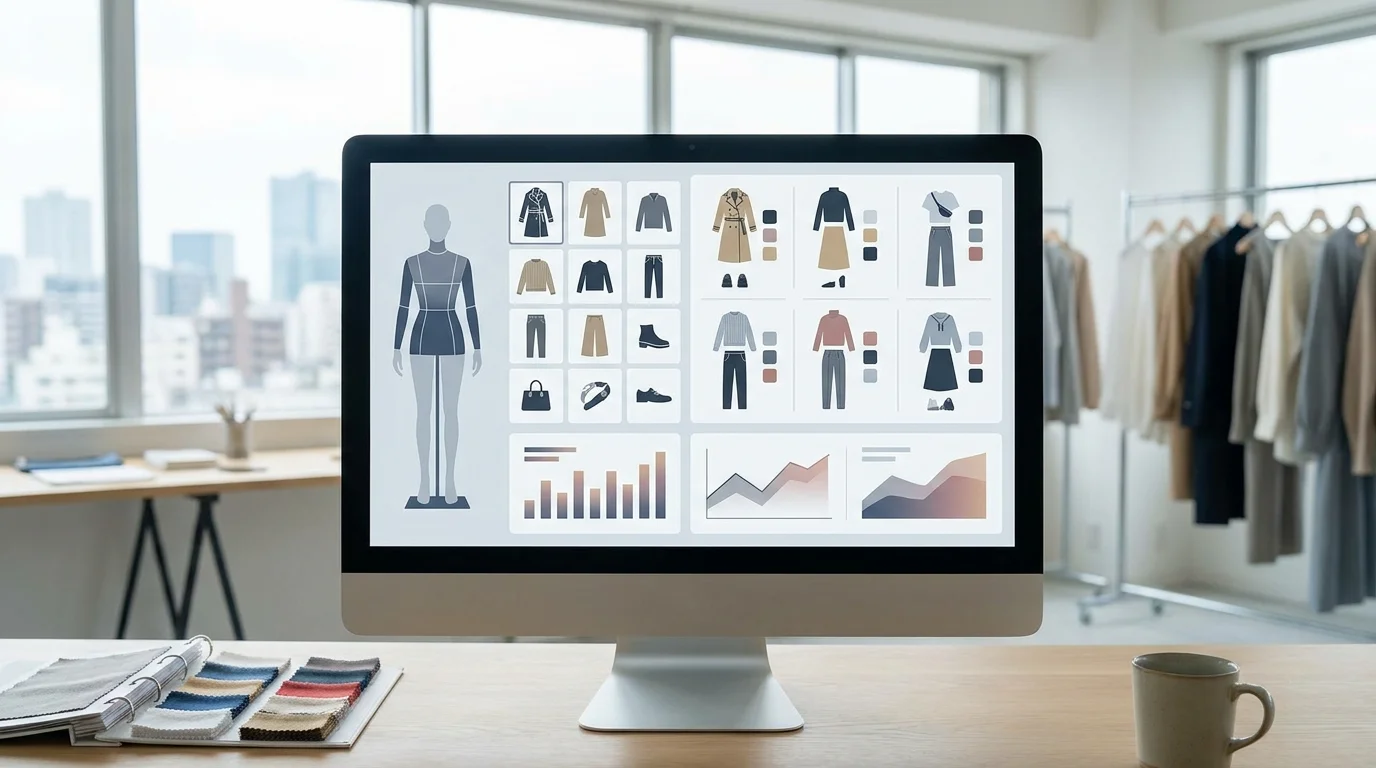
Table of Contents (Click to open/close)
1. Why Zero-Party Data Changes the "Quality" of CRM
Traditional CRM has been limited to inferences based on "past behavior (first-party data)" such as purchase and browsing history. However, zero-party data represents the direct intentions of the customer, such as "I like this" or "I want to solve this problem." By collecting this, it becomes possible to achieve reliable matching that goes beyond the realm of guesswork.
In particular, conversational interfaces like "AI Stylists" can draw out customer context through natural communication, unlike traditional survey formats.
2. How AI Stylist Customer Service Automation Works
AI stylists interact with customers through chat interfaces such as official LINE accounts. For example, they ask about the customer's "mood today," "body type concerns," and "preferred colors," then instantly suggest the optimal outfit from tens of thousands of combinations.
The data obtained through this process is not just survey results; it is accumulated as a "testament of trust through dialogue."

By utilizing the latest LLMs (Large Language Models), vague customer expressions (e.g., "something that feels clean and fresh") are converted into specific product attributes (tags), enabling highly accurate recommendations.
3. Data Integration and Scenario Design for LTV Maximization
Integrating collected zero-party data with existing core systems and CDPs (Customer Data Platforms) is the key to maximizing LTV. If an AI stylist learns that a customer has "sensitive skin," then all subsequent follow-up emails and ad distributions should be structured around "hypoallergenic products."
This makes customers feel a sense of psychological loyalty, knowing that the brand "understands them," which results in a simultaneous decrease in churn rate and an increase in average order value.

4. Outlook for AI Customer Service Toward 2026
By 2026, AI stylists will evolve further, and "virtual try-ons" combined with image analysis, as well as "intent marketing" that proactively predicts changes in preferences based on social media posts, will become mainstream. It is no exaggeration to say that those who master zero-party data will master the next-generation e-commerce market.
FAQ
- Q. Won't customers be reluctant to provide zero-party data?
- A. If you can present a clear benefit (value exchange) where providing data leads to "receiving proposals perfectly suited to them," many customers will provide it favorably. Dialogue with an AI stylist serves as a natural entry point for this.
- Q. Does introducing an AI stylist require extensive development?
- A. Currently, SaaS-based AI customer service tools utilizing API integrations are widespread, and by linking them with existing e-commerce sites or LINE accounts, implementation is possible in a relatively short period.
- Q. How to utilize accumulated data?
- A. It can be utilized across a wide range of marketing processes, including personalized delivery via MA (Marketing Automation), needs analysis for new product development (MD), and improving advertising targeting accuracy.
Taking your e-commerce business to the next level
Build an exceptional customer experience and maximize LTV through AI-driven customer service and zero-party data utilization.
Talk to us for a free strategy consultationSummary
Zero-party data represents the "ultimate customer understanding" gained through direct dialogue. By leveraging AI stylists as the interface, e-commerce operators can achieve unprecedented levels of personalization and dramatically increase LTV. Looking toward 2026, the shift from simple "selling" to "providing value through dialogue" will be the key to success.
Published: June 24, 2026 / By: Osamu Yasuda

Related Articles


References
- [1] Zero-Party Data Strategy for 2026, Digital Marketing Institute.
- [2] Personalization in E-commerce: The Role of Generative AI, TechInsights Japan.