

Drastically Improve Fuel Efficiency with AI! How Telematics and Big Data "Driving Scoring" is Transforming Logistics Costs
In the logistics industry, reducing fuel costs has moved beyond simple expense cutting to become a challenge directly linked to corporate survival strategy. As of 2026, "Fuel Efficiency Optimization AI Advice"—which combines telematics big data from vehicles with AI—is making traditional, abstract eco-driving instruction a thing of the past. AI analyzes massive amounts of behavioral data from vehicle CAN-bus systems and high-precision G-sensors in real-time to quantify individual driver biases. This article explains next-generation solutions that drastically improve overall fleet fuel efficiency by providing personalized feedback.

Table of Contents (Click to expand/collapse)
1. "Driving Quality" Visualized by Telematics and Big Data
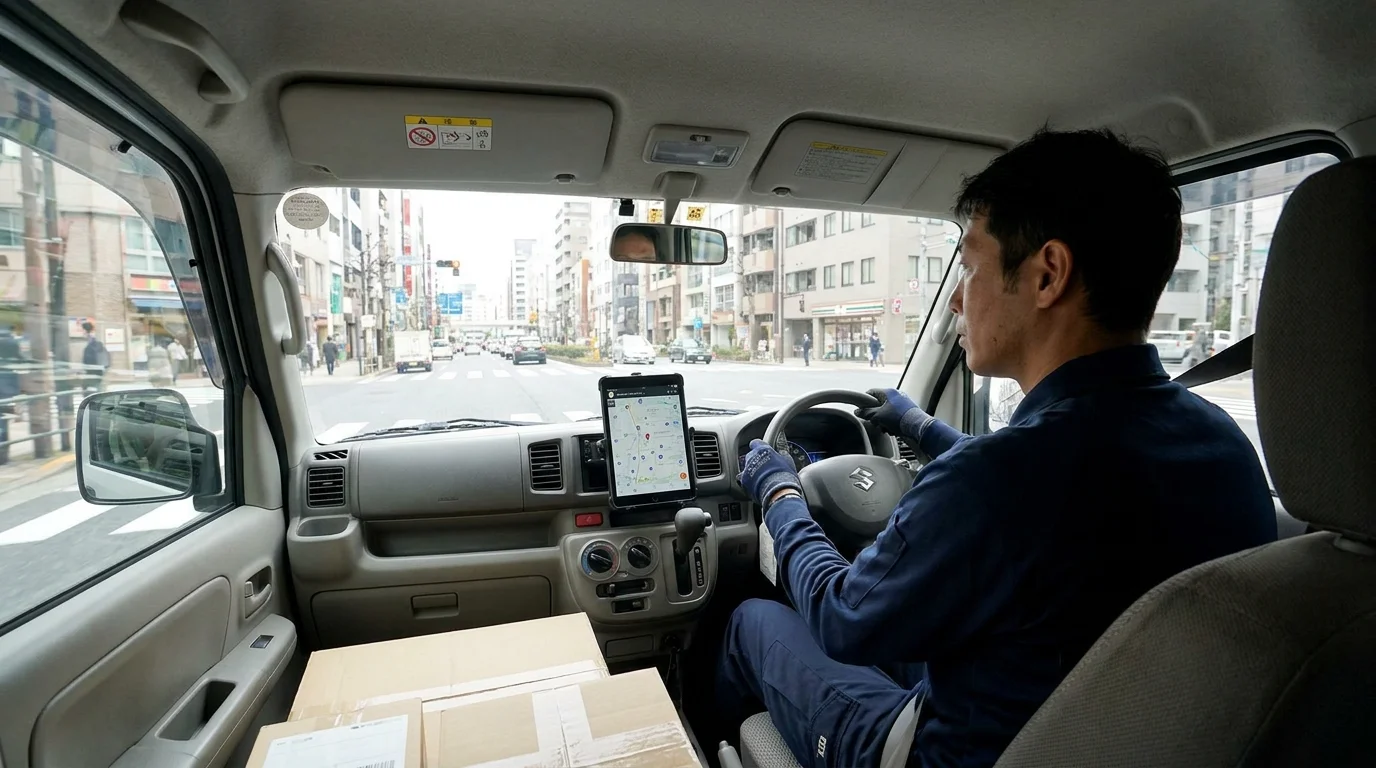
Until now, fuel management was limited to managing "results" calculated from total monthly mileage and refueling amounts. However, the latest telematics systems acquire data such as engine RPM, accelerator position, brake pressure, and fuel injection volume directly from the vehicle's CAN-bus in millisecond intervals.
By combining this data with impact detection from G-sensors (accelerometers), the process of "why that fuel efficiency occurred" can be fully visualized. For example, AI can instantly determine whether the cause of poor fuel efficiency on a specific route is due to traffic congestion or a driver's unnecessary rapid acceleration.
2. Quantitative Correlation of Fuel Efficiency Improvement via AI Scoring
AI uses deep learning to identify "specific behaviors" that negatively impact fuel efficiency from the vast amount of collected data. It calculates an "Eco-Drive Score" by integrating multi-faceted parameters, such as the appropriateness of accelerator work relative to road gradients and the suitability of idling time, rather than just the number of sudden braking incidents.
As the data above shows, when AI scoring is introduced and drivers can objectively understand their own driving, it is common to see an average fuel efficiency improvement of over 12% within one year of implementation. This is because "unconscious bad habits" are brought to light by the data, making them easier to correct.
3. Building a Personalized Feedback Loop
The true value of AI advice lies in specific instructions optimized for each individual driver. Instead of a generic "let's accelerate slowly," the AI generates specific and personalized feedback, such as: "In Driver A's case, reducing the accelerator position by just 5% during the first two seconds after waiting at a red light will save 3,000 yen in monthly fuel costs."
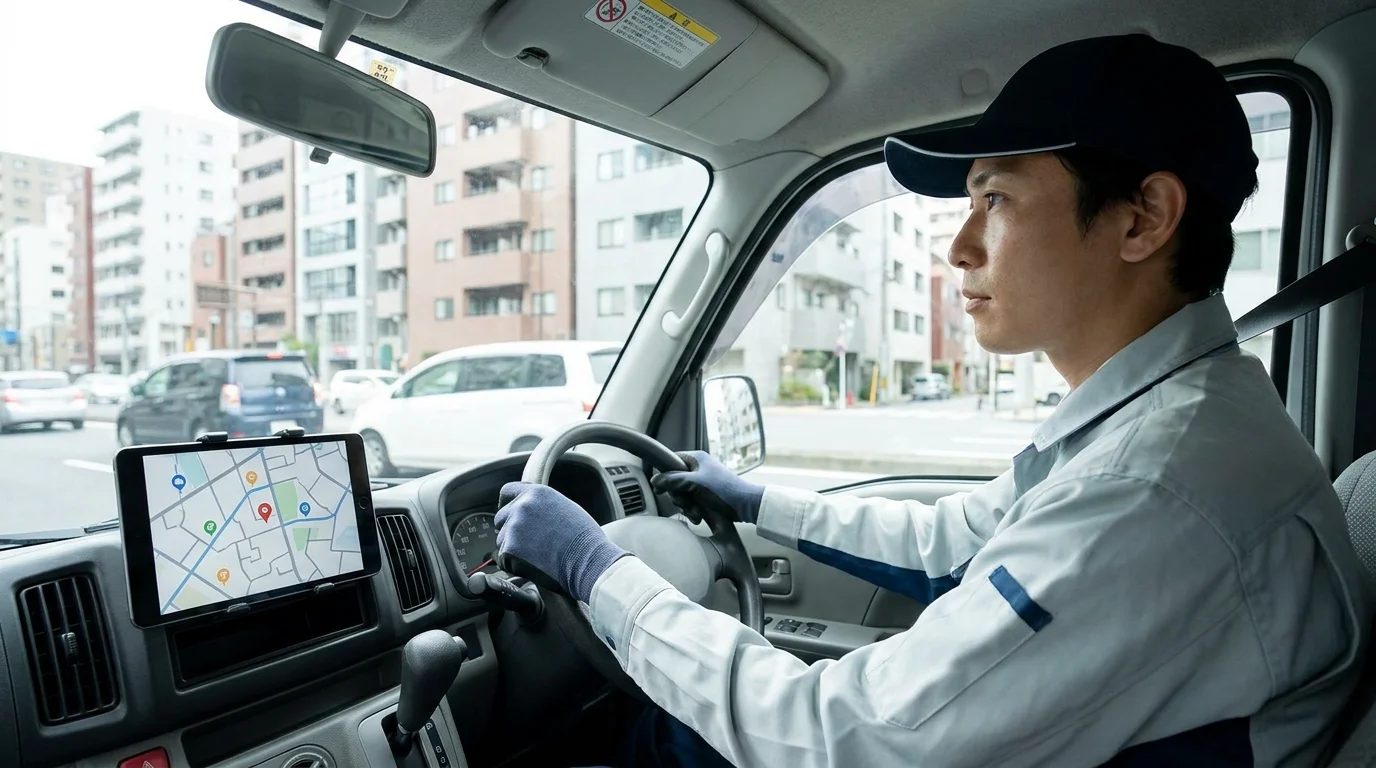
This feedback loop is provided in real-time via in-vehicle tablets or smartphone apps, or after the trip is completed. Drivers can aim to improve their scores as if playing a game, which helps prevent a drop in morale on the ground while improving the driving culture of the entire organization.
4. The Role of AI in Fleet Management in 2026
In 2026, as logistics DX (Digital Transformation) progresses, AI is no longer just a support tool. It plays a central role in comprehensive fleet management centered on fuel optimization, ranging from predicting vehicle maintenance timing and determining optimal delivery routes to preventing accidents by detecting driver fatigue.
The utilization of telematics and big data not only contributes to reducing environmental impact (ESG management) but also transforms fuel costs—a highly uncertain expense—into a "controllable variable." By introducing a fair evaluation system based on data, there are also significant secondary benefits, such as preventing the turnover of high-performing drivers.
FAQ
- Q. Is AI scoring possible even for existing older vehicles?
- A. Yes, it is possible. By using aftermarket telematics devices that connect to the OBD-II port, you can achieve data acquisition and AI analysis equivalent to that of the latest vehicles.
- Q. Won't drivers push back, feeling like they are being monitored?
- A. The key is positioning it as "support" rather than "surveillance." By clearly defining its use for incentive programs based on scores or as proof of safe driving, it has been positively received in many workplaces.
- Q. What benefits are there besides fuel efficiency improvement?
- A. By curbing aggressive driving, it directly leads to lower traffic accident rates, reduced costs for consumables such as tires and brake pads, and the maintenance of vehicle residual value (improved resale value).
Why not optimize your fleet operations with AI?
Achieve reliable cost reductions and safety improvements through the latest telematics analysis and AI utilization.
Talk to us for a free strategy consultationSummary
AI-driven fuel optimization advice is the process of transforming telematics big data into "valuable insights." By quantitatively analyzing vehicle behavior and providing optimized feedback for individual drivers, sustainable fuel efficiency improvements can be achieved without relying on abstract willpower. In the logistics management of 2026, this data-driven approach can be considered an essential requirement for balancing cost competitiveness and safety.
Published: June 24, 2026 / By: Osamu Yasuda

Related Articles

References
- [1] Telematics Data Analysis and Machine Learning in Fleet Management (2025)
- [2] Behavioral Economics in Eco-Driving Feedback Systems (2026)