
[2024 Update] Improving FAQ Bot Accuracy with RAG (Retrieval-Augmented Generation): Resident Support with Minimized Hallucinations
In the field of property management, responding to resident inquiries is a major challenge that consumes a significant portion of working hours. When automating FAQ responses for issues such as "air conditioner malfunctions" or "contract renewal procedures," traditional chatbots lack flexibility, while standalone generative AI (LLM) carries the risk of generating factually incorrect responses (hallucinations). This article explains strategic methods for leveraging the latest RAG (Retrieval-Augmented Generation) technology to complete accurate and rapid resident support via LINE bots.
1. Mechanisms for Suppressing Hallucinations through RAG Implementation
When using generative AI directly for resident support, the biggest hurdle is "hallucination," where the AI provides arbitrary answers or rules not found in the management regulations. RAG (Retrieval-Augmented Generation) is a system that, in response to a user's question, first searches internal management manuals and FAQ data, then includes those search results in the prompt to generate an AI response.
As a result, the AI generates responses based solely on "provided reliable information" rather than its "internal knowledge," making it possible to dramatically reduce factual errors. Building a RAG system is essential for accurately reflecting property-specific rules, especially in the initial response to equipment issues.
2. Trends in Resolution Rates for Resident Support
With the introduction of RAG-powered LINE bots, the "Resolution Rate"—where issues are resolved without relying on human chat or phone calls—has improved dramatically. The following data shows a comparison of resolution rates between traditional bots and RAG-powered bots.
As shown in the graph, implementing RAG allows the resolution rate to reach as high as 88%, significantly reducing the workload for management company operators. This is the result of the AI's ability to accurately extract information buried deep within manuals.
3. UX Optimization and Operational Flows via LINE Bot Integration
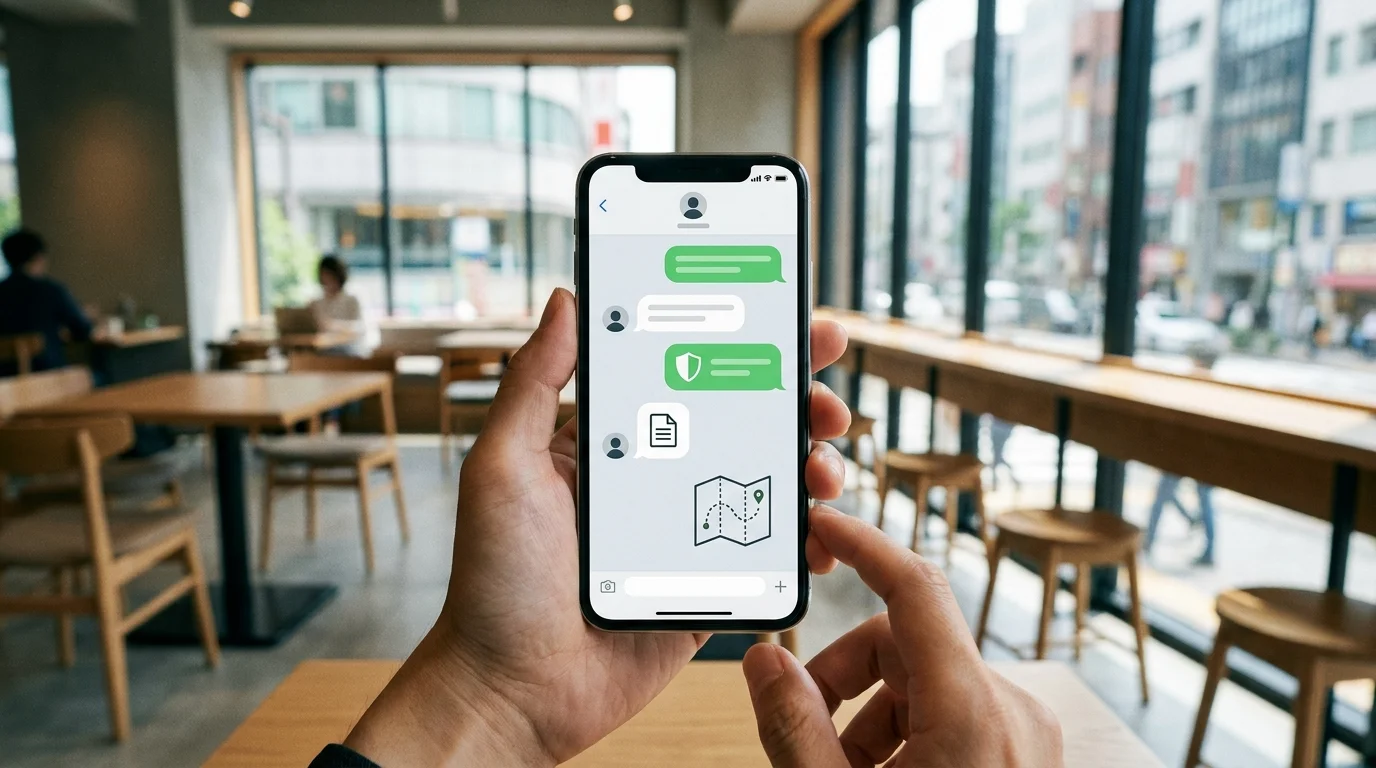
For residents, installing a dedicated app presents a high psychological hurdle. However, by adopting LINE—which has a high penetration rate—as the interface, usage can be maximized. By combining photo transmission features within the LINE bot, it is possible to handle advanced scenarios, such as receiving images of "kitchen leaks" and having the RAG provide emergency measures based on that visual context.
Furthermore, for complex cases that RAG cannot resolve, it is crucial to design a seamless escalation path to human operators. By having the AI summarize past interaction history and hand it over to the staff, residents are freed from the stress of repeating the same explanation.
4. Key Points for Building a Knowledge Base to Improve Accuracy
The accuracy of RAG depends on the quality of the documents being searched. Rather than uploading PDF manuals as-is, it is recommended to split them into meaningful units (chunks) and assign metadata. For example, tagging by categories such as "air conditioner," "water heater," or "lost keys" improves search precision.

In recent trends, "Query Rewriting" technology—where the AI clarifies ambiguous user questions—is being integrated into RAG. This allows the AI to respond to a short query like "no hot water" by asking follow-up questions such as "Is it a gas water heater or an electric one?" to present the optimal solution.
FAQ
- Q. If I implement RAG, will manual updates become unnecessary?
- A. No, they actually become more important. Since RAG generates answers by referencing documents, it will provide incorrect information if the source manual is outdated. Regularly updating the knowledge base is directly linked to maintaining accuracy.
- Q. What are the risks of personal information leaks when using a LINE bot?
- A. A secure environment can be built by using enterprise APIs and disabling data usage for training. Additionally, it is standard practice to manage personally identifiable information (PII) on the database side and only pass the necessary context to the LLM.
- Q. How long does it take to implement?
- A. It depends on the organization of your existing FAQ data, but typically it takes about 3 to 6 months from PoC (Proof of Concept) to full-scale implementation.
Supporting management DX and automation through RAG
Building cutting-edge AI bots that reduce operating costs while increasing tenant satisfaction. We propose strategies that leverage your company's manuals.
Talk to us for a free strategy consultationSummary
RAG-powered FAQ bots for tenants serve as a powerful tool for property management, achieving high self-resolution rates while suppressing hallucinations. By directly linking internal knowledge with the familiar LINE interface, high-precision responses are possible 24/7. Comprehensive DX, including not only technical accuracy improvements but also operational flow optimization, will be the source of competitiveness in the future real estate management industry.
Published: June 18, 2024 / By: Osamu Yasuda

Related Articles


References
- [1] Lewis, P., et al. "Retrieval-Augmented Generation for Knowledge-Intensive NLP Tasks." (2020)
- [2] Real Estate DX White Paper 2023-2024: Survey on the Reality of Operational Efficiency through Generative AI