

[2026 Latest] Event-Driven AI Dynamic Management for Controlling Delivery Uncertainty
The "2024 Problem" shaking the logistics industry is more than just tighter labor regulations; it marks the end of operations relying on traditional "experience and intuition." In particular, the personalization of dispatch operations has made it difficult to respond to "uncertainties" such as sudden traffic jams, accidents, and urgent delivery requests, resulting in lower vehicle utilization and worsening fuel efficiency. In this article, we will explain the forefront of dynamic management using "event-driven AI"—which treats these challenges as real-time events to instantly derive optimal solutions—alongside practical insights from the consulting field.

Table of Contents (Click to expand/collapse)
- 1. The Limits of Personalized Dispatch Operations and the Serious Dilemma of the "2024 Problem"
- 2. Route Optimization via Event-Driven AI: From Static Planning to Dynamic Control
- 3. Practical Field Approaches to Improving Fuel Efficiency and Reducing Driver Binding Hours
- 4. Future Logistics Strategies: Turning Delivery Uncertainty into a "Controllable Variable"
The Limits of Personalized Dispatch Operations and the Serious Dilemma of the "2024 Problem"
In our consulting work, we often see cases where the "secret sauce of delivery routes"—existing only in the heads of veteran dispatchers—becomes a bottleneck hindering corporate growth. Because shortcuts known only to specific staff and detailed constraints for each shipper are not digitized, the field falls into chaos when those individuals are absent, leading to a significant drop in delivery efficiency.
In particular, the cap on driver working hours due to the "Logistics 2024 Problem" directly impacts the negative effects of this personalization. Manual dispatch adjustments cannot keep up with sudden traffic restrictions or fluctuations in cargo waiting times, constantly carrying the risk that driver binding hours will exceed the schedule. In our actual support projects, it is not uncommon to find that this "invisible waiting time" leads to wasted fuel and squeezes profit margins.
Route Optimization via Event-Driven AI: From Static Planning to Dynamic Control
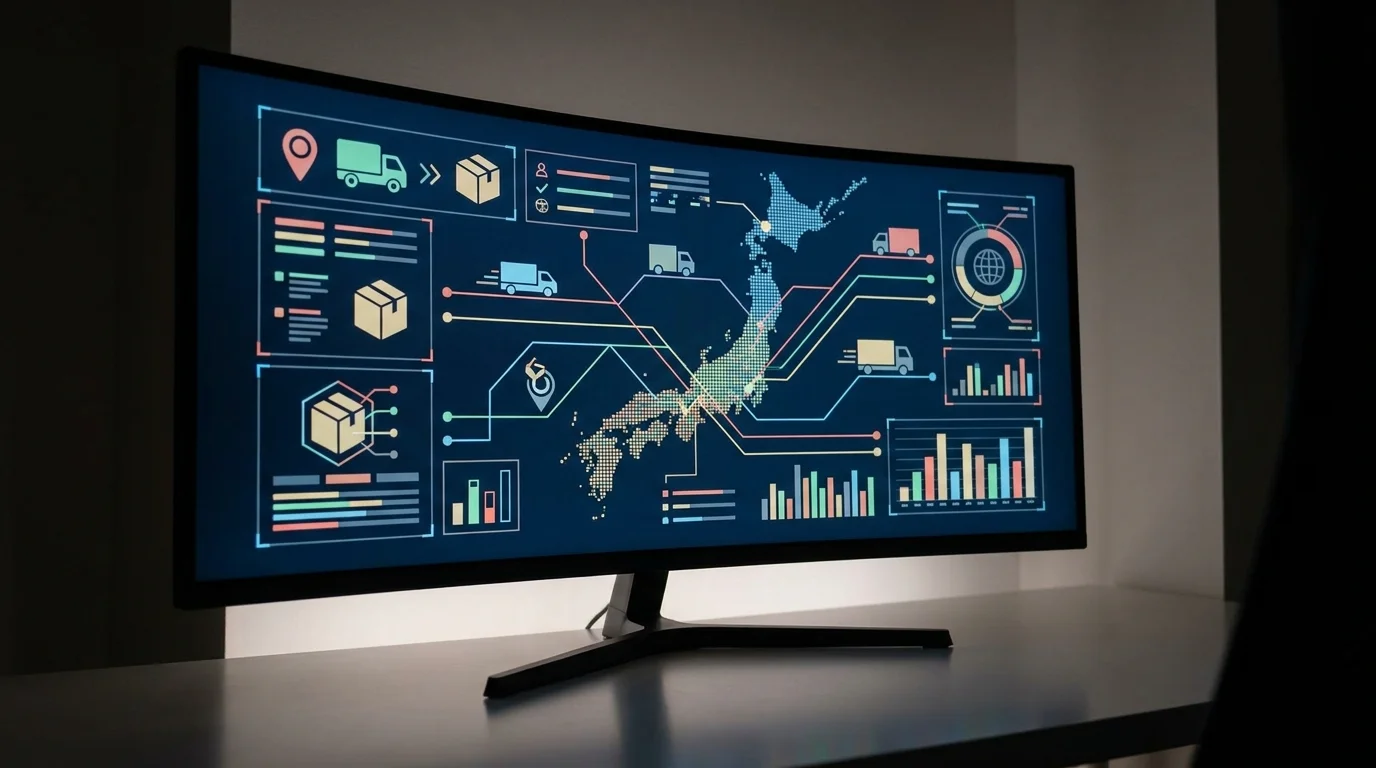
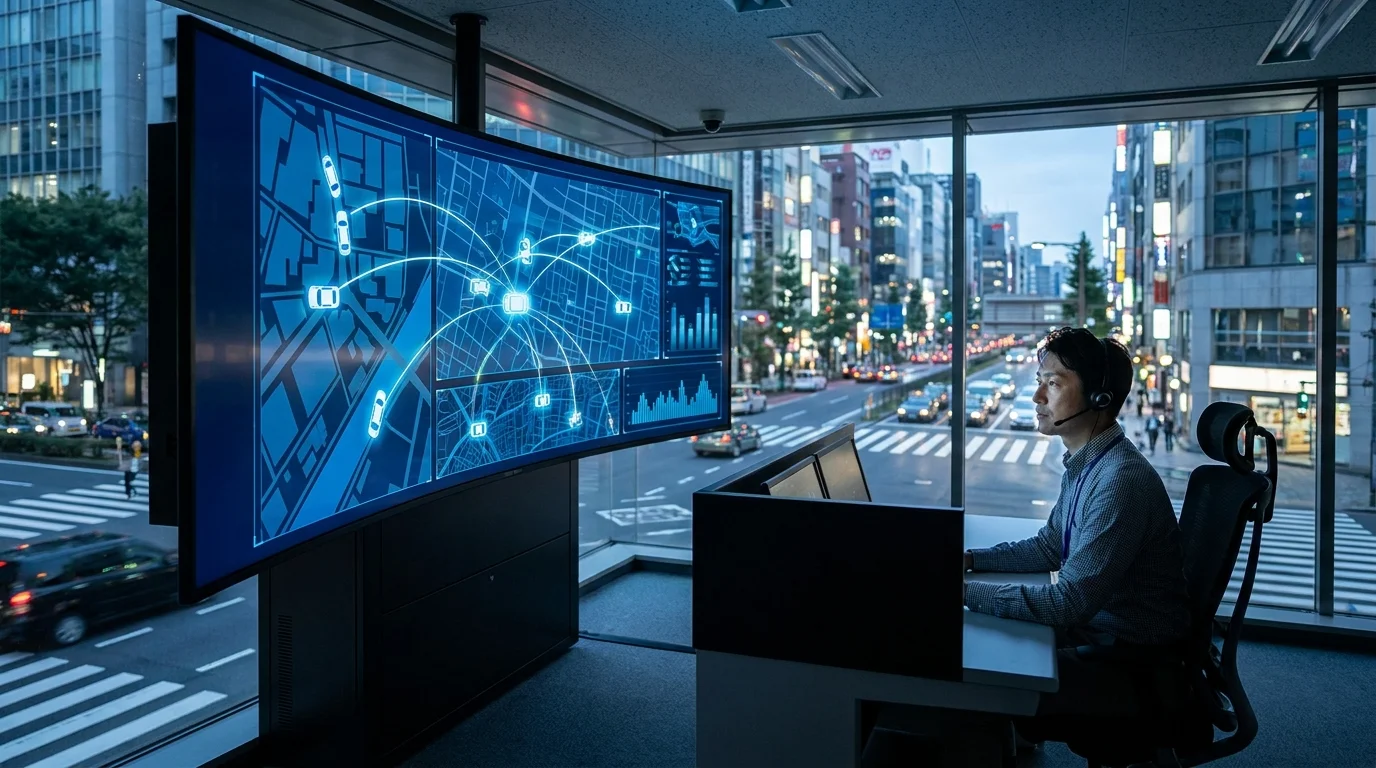
Until now, route optimization has been primarily "static," following delivery plans created the previous day. However, actual road environments are constantly changing. Event-driven AI detects occurrences such as traffic jams, accidents, weather changes, and even urgent same-day pickup requests as "events," recalculating routes for all vehicles within seconds.
A common scenario in the field is when one vehicle gets caught in accident-related traffic; the system automatically reassigns tasks to other nearby vehicles to compensate for that delay. This makes it possible to minimize delays across the entire delivery network and optimize fuel consumption.
Practical Field Approaches to Improving Fuel Efficiency and Reducing Driver Binding Hours
The most important factor in implementing AI route optimization is an interface that field drivers can "master." No matter how advanced the algorithm, it will not take root if the operation is complex. In our actual support, we build systems that automatically send the optimal driving sequence and navigation to the driver's smartphone, allowing for completion reports with a single button press.
Furthermore, this dynamic management system is a powerful weapon for companies operating EC businesses. In the field of In-house EC Construction and Growth Support, it has been proven that providing accurate estimated delivery times dramatically improves the customer experience (CX). By eliminating delivery uncertainty, companies can reduce redeliveries and minimize last-mile costs.

Future Logistics Strategies: Turning Delivery Uncertainty into a "Controllable Variable"
The key to logistics DX heading toward 2026 lies in positioning AI not just as an efficiency tool, but as "intelligence" that supports management decision-making. By accumulating delivery data and controlling uncertainty through event-driven AI, traffic jams and waiting times—previously accepted as "unavoidable"—can be transformed into reducible costs.
We provide hands-on support not only for technology implementation but also for the resulting changes in business flows and organizational culture. To overcome the Logistics 2024 Problem and build a sustainable delivery system, now is the time to decide to break away from "personalization."

FAQ
- Q. What is the biggest difference from existing dynamic management systems?
- A. The biggest difference is the "immediate responsiveness to events." Conventional systems only visualize deviations from the plan, whereas event-driven AI automatically recalculates "how to rearrange the remaining route for global optimization" the moment a deviation occurs and issues instructions to the driver.
- Q. Is there any pushback from veteran drivers in the field?
- A. While there may be some caution during the initial implementation, in most cases, attitudes shift toward cooperation as drivers gain successful experiences, such as "avoiding traffic jams has become easier" or "wasted waiting time has decreased, allowing me to go home earlier." UI design that reflects the voices of those in the field is the key to success.
- Q. How much fuel efficiency improvement can be expected from implementation?
- A. By reducing travel distances and idling time, we have achieved fuel efficiency improvements of approximately 5% to 15% at many of our project sites. Furthermore, as the number of vehicles is optimized, it is not uncommon to see an even greater impact on total logistics costs, including fixed costs.
Optimize your logistics with AI.
From addressing the 2024 logistics crisis to specific cost reduction simulations, our expert consultants are available for a free consultation.
Talk to us for a free strategy consultationSummary
The "uncertainty" within the logistics industry has reached a point where it can no longer be managed by human experience alone. By implementing dynamic management powered by event-driven AI, companies can eliminate reliance on individual expertise in dispatch operations while simultaneously improving fuel efficiency and reducing labor hours. Rather than viewing the "2024 Problem" as a crisis, we should see it as an opportunity to fundamentally evolve operations and build a proactive, data-driven logistics strategy.
Published: September 11, 2026 / By: Osamu Yasuda

Osamu Yasuda
Senior Managing Director & COO
Meets Consulting Inc.
Supported 100+ EC operations & logistics projects; specialist in operations and cost optimization
Related Articles

References
- [1] Ministry of Land, Infrastructure, Transport and Tourism "Addressing the 2024 Logistics Problem"
- [2] Ministry of Economy, Trade and Industry "Action Plan for the Promotion of Logistics DX"