

[2026 Latest] Implementing Pest Detection and Localized Spraying with Edge AI-Powered Drones
In the Japanese agricultural sector, yield loss due to unseasonable weather and pests is a critical issue that can threaten business survival. Traditionally, pest control has relied on "experience and intuition" for blanket spraying, but labor shortages and rising material costs are exposing the limits of this approach. In this article, we will explain the fully automated process of "Monitoring (Wide-area Surveillance), Detecting (Lesion Identification), and Acting (Localized Spraying)" using Edge AI-powered drones, featuring real-world examples from our consulting sites. The implementation of Variable Rate Application (VRA)—which uses high-precision image diagnostic solutions to pinpoint lesions in vast fields and drop chemicals only where needed—will become the standard model for smart agriculture in 2026.

Table of Contents (Click to Expand/Collapse)
1. The Role of Edge AI in Accelerating "Monitor, Detect, and Act"
In actual support scenarios, many producers face the challenge that "by the time they notice signs of pests, they have already spread throughout the field." To address this, smart agriculture in 2026 centers on Edge AI inference, which completes the three steps of "Monitoring," "Detecting (Analytics)," and "Acting (Actuation)" entirely within the aircraft.
In traditional drone applications, the time lag between uploading captured data to the cloud and receiving analysis was a major barrier. However, the latest Edge AI-equipped drones detect lesions in real-time while flying and control spray nozzles within milliseconds. Since they operate offline even in mountainous areas with unstable communication environments, the lead time from discovery to countermeasure is minimized to the extreme. This solution essentially turns the eyes and judgment of an expert into an algorithm.
2. Automated Workflow from Image Diagnosis to Variable Rate Application (VRA)
The true value of image diagnostic solutions goes beyond mere "visualization." Advanced integration with VRA (Variable Rate Application), which dynamically changes the amount of chemical discharged based on the density and range of identified pests, is essential. In our consulting work, we emphasize designs that maximize pest control effectiveness while significantly reducing pesticide use through this automated integration.
As statistical data shows, "Acting (Localized Spraying)" using AI image diagnosis can reduce pesticide use by approximately 70% in some cases compared to conventional uniform spraying. This contributes not only to reducing environmental impact but also to directly compressing production costs. Furthermore, in the context of In-house EC Construction and Growth Support, the narrative of "environmentally friendly, data-backed agricultural products" serves as a powerful differentiator for high-unit-price D2C sales.

3. Implementation Strategies for Maximizing Yield and Reducing Costs by 30%
A common misconception at support sites is the expectation that "introducing AI will immediately increase yields." What is crucial is the strategy of how to integrate the diagnostic results "detected" by AI into existing operations such as agricultural engineering and fertilization planning. For example, when unseasonable weather is expected, a flexible response is required, such as preventively spraying a minimum amount of biostimulants on "high-risk areas" predicted by AI.
By quantifying experience and intuition in this way, highly reproducible agricultural management that eliminates individual dependency is achieved. In fact, corporations with large-scale fields have succeeded in reducing pest control costs by 30% while halving the seedling failure rate compared to the previous year by establishing this "Monitor, Detect, and Act" cycle.
4. Roadmap for Transitioning to 2026-Style Smart Agriculture
Transitioning to smart agriculture is not just about purchasing equipment. The shortest path to success is to start with a small-scale PoC (Proof of Concept) and fine-tune the learning model to match the characteristics of your own fields (crop type, topography, major pests). In our consulting, we start by defining "which pests should be detected with the highest priority" in the initial stage and clarifying the return on investment (ROI).

Ultimately, the winning strategy for 2026 and beyond is to integrate this data with consumer needs obtained through In-house EC Construction and Growth Support, evolving into "market-in" agriculture that works backward from the market to decide "when, what, and how much to produce."
FAQ
- Q. Can "Monitoring, Detecting, and Acting" be completed with a single drone?
- A. Yes, this is possible with high-end models as of 2026. By performing "Monitoring" with a multispectral camera, "Detecting" with the onboard AI unit, and "Acting (Spraying)" with variable nozzles all in a single flight, overwhelming efficiency is achieved.
- Q. What is the approximate cost of introducing an Edge AI-powered drone?
- A. It depends on the aircraft specifications, but it involves an investment in the range of several million yen. However, due to the savings in pesticide costs and the prevention of yield loss, large-scale fields can achieve a return on investment in 2 to 3 years. We also accept consultations regarding the use of subsidies.
- Q. Is there a risk that the AI might misdiagnose and fail to spray in the necessary areas?
- A. AI accuracy is not 100%. Therefore, in our on-site support, we recommend threshold settings that err on the side of caution. We propose operations that minimize yield risk by intentionally configuring wider spray areas for suspicious zones and incorporating a final human verification step.
Taking your company's agricultural DX to the next level
Our expert consultants propose strategies to maximize yields through the use of AI image diagnostics and drones.
Talk to us for a free strategy consultationSummary
In the smart agriculture of 2026, the combination of AI image diagnostics and edge AI-equipped drones will realize "proactive pest control" to prevent yield loss. By digitizing the "monitor, detect, and act" process and implementing Variable Rate Application (VRA), it is possible to balance cost reduction with yield maximization. Start by identifying your specific challenges and take the first step toward data-driven, sustainable agricultural management.
Published: September 11, 2026 / By: Osamu Yasuda
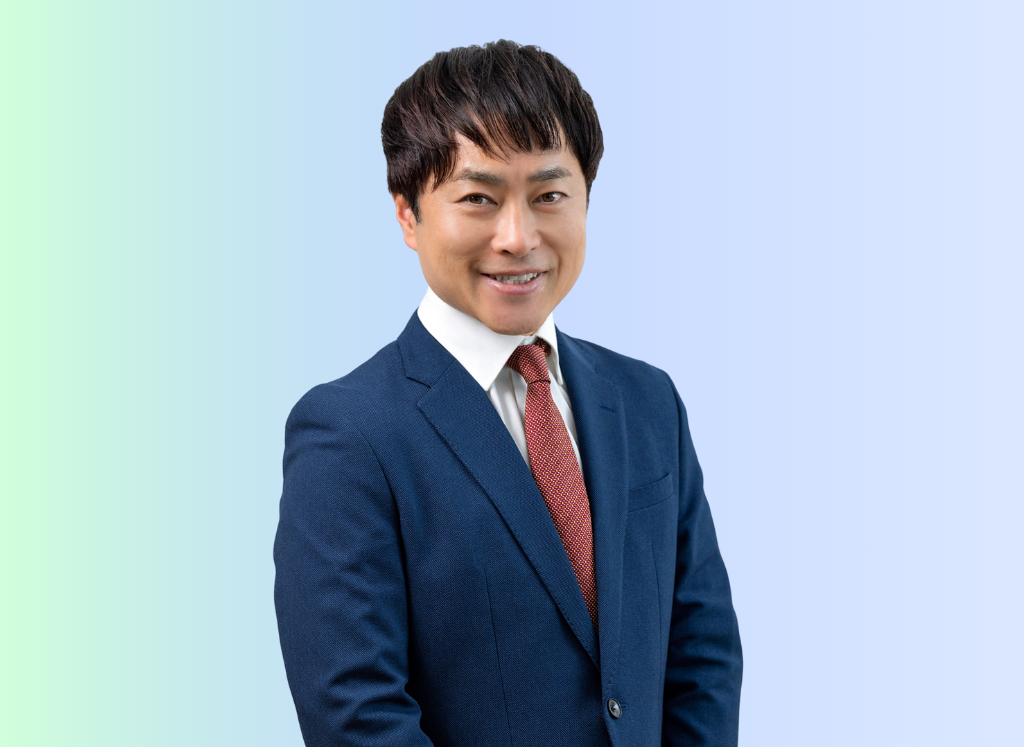
Osamu Yasuda
Senior Managing Director & COO
Meets Consulting Inc.
Supported 100+ EC operations & logistics projects; specialist in operations and cost optimization
References
- [1] Ministry of Agriculture, Forestry and Fisheries "Roadmap for the Realization of Smart Agriculture"
- [2] Japan Edge AI Association "Guidelines for the Utilization of Real-time Inference in the Agricultural Sector"