

What Is EC Marketing? Basics of LTV Improvement Theory and Overall Picture for New Managers
EC marketing encompasses all activities to attract, convert, and retain customers in online commerce. For new managers, understanding the LTV improvement framework provides the foundation for sustainable growth.

Table of Contents (Click to Expand)
1. EC Marketing Definition and the Revenue Equation
The essence of EC marketing lies in optimizing the customer experience (CX) through digital touchpoints to maximize business profit. The foundation is the "Sales Equation": Sales = Traffic × Conversion Rate (CVR) × Average Order Value.
New managers must first dissect their metrics in a MECE manner to identify which variable holds the challenge. For example, high traffic but low sales requires CVR improvement (EFO or utilizing UGC), while low repeat rates demand stronger CRM measures. Additionally, when managing ads, it's crucial to design CPA (Cost Per Acquisition) considering marginal profit, not just ROAS (Return on Ad Spend).
New managers must first decompose their company's metrics using a MECE framework to identify which variables present challenges. For example, if traffic is high but sales aren't converting, CVR improvement (through EFO and UGC utilization) is needed. If repeat rates are low, CRM measures such as step emails and loyalty programs should be prioritized.

2. Acquisition Phase: Channel-Specific Optimization
Acquisition strategies differ vastly between "In-house EC" and "Mall-type EC (Amazon, Rakuten, Yahoo! Shopping, etc.)." For malls, optimizing for the platform's internal search algorithm (SEO) is the top priority.
- SEO/Search Optimization: Selecting appropriate keywords, optimizing product titles, and comprehensive attribute information.
- Ad Operations: Utilizing in-mall ads (RPP and Sponsored Products), alongside listing and SNS ads.
- SNS & Influencers: Gaining awareness via Instagram and TikTok, and building trust through UGC (User Generated Content).
3. Engagement Phase: CVR and LTV Correlation
In an era where Customer Acquisition Costs (CAC) for new users are soaring, retention marketing is paramount. The business's fate hinges on turning one-time buyers into fans and driving second purchases (F2 conversion).
Specifically, step emails via MA tools, creative package inserts that enhance the unboxing experience, and personalized campaigns leveraging zero-party data are effective. This builds mid-to-long-term LTV (Customer Lifetime Value) rather than just one-off sales. This is essential for maintaining sound unit economics (LTV/CAC > 3).
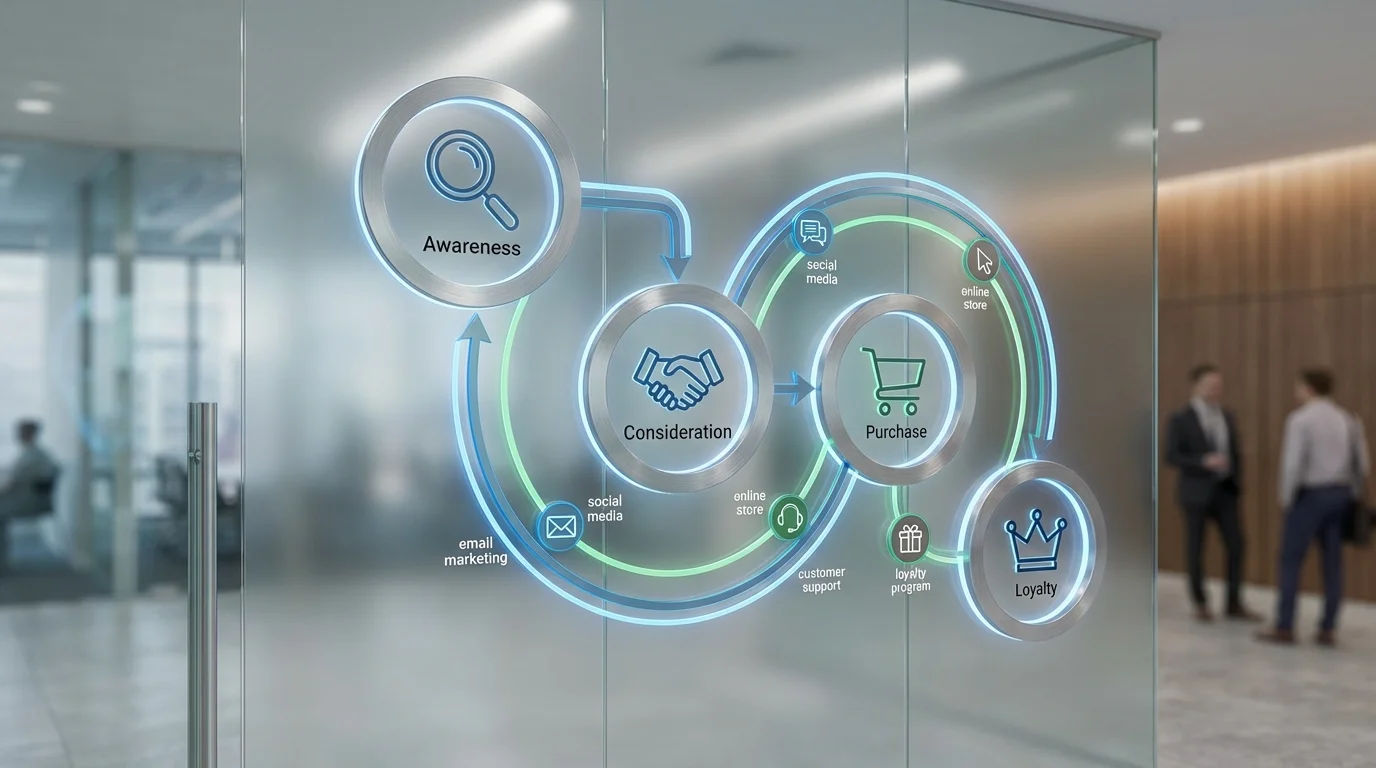
4. EC Market Growth Trends and Data
The chart below illustrates the ROI transition in a typical EC business. Initially, acquiring customers via ad spend is the main focus, but as the operational phase advances, profit margin improvement driven by repeat purchase measures becomes prominent.
Frequently Asked Questions (FAQ)
- Q. What metric should be prioritized most in EC marketing?
- A. It depends on the business phase, but in the long run, LTV should be seen as the most important metric. In the short term, the orthodox approach is to work on CVR improvement while balancing CPA (Cost Per Acquisition) and ROAS (Return on Ad Spend).
- Q. Should I focus on my in-house EC or on malls?
- A. In the initial stage when brand awareness is low, utilizing malls like Amazon and Rakuten, which have overwhelming reach, is recommended. When you want to express your brand's unique worldview and directly accumulate customer data, constructing and strengthening an in-house EC using Shopify or similar becomes necessary.
Take Your EC Business to the Next Stage
Do you struggle with 'not knowing where to start' or 'LTV isn't growing'? Our specialist consultants, with a track record supporting numerous EC businesses, will propose a strategy roadmap tailored to your company.
Get Free Strategy ConsultationSummary
EC marketing is the process of continuously optimizing the processes of traffic acquisition, customer service, and follow-up based on data. New managers should first clarify which elements of the 'Sales Equation' need improvement and be conscious of deploying measures centered around LTV. Ultimately, improving the fundamental customer experience brings about sustainable sales growth.
Published: 2026-02-18 / Author: Yuta Ito

Related Articles



References
- [1] EC Marketing: Revenue Equation Framework
- [2] LTV Optimization Strategies for E-Commerce