

【2026 Latest】Key Points of Terms of Service Design for AI Monitoring in Share Houses | Management Techniques for Balancing Privacy and Safety
In the close-knit communal living of a share house, interpersonal trouble is the biggest management concern. Until now, managers had to rely on patrols or after-the-fact reports, but as of 2026, prevention through "dedicated apps × AI monitoring" is becoming the standard. However, the hurdle of privacy protection and terms of service design is unavoidable. How should technology be integrated into community harmony while ensuring the psychological safety of residents? We explain the legal and technical essentials, incorporating real-world examples from our support sites.

Table of Contents (Click to expand/collapse)
1. Legal Boundaries of AI Monitoring in Share House Management
In actual support scenarios, many owners considering AI monitoring are very anxious about "how far is acceptable." The purpose of AI monitoring in share houses is not to spy on individuals' private lives, but to detect signs of "flame-ups" or "serious conflicts" that could lead to the collapse of the community.
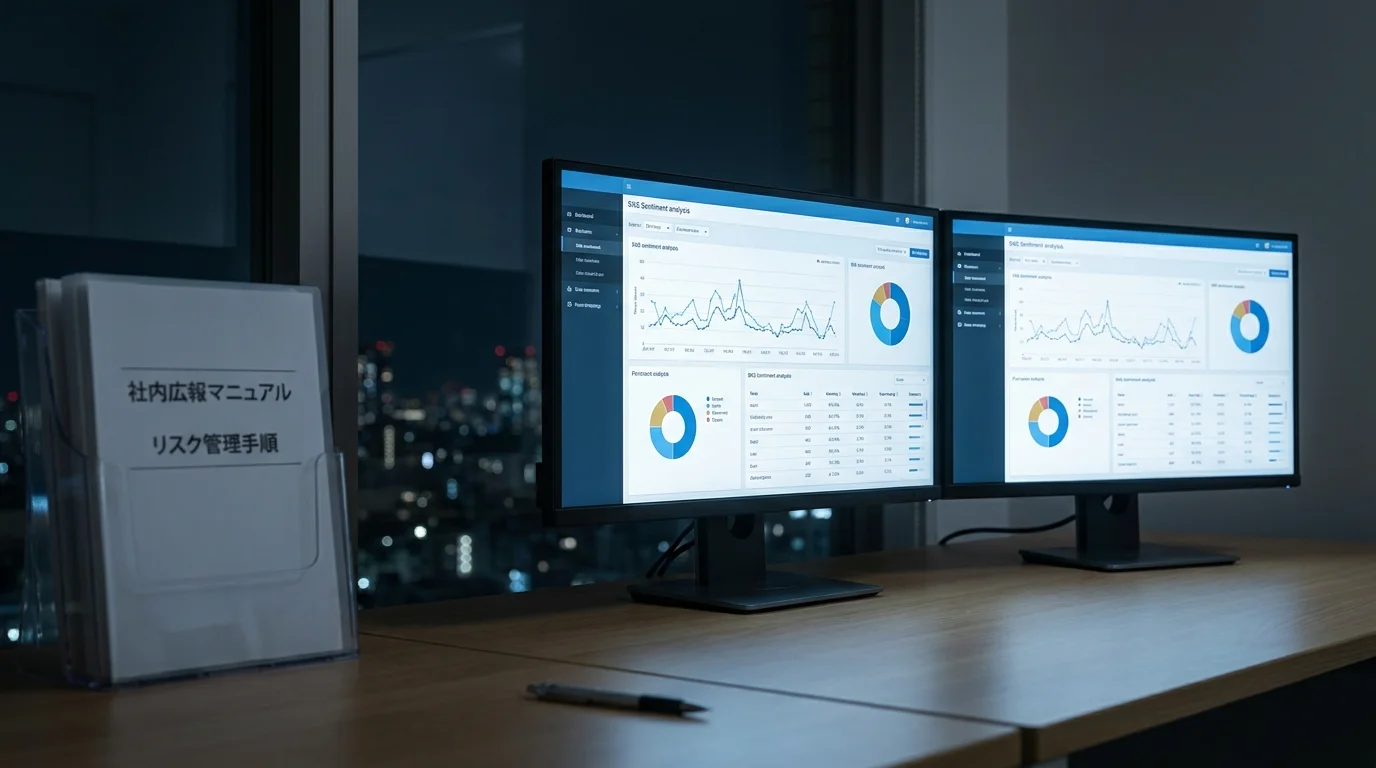
Examples include late-night noise levels, duration of stay in common areas, and sentiment analysis within messaging apps. These should be treated not as personally identifiable information, but as metadata indicating the "health" of the community. A common approach at support sites is to divide the purpose of monitoring into "safety management" and "comfort improvement," and to strictly implement Data Minimization for each.
This kind of sophisticated community management shares many commonalities with methods for building trust with customers through digital touchpoints. In our D2C EC Construction & Growth Support, we emphasize terms of service design that utilize user behavior data for "providing a better experience" rather than "surveillance." Share house management also requires community management that views residents as "fans."
2. Designing Terms and Data Utilization to Enhance Psychological Safety
In share houses that have introduced AI monitoring, the biggest concern for residents is the fear that "my actions are constantly being evaluated, and I might be kicked out." To dispel this, it is necessary to clearly state in the terms that "AI detection does not directly lead to immediate penalties."
In actual support, when the AI detects an anomaly, we first include a step to "automatically send a reminder via the app." This creates a mechanism where self-cleansing occurs before human intervention. In terms of service design, it is essential to define data retention periods, limited access rights, and the transparency of AI algorithms based on the concept of Privacy by Design. For example, when using sentiment analysis AI to detect "signs of a fight," we promise that the raw audio or text data will be immediately discarded, and only the numerical scores will be retained.

3. Transparency Processes for Smooth Consensus Building
No matter how legally perfect the terms are, a community cannot function without the residents' sense of satisfaction. What we recommend on-site is the establishment of a "pre-operation period" before full implementation and thorough briefing sessions for residents. Here, we clearly communicate not what the AI is "watching," but what it is "not watching."
Specifically, we ensure the following three points:
- Limitation of Purpose: Pledging to use data only for crime prevention and the prevention of rule violations such as noise.
- Right to Feedback: Incorporating a process into the terms for residents to appeal against AI false positives.
- Return of Benefits: Explicitly stating that management costs saved by the introduction of AI will be returned to residents through improved common area facilities or event expenses.
In this way, positioning technology not as a "tool of governance" but as a "supporter of coexistence" is the key to creating a comfortable community. This is exactly the same design philosophy as in D2C EC Construction & Growth Support, where we ensure data transparency while returning benefits to increase customer engagement.

FAQ
- Q. Won't residents feel intimidated and "watched" if AI monitoring is introduced?
- A. The way the introduction is communicated is crucial. Define it not as "watching over" them, but as a supporter to "protect an environment where everyone can live comfortably" by preventing trouble before it happens. In fact, residents who follow the rules tend to welcome fair management by AI.
- Q. When introducing it to an existing share house later, how should the change in terms be handled?
- A. A process for individual agreement at the time of contract renewal or obtaining the consent of all residents is required. At that time, the key to smooth consensus building is to present data on the specific benefits of AI implementation (such as resolving late-night noise).
- Q. What if the AI makes a false detection and sends a warning to an innocent resident?
- A. Please be sure to include a statement in the terms and conditions that "AI judgment is not a final decision, and the administrator will perform fact-checking." Establishing a contact point within the app for when false detections occur and setting up a system for rapid response will lead to the restoration of trust.
Proposing Next-Generation Community Management Powered by AI
From policy design to app selection and consensus-building consulting, our on-site professionals will support you every step of the way.
Talk to us for a free strategy consultationSummary
AI monitoring in sharehouses is not just a tool for management efficiency, but legal tech designed to enhance the psychological safety of the community. With policy design based on Privacy by Design and ensuring transparency that prioritizes resident benefits, technology becomes the ultimate partner in enriching human relationships. Based on the expertise we have gained in the field, let's build the optimal consensus-building process for your facility.
Published: October 23, 2026 / By: Osamu Yasuda

Osamu Yasuda
Senior Managing Director & COO
Meets Consulting Inc.
Supported 100+ EC operations & logistics projects; specialist in operations and cost optimization
Related Articles


References
- [1] Personal Information Protection Commission, "AI Utilization Guidelines (2025 Revised Edition)"
- [2] Japan Sharehouse Association, "Guide to Using Digital Technology in Communal Living"