

[2026 Latest] Breaking the Limits of Flyers with AI Trade Area Analysis and the Power of Geofencing
"'No response even after distributing flyers' or 'The newspaper insert readership doesn't match our target audience'—for businesses with physical stores, traditional analog advertising for customer acquisition is reaching its limits. This is why advanced AI trade area analysis and digital acquisition leveraging smartphone location data are gaining attention. In this article, we explain the latest methods based on field expertise, where AI analyzes not just residential data but also 'stay history' and 'behavior patterns' to deliver pinpoint advertisements to segments with a high intent to visit."

Table of Contents (Click to open/close)
Structural Reasons Why "Mass Distribution" of Newspaper Inserts No Longer Works
In our consulting practice, we often hear cries of distress that response rates for traditional newspaper inserts have dropped to less than one-third compared to a few years ago. The primary reason is the dramatic decline in newspaper subscription rates among the 30s and 40s age groups—the main purchasing demographic—and the complete shift of consumer information gathering to smartphones.
In our actual support cases, it is not uncommon to see businesses spending over 1 million yen per month on flyer distribution without any ability to measure store visits. Analog advertising often becomes "luck-based acquisition" where it is unclear "who it reached," leading to wasted costs. In the 2026 market environment, area marketing not based on data can be considered a management risk.
Identifying "True Store Visit Potential" Through AI Trade Area Analysis
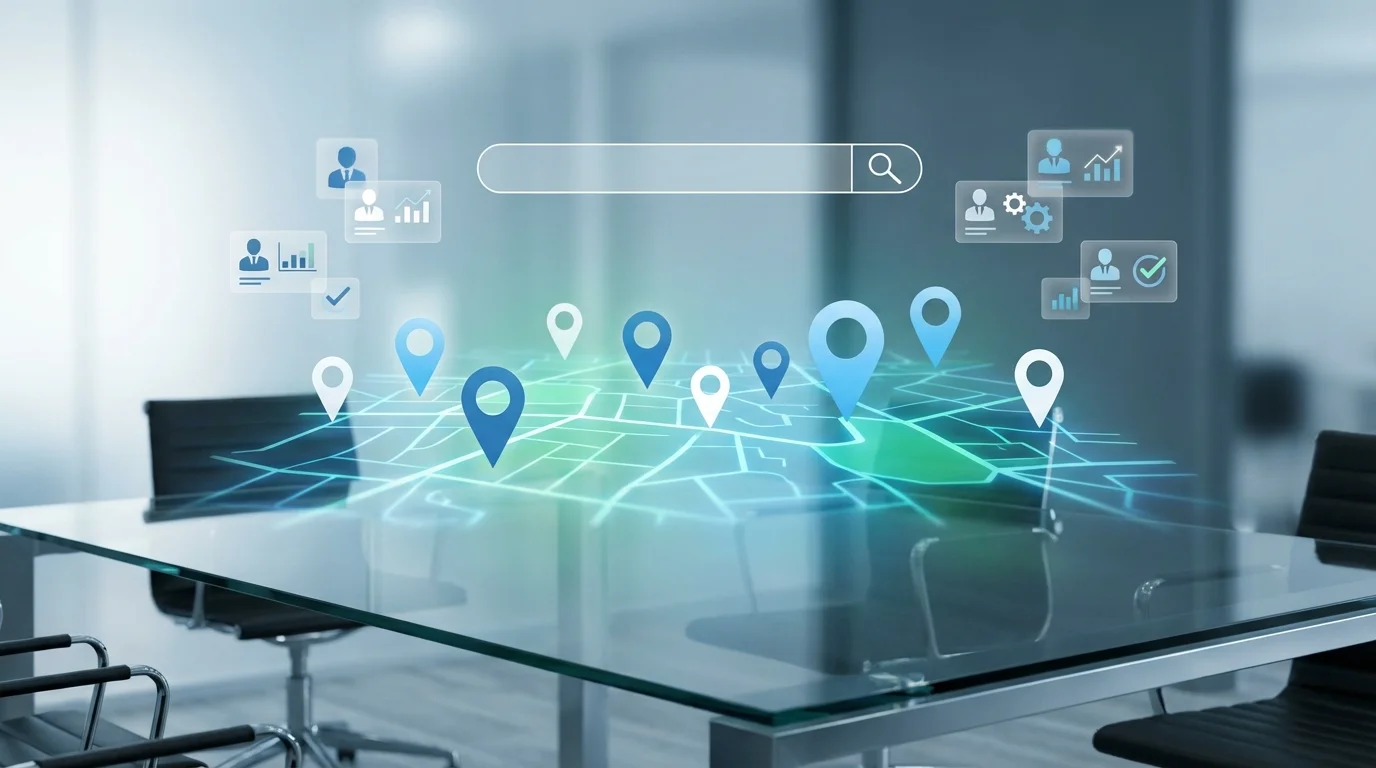
Traditional trade area analysis targeted "people living within a radius of X km from the store" based on statistical data such as the national census. However, this is insufficient. AI trade area analysis analyzes dynamic behavioral data such as "weekday commuting routes," "frequently visited competitor stores," and "areas where they often stay on holidays."
A common finding in the field is that a person who uses a competitor's supermarket 3km away every day is more likely to visit your store with the right offer than someone living right next door. AI instantly identifies these complex correlations and eliminates wasteful ad delivery.
The Power of Real-Time Guidance via Geofencing
Once AI identifies the target, the next important factor is "when to deliver." This is where geofencing technology proves its power. It is a system that sets virtual boundaries on a map and delivers advertisements in real-time to the smartphones of targets who enter those boundaries.

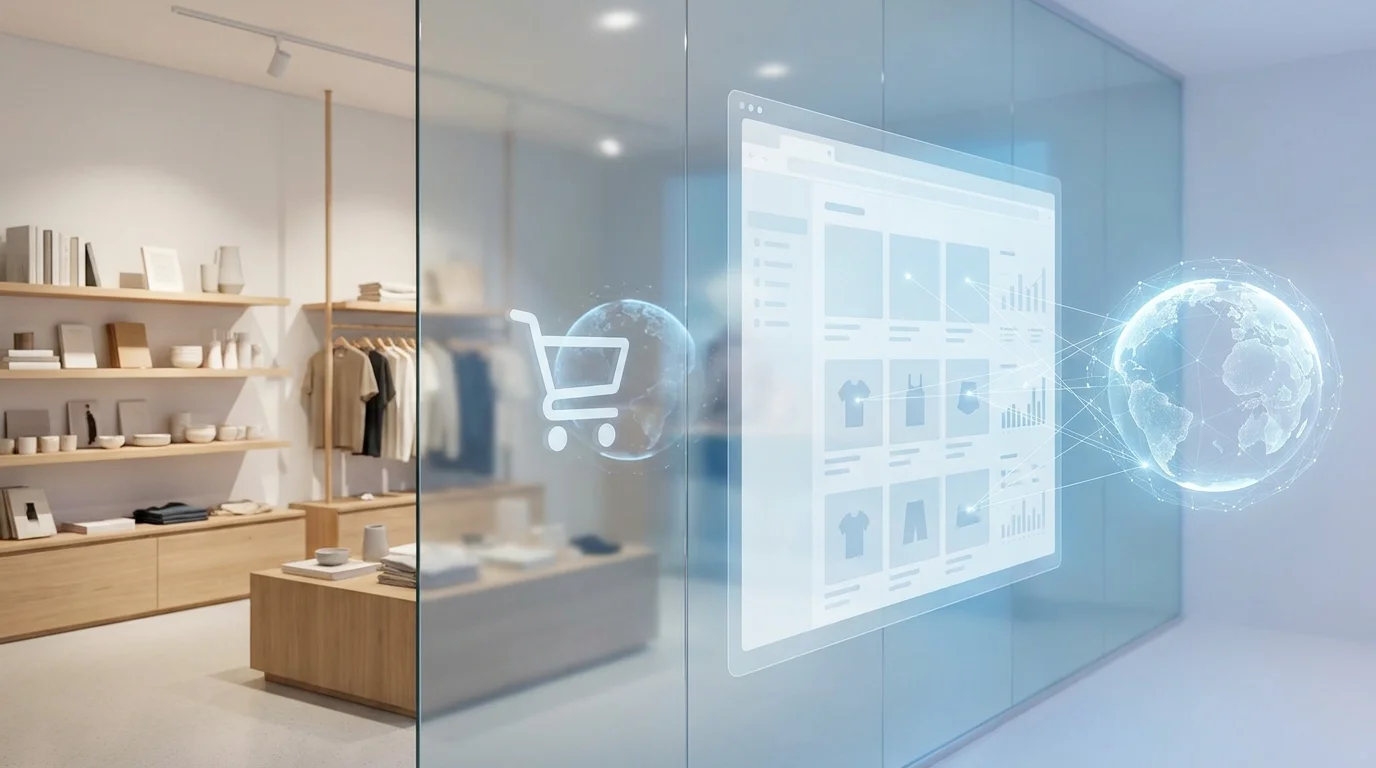
For example, an apparel store can trigger impulse buys by sending a "limited-time in-store coupon" to users staying at a nearby shopping mall. Furthermore, in the field of In-house EC Construction and Growth Support, there are increasing cases of guiding users from geofencing delivery at physical stores to EC sites, seamlessly connecting online and offline. Providing useful information tailored to the user's "current location," rather than just an advertisement, directly leads to high click-through and store visit rates.
The Core of OMO Strategy: Integrating Physical Stores and Digital
Future customer acquisition requires an OMO (Online Merges with Offline) perspective that integrates stores and digital as a single customer experience, rather than thinking of them separately. The data obtained from AI trade area analysis is not just a target list for ad delivery. It is valuable first-party data that shows "what kind of lifestyle patterns" your customers have.

In our actual support, we design systems to maximize LTV (Lifetime Value) by having customers who visited the store via location-based ads install an app and then tracking their subsequent purchasing behavior. The transition from analog to digital is not just about cost reduction; it is a strategic shift to expand customer touchpoints from "points" to "lines" and then to "surfaces."
FAQ
- Q. Are geofencing advertisements problematic from a personal information perspective?
- A. The location information used for delivery is handled as anonymized data after obtaining user consent. Since it does not identify specific individuals, it can be operated appropriately in compliance with laws and regulations.
- Q. Is AI trade area analysis effective in regional cities as well?
- A. Yes. In fact, in regional cities where car travel is the primary mode of transport, behavioral data such as "usage history of major arterial roads" and "frequently visited suburban stores" becomes more important than just residential location, making it highly effective.
- Q. Does implementation require high initial costs?
- A. It is possible to start small by shifting a portion of your traditional flyer printing and distribution budget to digital. Since wasted 'misses' are reduced, total marketing ROI tends to improve.
Take Your Area Marketing to the Next Level
We propose strategies to maximize store visits and revenue by combining AI trade area analysis with digital customer acquisition.
Talk to us for a free strategy consultationSummary
The decline in response to flyer inserts is not a temporary phenomenon but a structural change. By utilizing AI trade area analysis and geofencing technology, it becomes possible to visualize target behaviors that were previously 'invisible' and encourage store visits at the right timing. Let's expand the strengths of physical stores through digital means and build a next-generation customer acquisition foundation that leads directly to store visits.
Published: August 27, 2026 / By: Osamu Yasuda

Osamu Yasuda
Senior Managing Director & COO
Meets Consulting Inc.
Supported 100+ EC operations & logistics projects; specialist in operations and cost optimization
Related Articles

References
- [1] Ministry of Internal Affairs and Communications, 'Information and Communications White Paper': Current Status of Location Information Utilization
- [2] Japan Newspaper Publishers & Editors Association, 'Newspaper Circulation and Household Subscription Rates' Trend Data