

[2026 Latest] Instantly Visualize Complex Slant Plane Restrictions with AI. Avoid Acquisition Risks for Irregularly Shaped Land
In the field of real estate development and subdivision projects, the tragedy most to be avoided is the situation where "the building cannot be constructed as planned on the acquired land." Especially in urban irregularly shaped lots or areas where road slant plane, north-side slant plane, and height district restrictions are intricately intertwined, volume checks relying solely on the intuition of veteran architects have their limits. As of 2026, "AI Volume Check"—which instantly visualizes these building regulations in 3D and calculates architectural plans that maximize business profitability—has become the de facto standard for acquisition decisions.
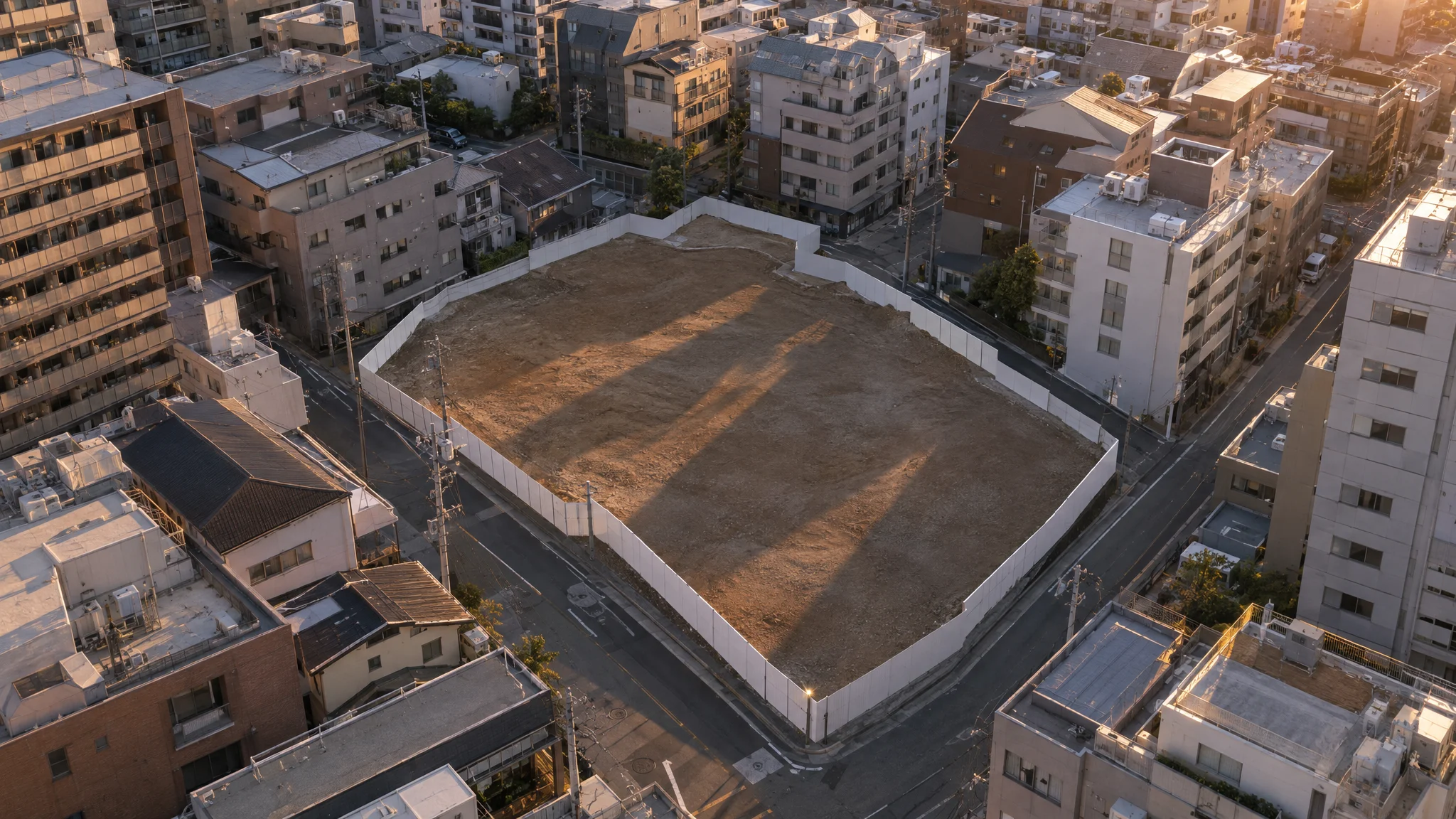
Table of Contents (Click to expand/collapse)
1. The Limits of Analog Methods: Failing to Spot "Unbuildable Land"
In our actual consulting cases, we often hear of instances where an acquisition manager signed a contract expecting that "four 3-story units would fit in this area," only for the business plan to collapse when detailed design revealed that height district restrictions and inverse shadow calculations allowed for only three units. With volume checks done by hand or simple CAD, it is not uncommon for it to take several days to accurately grasp the "shaving" required by slant plane restrictions.
As the data above indicates, approximately 70% of plan changes stem from an insufficient understanding of building regulations. Especially with irregularly shaped land, calculation patterns become enormous, involving setbacks from boundary lines and the use of sky factor relaxations. A common pattern we see in our support work is that by postponing these complex calculations, companies either lose out on speed to competitors or overstate the risks and submit low bids, losing the acquisition.
2. The Accuracy of the "Optimal Solution" Calculated by AI Volume Check
AI Volume Check is more than just an automated calculation tool. The latest algorithms link map data with regulatory databases to present a 3D model of the building shape that secures maximum floor area ratio (FAR) in minutes. This allows for the instant simulation of measures like "relaxations using the sky factor" that are difficult for the human eye to spot.
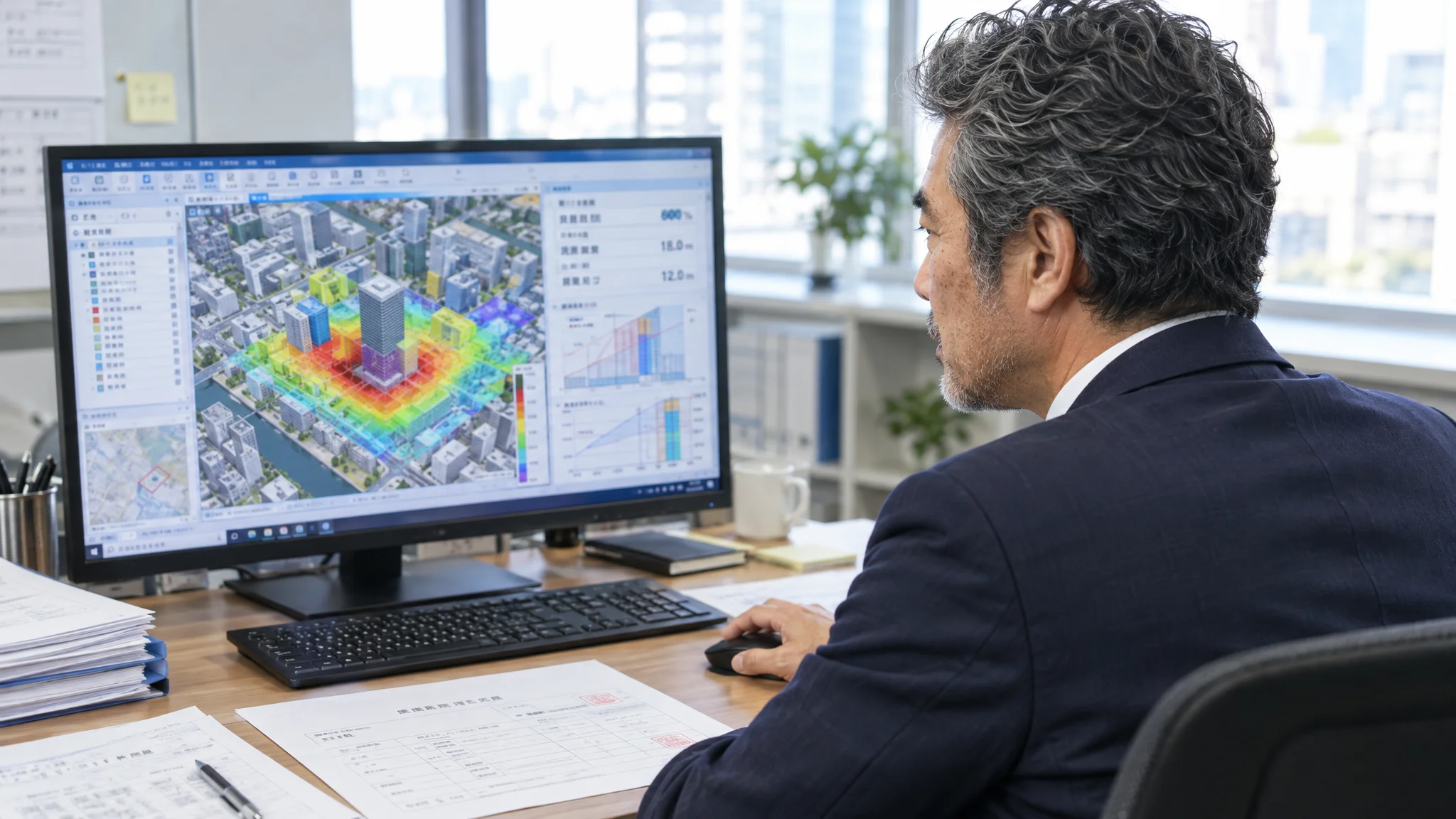
For example, just as data-driven decision-making determines success or failure in In-house EC Site Construction & Growth Support, "evidence-based figures" are essential in real estate acquisition. AI reverse-calculates the floor plan layout that yields the highest profitability based on road widths and relationships with adjacent property lines. This eliminates the uncertain factor of "intuition" and ensures reliable business profits.
3. The Speed of Acquisition Decisions Dictates Business Profits
The real estate market is a game of speed. The better the property, the more likely it is to receive an offer within hours of the information being released. Companies that have implemented AI Volume Check enter basic information from smartphones or tablets on-site and check rough architectural plans on the spot. This dramatically increases the speed of internal approvals and improves the acquisition rate of high-potential properties.

A common occurrence in the field is losing a contract to another company while waiting for a response from an architectural firm. By utilizing AI, companies can bring initial-stage evaluations in-house, simultaneously achieving reduced outsourcing costs and shorter lead times. In our actual support cases, we have confirmed that this difference in "decision-making speed" results in a gap of over 20% in the number of units acquired annually.
4. From Architectural DX to Supporting Overall Business Growth
The implementation of AI Volume Check goes beyond mere efficiency. The accumulated simulation data contributes to improving the accuracy of future area marketing and land acquisition price predictions. This is very similar to the process of analyzing customer behavior and devising the next strategy in In-house EC Site Construction & Growth Support. By weaponizing technology, it becomes possible to shift from person-dependent "craftsmanship" to highly reproducible "data-driven management." The power to transform challenging, irregularly shaped land into a source of profit is the essence of architectural DX required in modern real estate development.
FAQ
- Q. How accurate is the AI Volume Check?
- A. Regarding basic legal requirements (road slant plane, north-side slant plane, adjacent land slant plane, FAR, and building coverage ratio), it covers nearly 100% of current regulations. However, for unique municipal ordinances or specific administrative guidance, we recommend final verification by an architect; nevertheless, it boasts sufficient accuracy as an initial acquisition decision tool.
- Q. Does implementation require advanced CAD knowledge?
- A. No. Many tools are designed with an intuitive UI, allowing acquisition managers or sales staff to operate them simply by selecting the address and site shape. 3D models can be generated without any specialized command input.
- Q. Does it support relaxation calculations such as the sky factor?
- A. Yes, many of the latest AI engines support this. Sky factor simulations, which previously took an enormous amount of time using manual calculations or specialized software, can now be completed in seconds with AI, presenting the maximum buildable area.
Take your real estate business to the next level with AI
We propose procurement decision-making and business optimization utilizing the latest technology.
Talk to us for a free strategy consultationSummary
In the procurement of irregularly shaped land or sites with complex building regulations, AI volume checks serve as a powerful tool to balance risk mitigation and profit maximization. In the competitive landscape of 2026, there is no time to wait for analog responses that take several days. The speed of making decisions based on instantly 3D-visualized architectural plans with solid evidence is what determines business growth. By implementing construction DX, eliminate human error and build steady profits.
Published: November 11, 2026 / By: Osamu Yasuda

Osamu Yasuda
Senior Managing Director & COO
Meets Consulting Inc.
Supported 100+ EC operations & logistics projects; specialist in operations and cost optimization
Related Articles
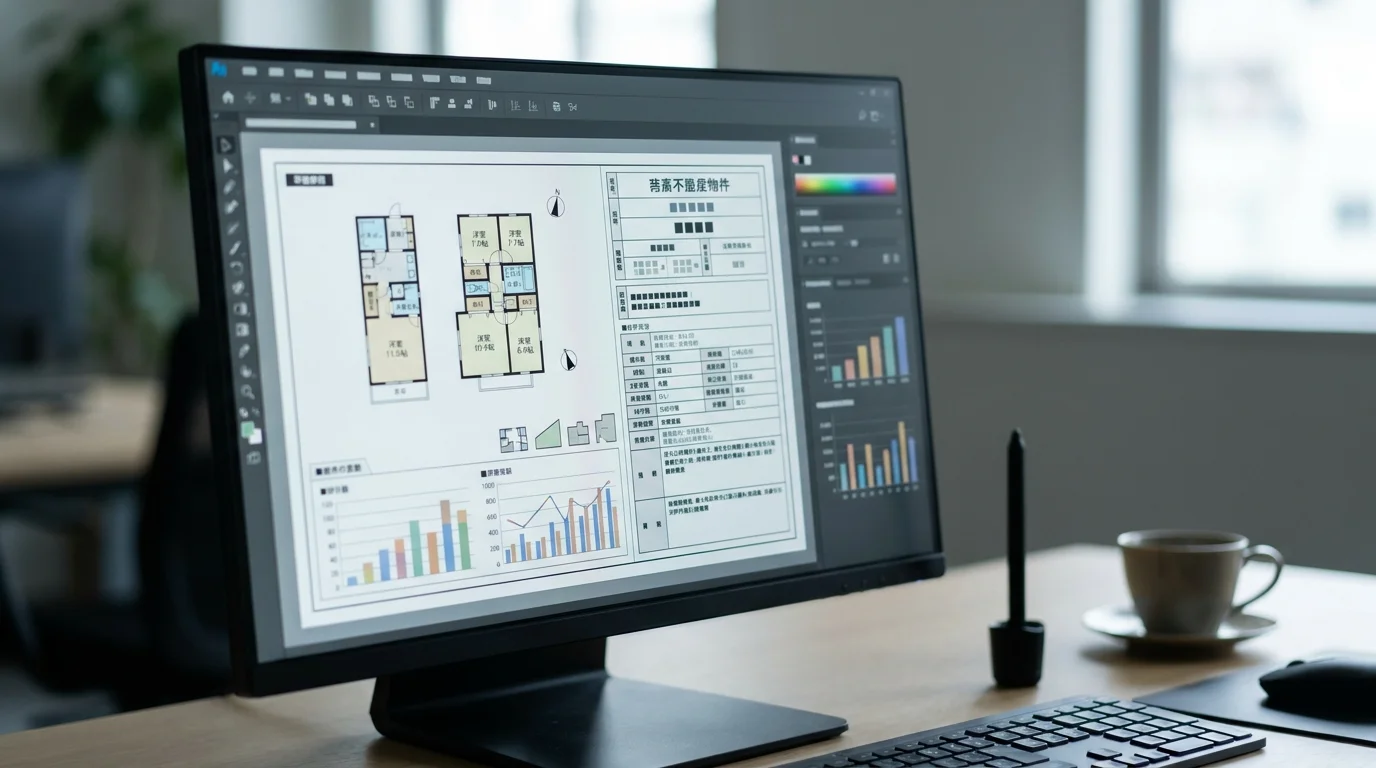
Real Estate Brokerage DX: Shortening lead times with AI-driven automatic property flyer (Maisoku) generation

ROI of Generative AI Virtual Home Staging: A cost-effectiveness comparison with traditional CG

The Forefront of Back-Office DX: Minimizing lead times for Important Matter Explanations and automating specialized tasks
References
- [1] Ministry of Land, Infrastructure, Transport and Tourism: Study materials on the rationalization of slant line restrictions under the Building Standards Act
- [2] Japan Federation of Construction Contractors: AI Utilization Guidelines for Promoting Construction DX, 2025 Edition
- [3] Architectural Institute of Japan: Accuracy evaluation of AI-based automatic building volume generation algorithms