

[2026 Latest] Minimizing RTO and Automating Initial Response with AI Safety Confirmation
In the event of a disaster, a company's fate is determined by its actions within the "first hour." However, in many support scenarios, we often see HR and general affairs personnel stuck waiting for safety confirmation email replies and manually updating spreadsheets. This "data aggregation gap" is the primary factor delaying business recovery. In this article, we explain from the front lines of consulting how AI-driven automated safety confirmation minimizes RTO (Recovery Time Objective) and transforms digital BCP into an effective reality.

Table of Contents (Click to open/close)
Bottlenecks in Initial Disaster Response: Why Manual Tallying Delays Recovery
In actual support scenarios, we frequently encounter cases where, immediately following an earthquake of intensity 5-upper or higher, the person in charge is unable to log into the management system or becomes overwhelmed by fragmented "I'm safe" notifications from employees via various channels like LINE, email, and phone. Manual aggregation results in information fragmentation and time lags. To achieve the Recovery Time Objective (RTO) within a Business Continuity Plan (BCP), accurate data on "who is where and in what condition" is required immediately, yet analog processes continue to hinder these efforts.
Accelerating Data Collection via AI Automated Calling and its Impact on RTO
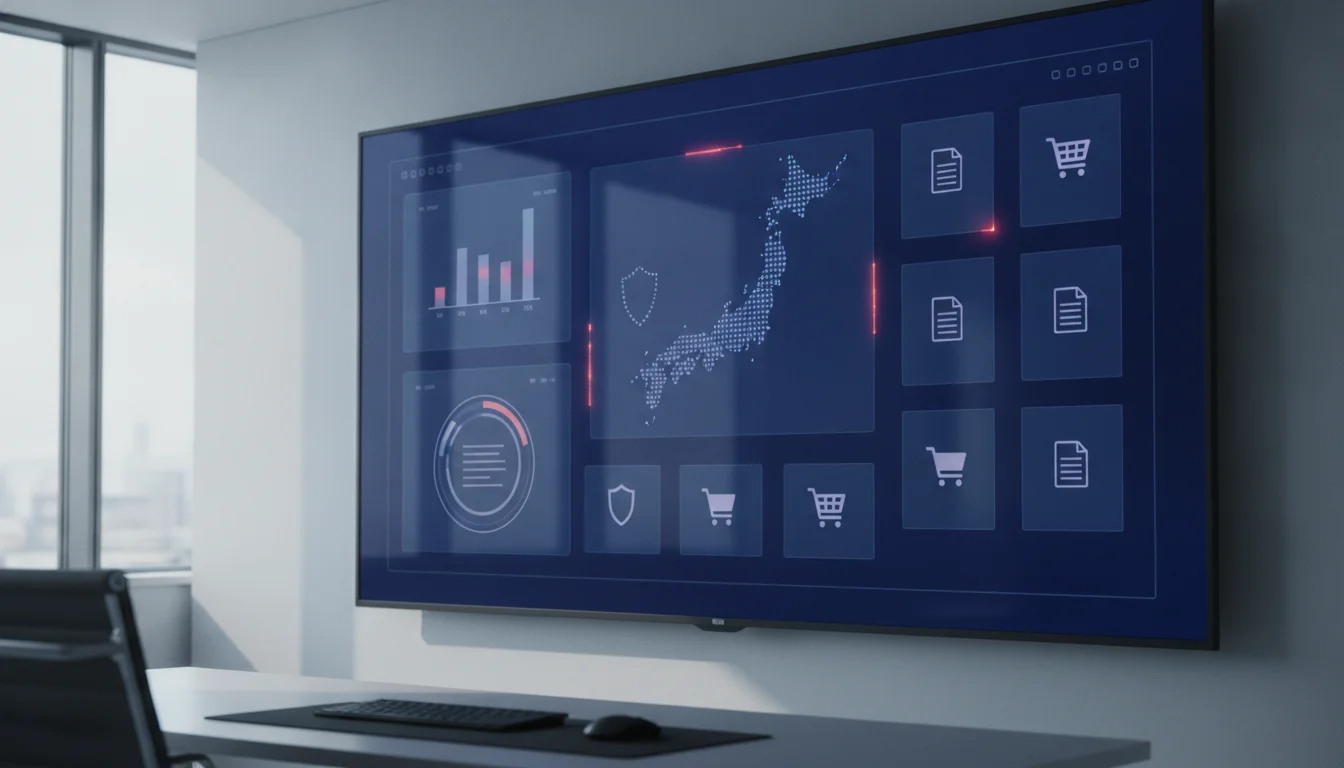
The defining features of the automated safety confirmation AI are its "zero-second transmission" linked with Japan Meteorological Agency data and "automatic classification of open-ended responses" powered by natural language processing. Rather than just "selecting an option to respond" as in conventional systems, the AI instantly analyzes text input from employees in a state of panic—such as "I'm uninjured, but my house is destroyed" or "I'm at a shelter"—and reflects it on the dashboard by urgency level. This allows for a situation where the status of over 80% of all employees is already visualized at the support site before the disaster response headquarters is even established.
As shown in the graph above, the difference in speed due to AI implementation is overwhelming. These 110 minutes saved lead directly to "recovery activities" such as securing alternative locations and reorganizing logistics networks. For example, in our D2C EC Site Construction and Growth Support, this rapid assessment of human resources is integrated as an essential element for customer announcements and minimizing opportunity loss in response to risks such as server downtime or logistics disruptions.
The Core of Digital BCP: Focusing Human Resources on Decision-Making
The essence of BCP is not about creating manuals, but about being able to "act" during an emergency. A common failure in the field is that even leadership gets bogged down in data aggregation, delaying critical business decisions. By delegating safety confirmation and primary data aggregation entirely to AI, disaster response personnel and management can focus exclusively on high-level decision-making regarding "what to do next." This is more than just efficiency; it is a strategic allocation of resources to enhance corporate resilience.

In our actual support engagements, we recommend establishing a workflow that includes "issuing instructions" following safety confirmation. By building a system that automatically notifies staff deemed "able to report to work" by AI of specific meeting locations and business resumption priorities, you can further mitigate initial confusion.
4. Summary: Corporate Resilience Required in 2026
FAQ
- Q. What is the difference between existing safety confirmation systems and AI systems?
- A. Conventional systems simply "send emails and wait for multiple-choice responses," whereas AI-powered systems perform "automated follow-ups across multiple channels like SNS and phone" and "automated analysis and classification of open-ended text," reducing the manual effort for aggregation to nearly zero.
- Q. How much preparation time is required for implementation?
- A. It typically takes about 1 to 2 months to go live, including employee data integration and notification testing. Since setting up scenarios tailored to on-site operations is crucial, consultants often provide hands-on support throughout the process.
- Q. Will the AI still function during a network outage?
- A. By utilizing multiple communication infrastructures (packet, voice, and SMS) and performing distributed processing via the cloud, the system is designed to maintain delivery rates even if a portion of the communication network goes down.
Take your company's digital BCP
to the next level
To automate initial disaster response and protect your employees and business,
we propose the optimal AI solutions.
In initial disaster response, automating safety confirmation through AI is not merely a matter of convenience; it is a direct solution to the management challenge of "minimizing RTO." By eliminating the bottlenecks of manual tabulation and allowing human resources to focus on high-level decision-making, let us build an organizational foundation that remains steadfast even in the volatile environment of 2026 and beyond. Formulating a digital BCP tailored to frontline challenges is now a corporate social responsibility.
Published: August 20, 2026 / By: Osamu Yasuda

Osamu Yasuda
Senior Managing Director & COO
Meets Consulting Inc.
Supported 100+ EC operations & logistics projects; specialist in operations and cost optimization
Related Articles


References
- [1] Cabinet Office: Business Continuity Plan (BCP) Guidelines (2023 Revised Edition)
- [2] Keidanren (Japan Business Federation): Proposals for Strengthening Resilience Utilizing Digital Technology