

[2026 Latest] AI Discounts That Don't Erode Gross Profit: Logic for Maximizing Marginal Profit via Markdown Optimization
In supermarkets and deli sections, the task of applying "discount stickers" repeats every evening. In many workplaces, this still relies on the "intuition" of store managers and veteran staff. However, is that intuition truly maximizing profit? In our consulting projects, we frequently see cases where "opportunity loss of gross profit" due to premature discounting and "waste loss" due to delayed discounting occur simultaneously.
This article explains the practical logic for updating a store manager's intuition to AI-driven "markdown optimization" to retain every possible yen of marginal profit.

1. Three Biases Where a Store Manager's "Intuition" Erodes Profit
In actual consulting scenarios, veteran store managers often take pride in the accuracy of their intuition. However, detailed analysis of POS data clearly reveals a "loss aversion bias." Because managers are extremely afraid of generating waste, they tend to apply 20% or 50% discount stickers prematurely, even to products that could have sold at list price.
Here are three typical patterns frequently seen on-site that undermine profit.
- The Trap of Uniform Discounting: Rigid operations such as "30% off all items at 6:00 PM," regardless of product turnover or expiration dates.
- Lack of Inventory Visibility: Determining discount rates based solely on the volume displayed on shelves, without considering backroom inventory status.
- Disregard for External Factors: Miscalculating discount timing due to an inability to predict decreased foot traffic from rain or increased demand from nearby events.
Due to these factors, the reality is that many stores are losing approximately 15–20% of the gross profit they should have earned. For products like deli items in physical stores where "value drops to zero in a few hours," markdown optimization is not just cost reduction—it is the most critical strategy for generating profit.
2. AI Markdown Optimization: A Mathematical Model to Maximize Marginal Profit
The essence of AI-driven markdown optimization is not simply selling out, but "maximizing marginal profit (Sales - Variable Costs)." Specifically, it incorporates historical sales performance, real-time inventory, weather, and competitor trends as training data.

The core of the logic construction is calculating "price elasticity" for each time slot. We use probability models to predict how sales speed changes between a 10% discount and a 30% discount. Next, by comparing the remaining time until closing with inventory, we weigh "waste costs" against "revenue loss from discounting" to derive the price with the highest expected value.
Data is not something to "look at," but something to "automate decision-making." Based on granular predictions impossible for humans—such as "if you wait 15 more minutes, three more units will sell at list price"—the AI suggests the optimal discount timing down to the minute.
3. Automating "Time Scheduling" to Overcome Implementation Hurdles
No matter how excellent an AI model is, it is meaningless if it cannot be integrated into on-site operations. Adding the task of "checking AI instructions" during a manager's busy peak hours is counterproductive. The key to success lies in "automated push notifications for discount instructions" linked with existing label printers.
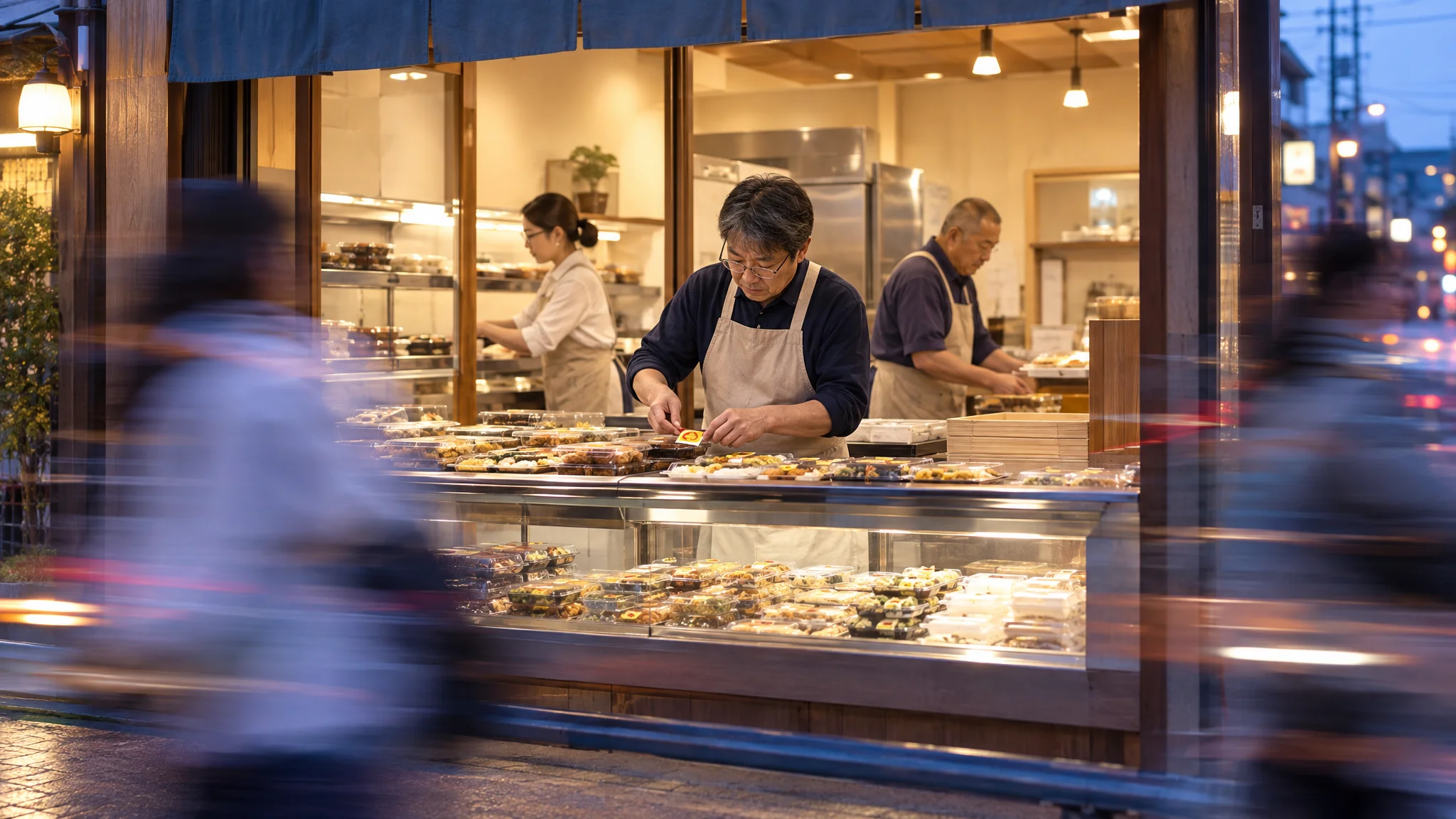
The recommended implementation pattern is a system where a "proposed discount schedule for the day" is presented in the morning, and the AI provides real-time revisions based on sales throughout the day. Staff are freed from the judgment of "when, what, and for how much," allowing them to focus on tasks only humans can do, such as customer service and cleanliness.
Through this approach, one store successfully reduced waste loss by 30% while improving the department's gross profit margin by 4%. The correct answer for retail DX in 2026 is not to reject the manager's intuition, but to supplement it with data and elevate it into higher-value-added management decisions.
FAQ
- Q. Does implementation require large-scale system modifications?
- A. No. It can be implemented via API integration with existing POS data or daily data synchronization via CSV. Since it functions as an external AI engine, speedy deployment is possible.
- Q. Can it handle irregular events such as special sale days?
- A. Yes, it can. By inputting calendar information and promotional plans into the AI in advance, abnormal demand fluctuations during events can be incorporated into the forecasting model.
- Q. Are there benefits to implementation even for small-scale stores?
- A. Yes. Especially for stores with many SKUs and varying levels of staff experience, the effect of gross profit improvement through markdown standardization is particularly significant.
Why not maximize your profit margins through "Markdown Optimization"?
Move from intuition-based discounting to data-driven maximization of marginal profit. We propose DX strategies tailored to your operations.
Talk to us for a free strategy consultationSummary
The dilemma of "excessive discounting" and "waste loss" that pressures profits in the deli department can be solved through AI-driven markdown optimization. By eliminating biases inherent in a store manager's intuition and identifying the timing to "retain every possible cent of profit" based on data, you can expect reliable revenue improvement while reducing the burden on staff. Start by visualizing the "hidden losses" dormant in your own POS data.
Published: October 16, 2026 / By: Osamu Yasuda
References
- [1] Japan Retailers Association: Guidelines for Food Loss Reduction through DX Promotion
- [2] Ministry of Economy, Trade and Industry: Case Studies of AI Utilization in the Distribution and Logistics Sectors (FY2025 Supplement)

Osamu Yasuda
Senior Managing Director & COO
Meets Consulting Inc.
Supported 100+ EC operations & logistics projects; specialist in operations and cost optimization