

[2026 Latest] DX in the Hospitality Sector: Redefining "High-Touch Service" through RPA-style AI Concierge Implementation
In 2026, as inbound demand continues to hit record highs, Japan's hospitality industry is caught between severe labor shortages and diversifying guest needs. In particular, responding to "routine inquiries" at the front desk drains staff's mental and physical resources, hindering the high-quality face-to-face service (high-touch service) that should be provided. In this article, we explain the strategy for fundamentally transforming business structures by positioning multilingual AI concierges not just as "chatbots," but as RPA (Robotic Process Automation) for the hospitality sector.
Table of Contents (Click to expand/collapse)
1. The Value of "RPA-style Offloading" for Routine Tasks
Approximately 70% of the inquiries hotel front desk staff receive daily are routine, such as "Wi-Fi password," "breakfast hours," and "late check-out." "Offloading" these to an AI concierge follows the same logic as RPA for automating clerical work. By freeing staff from simple information relay, it becomes possible to concentrate resources on high-value-added tasks that only humans can perform, such as providing attentive care tailored to each guest's expression or offering deep introductions to local culture.
As the data above shows, the time available for "face-to-face service" increases more than threefold with the introduction of AI. This is not just an efficiency gain, but a process of redefining the quality of service itself.
2. The Limits of Multilingual Support and Overcoming "Language Barriers" with AI
As the nationalities of inbound guests diversify, it is unrealistic to secure staff who can handle every language. The latest multilingual AI concierges combine real-time translation in over 100 languages with responses that maintain the hotel's unique nuances. This eliminates stress caused by language barriers and dramatically improves guest satisfaction (CS).
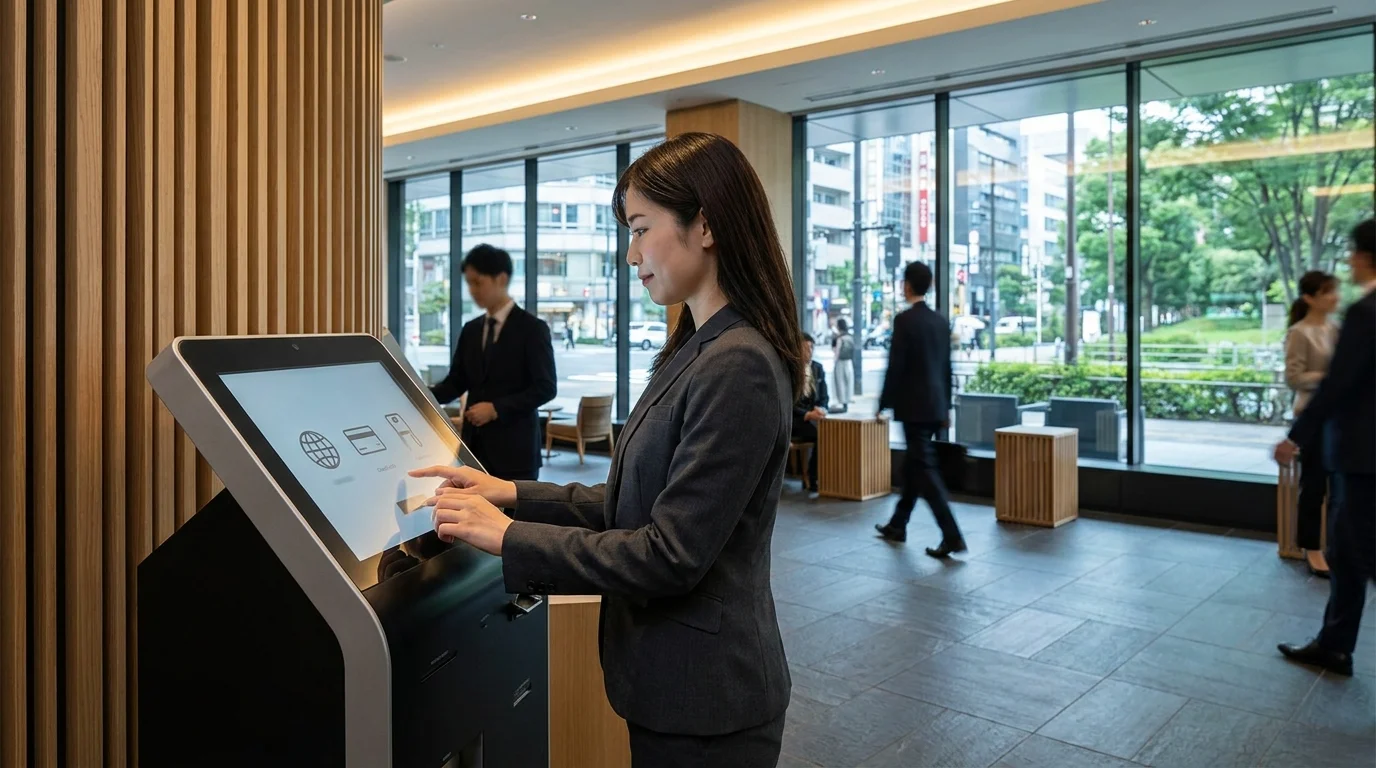
In particular, the fact that AI can provide responses with consistent quality 24 hours a day—even during late-night or early-morning hours when multilingual staff are absent—contributes significantly to operational stability.
3. 2026 Hospitality DX: Transitioning to Data-Driven Hospitality
The true value of an AI concierge lies not only in automating responses but in the ability to digitize "potential guest dissatisfaction and requests." Verbal questions that previously just vanished are accumulated as text data and become analyzable, providing hints for facility improvements or ideas for surprise gestures.

For example, if data shows that "the location of nearby drugstores is frequently asked about at specific times," it becomes possible to take proactive measures, such as setting up a special corner next to the front desk or distributing guide maps in advance to match those times.
FAQ
- Q. What is the difference between existing chatbots and an AI concierge?
- A. While conventional bots mainly use a format where users select from pre-set options, an AI concierge uses Natural Language Processing (NLP) to understand the guest's intent in free-form questions and provides flexible answers after learning information specific to the hotel.
- Q. Is it possible to implement and operate even if staff are not tech-savvy?
- A. Yes, it is. The system is designed for operation with minimal burden on on-site staff, featuring interfaces that allow for no-code FAQ updates and mechanisms where the AI automatically deepens its learning.
- Q. What are the specific cost-saving effects of implementation?
- A. While it depends on the size of the facility, there are many cases where routine responses via phone or at the front desk were reduced by 30–50%. In addition to controlling labor costs, secondary effects such as a decrease in turnover rates have also been reported.
Accelerate Your Property's Hospitality with AI
We will propose a specific roadmap for hospitality DX using a multilingual AI concierge.
Talk to us for a free strategy consultationSummary
In hotel management in 2026, AI is not a replacement for staff, but a powerful partner that frees staff from "tasks" and allows them to return to "hospitality." Automating routine tasks with multilingual AI concierges is the shortest path to DX in the lodging sector, simultaneously achieving operational efficiency, cost reduction, and improved customer satisfaction.
Published: May 27, 2026 / By: Osamu Yasuda

Related Articles
References
- [1] Japan Tourism Agency, "Guidelines for ICT Utilization in Inbound Tourism Support"
- [2] Japan Hospitality DX Promotion Council, "2026 Edition: AI Concierge Implementation Effectiveness Measurement Report"