

[2026 Latest] Overcoming the 2024 Problem: Achieving Zero Calls While Driving with AI Voice Reception
The essence of the "2024 problem" shaking the logistics industry is not merely a tightening of labor hour regulations. The real challenge lies in how to resolve the dilemma between "improving productivity within limited time" and "ensuring safety" faced by drivers on the ground. In particular, handling phone calls for redelivery requests or time changes while driving not only carries the risk of violating safe driving obligations but has also placed significant mental stress on drivers. Based on insights from our support sites, this article explains the forefront of logistics DX that achieves "zero calls while driving" through AI automated voice reception.

Table of Contents (Click to open/close)
1. "Hidden Costs" and Risks Caused by Handling Phone Calls While Driving
The most pressing concern we hear from drivers at our support sites is "the non-stop redelivery calls while driving." While some interpret that using hands-free devices makes it legally acceptable, the reality is different. It is the "consumption of cognitive resources"—remembering the call content, taking notes, and recalculating routes—that directly links to accident risks.
As shown in the figure above, drivers previously spent an average of over 45 minutes per day handling calls. After implementing AI, this has been limited to "emergencies only," succeeding in a significant reduction. These 45 minutes were not just time; they were a "negative asset" that eroded driver concentration and accumulated fatigue. Heading toward 2026, when compliance will be strictly enforced, leaving this risk unaddressed could constitute a major management oversight.
2. Eliminating "Task Switching" Through AI Automated Voice Reception
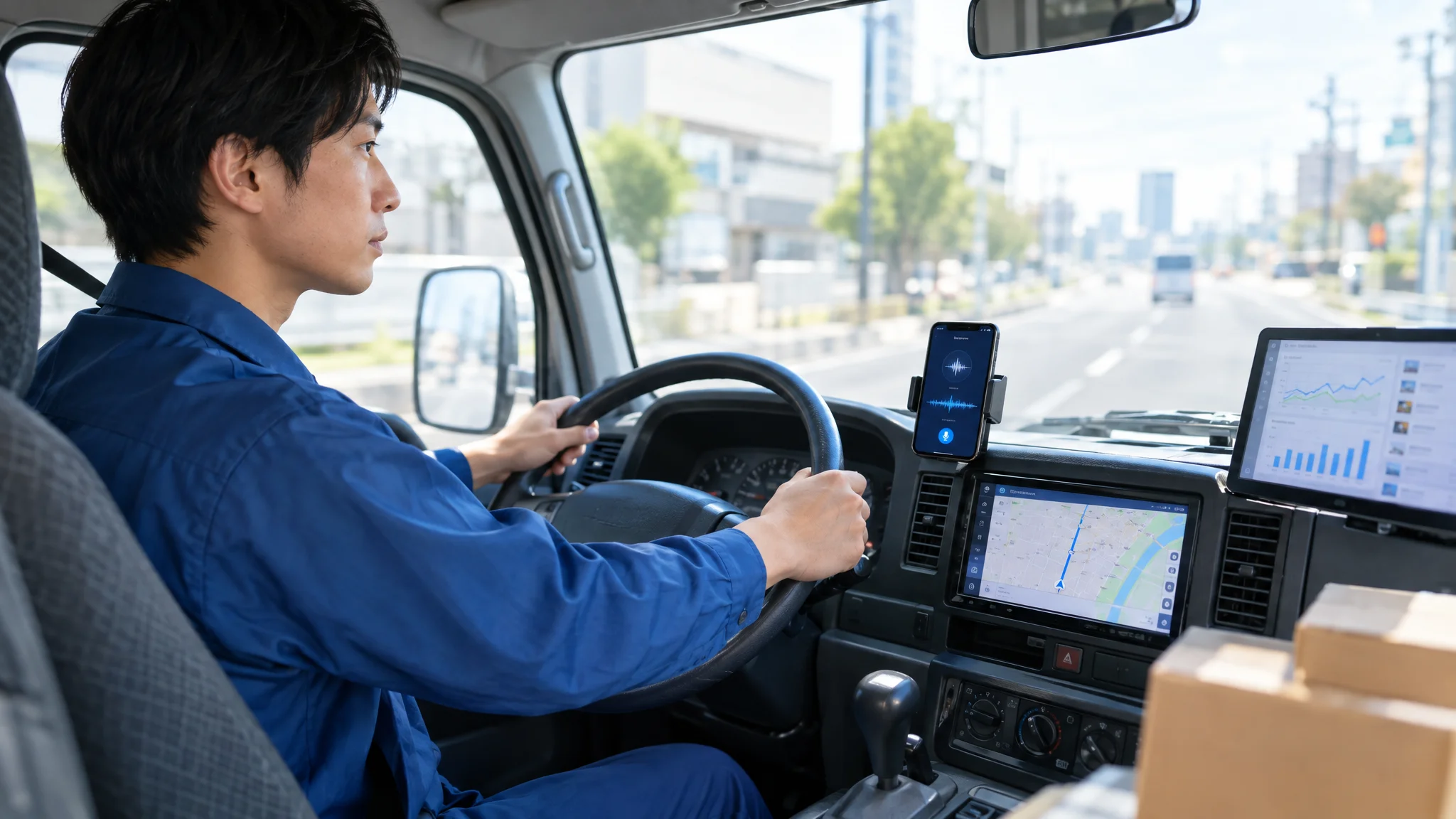
A common scenario on the ground is receiving a change request from a customer during delivery, such as "I want it after 6:00 PM," forcing an immediate route reorganization. This "task switching" places a heavy load on the brain. By introducing AI automated voice reception, the AI listens to the customer's request in natural language and immediately converts it into text and data.

Drivers can grasp changes simply by checking their smartphone screens at the next stop. Furthermore, in the field of Own EC Construction & Growth Support, real-time visibility of delivery status directly impacts customer satisfaction. By having the AI handle incoming calls, an environment is created where drivers can focus 100% on their core tasks: "driving" and "cargo handling."
3. The Key to Logistics DX Success: Automated Integration from Incoming Calls to Core Systems
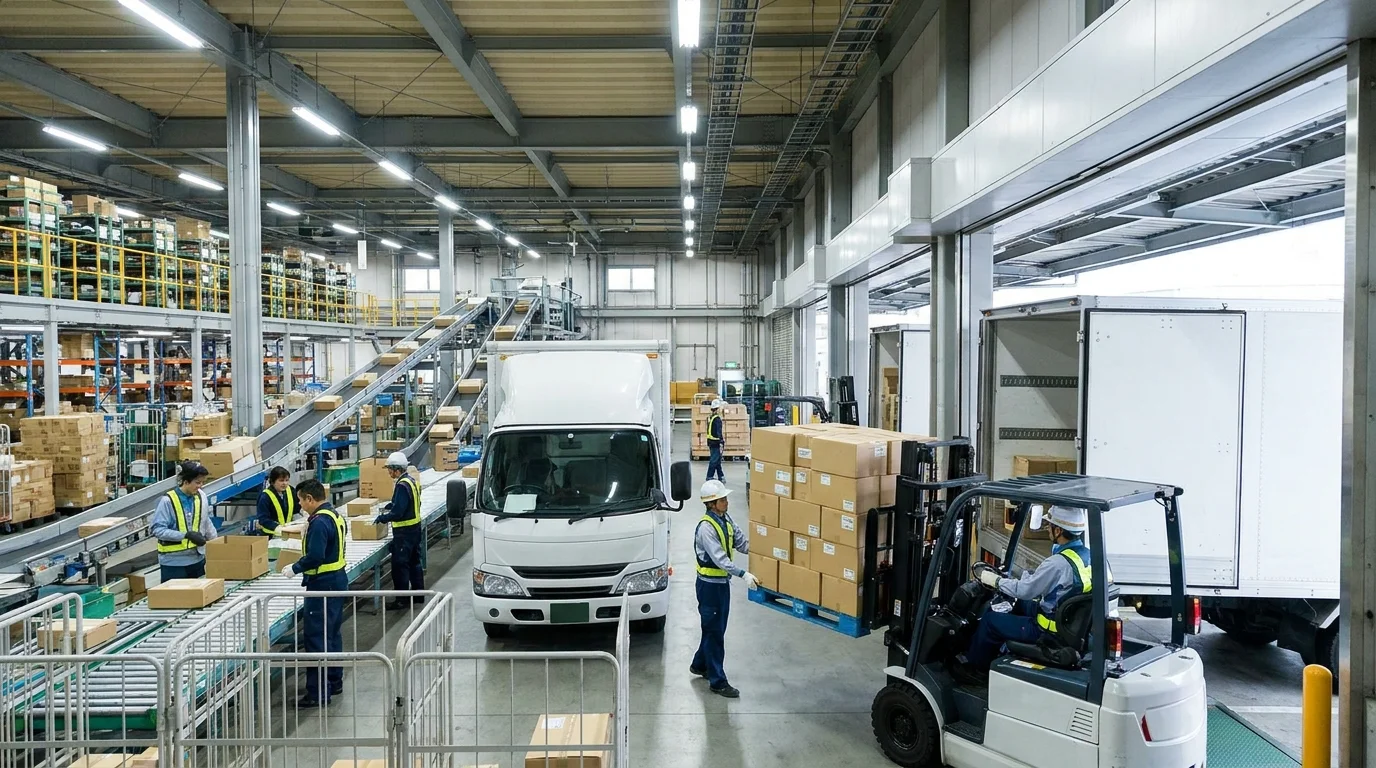
Simply setting up an "answering machine" is insufficient. What is crucial is seamlessly writing back the content captured by the AI into the WMS (Warehouse Management System) or TMS (Transportation Management System). At our support sites, we emphasize API integration between the AI and existing systems. This eliminates even the need for administrative staff to listen back to audio and input data manually.
For example, this is a mechanism where the AI analyzes redelivery requests and automatically incorporates them into the next day's delivery route. This is a typical example of "improving productivity through systems" that eliminates dependency on individual skills amidst worsening labor shortages. In actual support cases, we often see this automation reduce back-office administrative man-hours by more than 30%.
4. Redefining the Working Environment for 2026
Following the 2024 problem, the logistics industry must evolve into a "workplace of choice." A stance that protects driver safety and health by delegating grueling phone handling to AI also leads to powerful recruitment branding. Technology should not be used to replace people, but to enable people to work more humanely and safely. The introduction of AI automated voice reception will be the first step toward that goal.
FAQ
- Q. Do customers ever feel uncomfortable dealing with an AI?
- A. As of 2026, the latest AI is capable of very natural Japanese dialogue. In fact, rather than the difficulty of hearing a driver struggling to respond amidst noise or poor signal, there are increasing cases where it is received positively due to the peace of mind that comes from "being heard accurately."
- Q. Could you provide an estimate for implementation costs and the payback period?
- A. It depends on the scale, but when combining the reduction in driver accident risks and administrative man-hours, a return on investment (ROI) is possible within approximately one year in many cases. We also recommend utilizing subsidies at our support sites.
- Q. Can it integrate with older existing systems?
- A. Even for legacy systems without APIs, AI can enable gradual automation by handling email transmissions and CSV outputs. We propose flexible designs tailored to the specific conditions of your site.
Ready to upgrade your logistics operations with AI?
We propose practical DX strategies that balance driver safety with increased productivity.
Talk to us for a free strategy consultationSummary
To overcome the '2024 problem,' a system is needed to release drivers from 'physical and mental burdens.' AI automated voice reception not only ensures safety during driving but also accelerates the optimization of the entire logistics chain through system integration of incoming call data. Looking toward 2026, let us move quickly to strengthen compliance and improve working environments by leveraging technology.
Published: September 16, 2026 / By: Osamu Yasuda

Osamu Yasuda
Senior Managing Director & COO
Meets Consulting Inc.
Supported 100+ EC operations & logistics projects; specialist in operations and cost optimization
Related Articles


References
- [1] Ministry of Land, Infrastructure, Transport and Tourism, 'Drastic Measures for the Logistics 2024 Problem'
- [2] National Police Agency, 'On the Dangers of Smartphone Use While Driving and the Strengthening of Penalties'