

AI Bot Implementation Roadmap for Major Manufacturers: Migration Steps from PoC to Enterprise Scaling
The core of Digital Transformation (DX) in the manufacturing industry lies in the mobilization of vast knowledge. The latest LLMs (Large Language Models) have dramatically improved the "limitation of answer accuracy" faced by former rule-based chatbots. However, for major manufacturers to implement AI bots on a company-wide scale and obtain continuous Return on Investment (ROI), a strategic migration from PoC (Proof of Concept) to enterprise scaling, rather than simple tool introduction, is essential. In this article, we systematically explain cross-organizational governance design and implementation processes.

Table of Contents (Click to Expand)
1. Phase 1: Value Verification by PoC and Identification of Use Cases
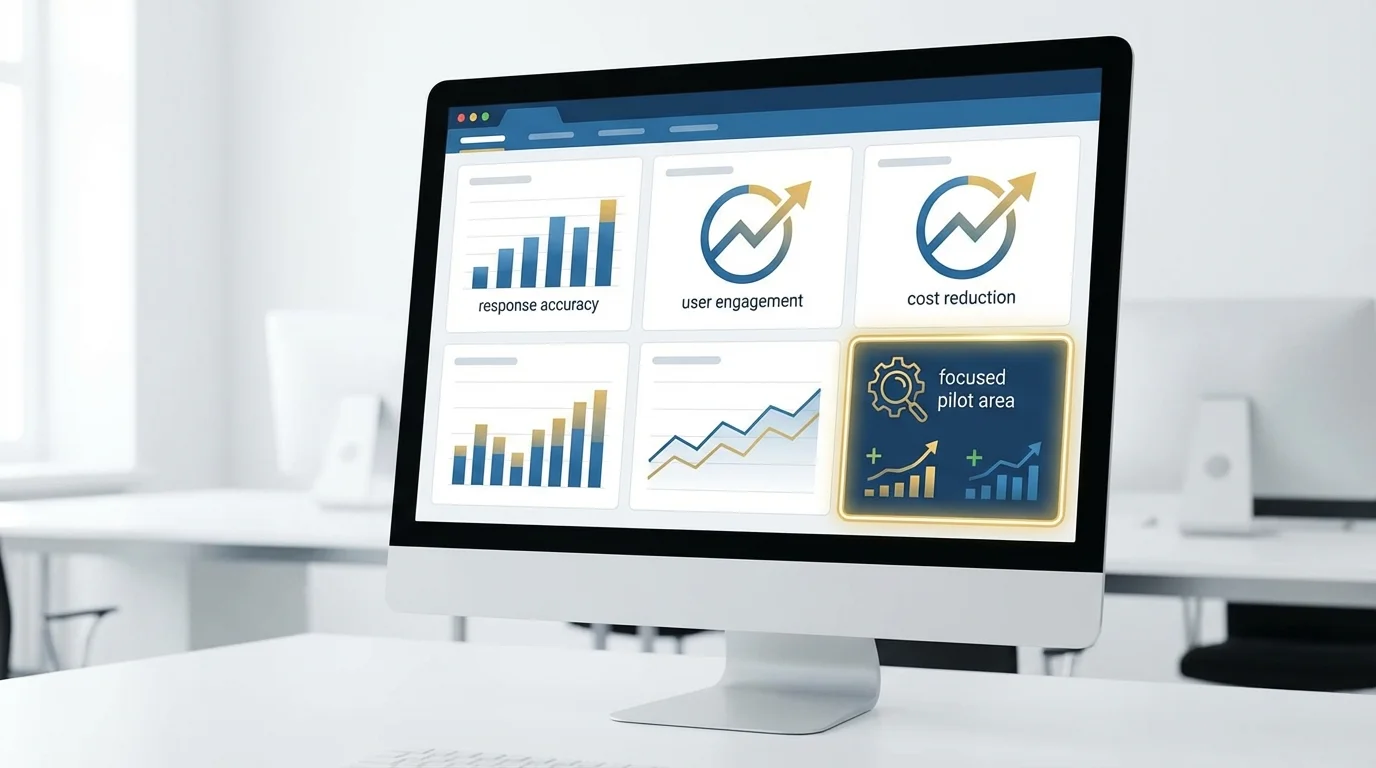
The first step is not to rush company-wide deployment, but to create a "successful experience in a limited area". For major manufacturers, automation of technical manual search, inquiry of internal regulations, or IT help desk is suitable.
- Narrowing down the target scope: Select departments with abundant structured data (PDF manuals and Wiki).
- Setting Success Indicators (KPI): Evaluate not only the reduction rate of inquiry response time but also user satisfaction and accuracy of information.
2. Phase 2: Enterprise Governance and Construction of RAG
After the success of PoC, what you face are the walls of security and data. Especially in the manufacturing industry, since highly confidential design information and information related to patents are handled, construction of a secure information reference model by RAG (Retrieval-Augmented Generation) is essential.
Here, instead of having LLM learn directly, we adopt a method of searching for necessary information from an external database and generating an answer. This makes it possible to reflect the latest internal information while suppressing hallucinations (false answers).
3. Phase 3: Company-wide Scaling and Maximization of ROI
In the final stage, expand from specific departments to the entire company. At this time, management of token costs and optimization of API usage are important. By building a centralized platform instead of each department contracting separately, infrastructure costs are suppressed, and cross-use of knowledge is promoted.
4. Visualization of Introduction Effect (Data Analysis)
Comparing business efficiency before and after the introduction of AI bots, significant differences appear in many companies as follows. In particular, reduction of search time contributes to direct suppression of personnel costs.
FAQ
- Q. How much data cleansing is necessary for implementation?
- A. It is not necessary to make everything perfect. It is most efficient to start with frequently used manuals and FAQs, and structure them step by step while watching the AI's response accuracy.
- Q. Is there any concern that input data will be used for learning in terms of security?
- A. By using an API contract for enterprises (such as Azure OpenAI Service), it is possible to build an environment where input data is not reused for model learning.
Accelerate Your DX Promotion with AI Implementation?
We organize complex knowledge structures specific to major manufacturers and propose optimal AI bot utilization strategies.
Get a Free Strategy ConsultationSummary
Introduction of AI bots in major manufacturers is an infrastructure for maximizing the organization's intellectual assets beyond a mere efficiency tool. Proving value with PoC, securing governance with robust RAG architecture, and maximizing ROI with company-wide deployment. Taking these 3 steps steadily is the key to DX success. Why not start by organizing familiar knowledge?
Published: 2026-01-15 / Author: Osamu Yasuda
Related Articles

RECOMMEND
Beyond "Mall Ads" Dependence: Tactics for Maximizing Incremental ROAS Using PMAX
RECOMMEND
"D2C Buying Experience" by Visualization of Traceability and Conversion Rate Improvement Measures

RECOMMEND
[Problem Solving] Why Sales Are Not Growing? Management Strategy to Pinpoint the Root Cause with "3C Analysis" and "Logic Tree"
References
- [1] Ministry of Economy, Trade and Industry: "DX Report 2.2 (Digital Transformation Roadmap)"
- [2] Gartner: "Top Strategic Technology Trends for 2025: AI Engineering"
- [3] Microsoft: "Empowering Manufacturing with Generative AI and RAG Architectures"