

"D2C-ization of Purchasing Experience" by Visualization of Traceability and Conversion Rate Improvement Measures
In the current EC market, consumers, especially Generation Z, value not only "product functions" and "price" but also the story of "who made the product, through what process, and under what ethics". Even within platform constraints such as mall operations, by enhancing supply chain transparency, it is possible to build deep engagement like a D2C brand. In this article, we explain in detail from a management perspective how visualization of traceability improves conversion rate (CVR) and creates sustainable brand value.

Table of Contents (Click to Expand)
1. "Truth" Sought by Generation Z and Current Status of Ethical Consumption
For Generation Z, consumption is part of self-expression, and there is a noticeable tendency to support companies that match their values. What they dislike most is "greenwashing (fake ethical)", and they seek authenticity based on objective data rather than superficial catchphrases.
In conventional EC management, inventory turnover and cost per acquisition (CPA) have been emphasized, but from now on, it is necessary to include "accumulation of trust" in KPI. Disclosure of traceability is not just information disclosure but proof of sincerity to consumers and a powerful differentiator from competitors.
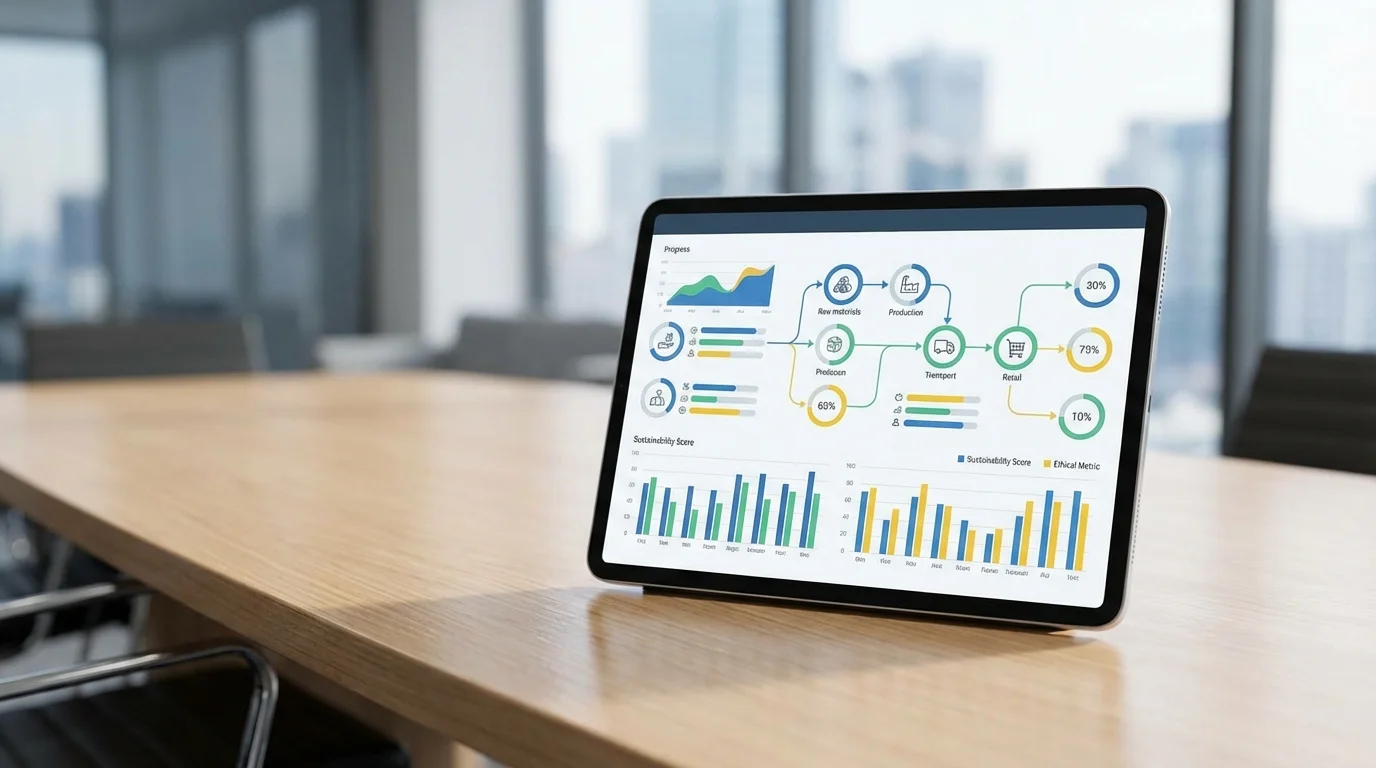
2. 3 Methods to Incorporate Traceability into UX
To effectively convey traceability on product LP (landing page), the following three UX design methods are effective.
- Interactive Map: Visualize from raw material procurement location to processing factory and logistics base on a map.
- Workers' Story: Post faces and voices of people actually involved in manufacturing in video or interview format.
- Digitization of Certificates: Make certification and inspection results by third-party organizations immediately confirmable via QR code or link.
By placing these elements, consumers can directly experience "what kind of impact they are having on society by purchasing this product".
3. Correlation Between Transparency and Conversion Rate (CVR) Seen in Data
It is clear from recent A/B test results that improvement in transparency leads to actual profit. The chart below shows a comparison of conversion rates between LP with detailed supply chain information disclosure and conventional functional appeal-centered LP.
In transparency enhanced LP, an average CVR improvement of about 1.5 times was seen. This can be said to be the result of information disclosure wiping out psychological hurdles (anxiety factors) at the time of purchase and increasing loyalty to the brand.

4. D2C-ization of Purchasing Experience: Brand Building Possible Even in Malls
In mall environments such as Amazon and Rakuten Ichiba, there is a challenge that it is difficult to convey the brand's worldview due to UI constraints. However, it is possible to promote "D2C-ization of purchasing experience" through included items, after-sales follow-up emails, or unique content within LP.
Specifically, by guiding from a card included with the product to a dedicated microsite and providing "behind the scenes of the manufacturing process" that can only be viewed there, even mall purchasers can be nurtured into enthusiastic fans of the brand.
FAQ
- Q. Is there a risk of competitors knowing suppliers by disclosing traceability?
- A. Certainly, that risk is not zero, but what Generation Z values is the "attitude of disclosing without hiding" itself. The merit of building a brand story that is difficult to imitate by introducing suppliers as "co-creation partners" rather than mere vendors greatly outweighs the risk of information leakage.
- Q. Is visualization of traceability possible even for small-scale EC operators?
- A. It is possible. Without introducing large-scale blockchain technology, you can start by posting photos of production sites and verbalizing producers' thoughts on LP. What is important is not the sophistication of technology but the accuracy and sincerity of information.
Take Your EC Business to the Next Stage
We propose ethical brand building chosen by Generation Z and CVR improvement measures based on data.
Get a Free Strategy ConsultationSummary
Visualization of traceability is not just a trend but an element that should become "standard equipment" in future EC management. By deeply understanding Generation Z's insights and sublimating supply chain transparency into UX design, you can create "reasons to be chosen" that do not get caught up in price competition. Let's build a strong relationship of trust with customers through "D2C-ization of purchasing experience".
Published: 2026-01-15 / Author: Osamu Yasuda
Related Articles

RECOMMEND
[Zero-Party Data Acquisition Point: Survey Design by Bundle and CRM Linkage]

RECOMMEND
[Optimization of Full-Funnel Marketing by Instagram Shop API and Shopify Integration]

RECOMMEND
[Secret of Improving "F2 Conversion Rate" in Rakuten/Yahoo: CRM Scenario Design to Capture LTV Branch Point After First Purchase]
References
- [1] Consumer Trends Report 2025: Generation Z and Ethical Consumption.
- [2] Supply Chain Transparency and its Impact on E-commerce Conversion Rates (Journal of Digital Business).